

Those hits just keep on coming. Yet again do we have another recall, this one in the US and from BMW. Following the recall issued earlier in the month regarding defective brake vacuum pumps (which translated into a ‘technical service campaign’ locally), BMW has – through its North American office – issued a recall for more than 150,000 vehicles made in 2007-2010 to fix faulty fuel pumps, primarily high-pressure units in cars equipped with twin-turbo inline six-cylinder engines featuring BMW’s direct fuel injection system.
The company says that affected vehicles may experience a failure of the high-pressure fuel pump, with symptoms including long-crank engine starting times along along with the illumination of the “Service Engine Soon” light. In certain cases, the driver may experience reduced engine performance in a safe mode accompanied by a tone and the illumination of the “Engine Malfunction” light.
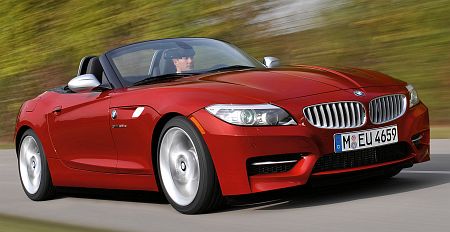
Approximately 130,000 vehicles are potentially affected, with about 40,000 expected to require a new pump. BMW USA said it will replace the high-pressure fuel pump and do a software update for the necessary vehicles. Affected models are the 2007–2010 335i, 2008–2010 135i, 535i and X6 xDrive35i and the 2010 Z4 Roadster sDrive35i.
Separately, a further 20,800 2008 normally-aspirated X5s in the US were also recalled to have their low-pressure fuel pump replaced. BMW said that should the fuel pump fail and the engine stop running, the steering and the brakes would still remain operational even with the loss of power assist for the steering and brakes.
The company said that there have been no reports of accidents or injuries connected to the recalls.
Looking to sell your car? Sell it with Carro.

 nebula87
on
nebula87
on 

 shawal
on
shawal
on  meane
on
meane
on  i am
on
i am
on  kam
on
kam
on  acerman
on
acerman
on  tan
on
tan
on  informer
on
informer
on  greasemonkey
on
greasemonkey
on  Someone
on
Someone
on  CocoBear
on
CocoBear
on  Izhar
on
Izhar
on  apax
on
apax
on  alldisc
on
alldisc
on  Troll Bait
on
Troll Bait
on  moc.
on
moc.
on  dragster
on
dragster
on  4x4Fan
on
4x4Fan
on  BMW-More Problem
on
BMW-More Problem
on  JonLing
on
JonLing
on  keluangman
on
keluangman
on  BOYRACER
on
BOYRACER
on  zimba
on
zimba
on  Tiadaid
on
Tiadaid
on  oli
on
oli
on  hehe
on
hehe
on  theanswer
on
theanswer
on  s60T
on
s60T
on  rynn
on
rynn
on  Need4SpeedUnderground
on
Need4SpeedUnderground
on  lols
on
lols
on  mohsin
on
mohsin
on  nabill
on
nabill
on  mirror mirror
on
mirror mirror
on  Henry
on
Henry
on  HIM
on
HIM
on  bkk
on
bkk
on  VW Golf Car Parts
on
VW Golf Car Parts
on  Mohd Fuad Omar
on
Mohd Fuad Omar
on 


AI-generated Summary ✨
Comments reflect concern over BMW's recall of 150,000 vehicles due to fuel pump issues, highlighting the seriousness of fuel pump failures especially in high-performance cars. Some comments compare BMW's recall to other brands, questioning reliability and transparency. Many feel recalls are vital for safety, but others criticize the frequency and quality of modern car components. Overall, sentiments show concern over safety, reliability, and manufacturing quality relating to the BMW recall.