Tesla has cut the prices of its vehicles in several markets internationally, The Guardian has reported, first in the United States, then followed by the same in China and Germany. The American electric vehicle maker […]
Here’s a full gallery of the Audi RS4 Avant, which is the smaller sibling the RS6 Avant and currently retails for RM762,990. Not a small sum, but it’s actually lower than the original price of […]
The order books for the new Honda City Hatchback facelift are now open in Malaysia, with the B-segment model set to be launched here in Q2 2024. The line-up will continue to include the e:HEV […]
Here’s something interesting – Naza Eastern Motors has teased the arrival of the Suzuki Jimny 5-Door in Malaysia. The stretched 4×4 is now available for booking as a more practical version of the cute and […]
It was reported by Reuters last year that Vietnamese carmaker VinFast is aiming to expand its presence in Asia, including in Indonesia where sales has already started and there are plans to establish a plant […]
Tesla has discontinued the US$6,000 Enhanced Autopilot option in the US, leaving only Full Self Driving available for purchase. In turn, FSD’s pricing has been reduced from US$12,000 to US$8,000. FSD has undergone various price […]
It looks like smart Malaysia (Pro-Net) may be gearing up to launch the second product in its line-up. The smart #3, which is a larger sibling to the smart #1 was previewed at the KL […]
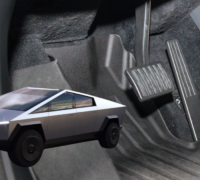
The original Tesla Cybertruck accelerator pedal design Tesla has recalled the Cybertruck for an issue with the accelerator pedal that could cause it to be “trapped”, according to a notice filed with the NHTSA. The […]
Daihatsu has announced it has resumed shipments of Move Canbus, Rocky Hybrid and Toyota Raize Hybrid which were previously suspended by Japan’s ministry of land, infrastructure, transport and tourism (MLIT) due to non-compliance with standards […]
The official arrival of GAC Motor in Malaysia brought with it the GAC GS3 B-segment SUV in 2021, though the intervening three years has brought its successor, the second-generation GAC GS3 Emzoom into the Malaysian […]
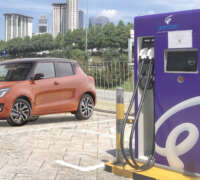
From L-R: Gentari DC charger at Naza Automall PJ, AC charger at Naza Tower KL Naza Automotive Holdings recently formalised its collaboration with Gentari Green Mobility, and the strategic partnership sets the stage for the […]
Toyota has officially launched the Land Cruiser 250 Series in Japan, which will be offered in a number of variants, including two First Edition offerings. Also know as the Land Cruiser Prado or simply the […]
Petronas Lubricants International (PLI) and Mercedes-Benz Global Customer Service & Parts have entered into a strategic partnership agreement and will be collaborating to develop technical solutions that optimise vehicle performance and efficiency, aimed at driving […]
Fresh from its launch event last month, SAIC Motor Malaysia has announced it has opened ten MG Motor dealerships in Peninsular Malaysia, covering the central (Klang Valley) and southern regions. The new outlets will sell […]
Volvo is turning 97 this month and Volvo Car Malaysia (VCM) will have a big birthday bash next weekend. All are invited to the Volvo Birthday Sale from April 26-28 at Sentul Depot in KL […]