
Verdict
These two luxury SUVs are separated by far more than their badges. At RM2,488,000, the Range Rover costs RM1,862,112 more than the RM625,888 EQS SUV, yet is the faster choice at 4.6 seconds to 100 km/h against 6.1 seconds and carries 818 litres of luggage versus 195 litres. The Mercedes changes the running-cost equation: its 118 kWh battery claims 673 km of range, accepts up to 22 kW AC and 200 kW DC charging, and its annual road tax is RM455 against RM3,872. Malaysian families needing seven seats should start with the EQS SUV.
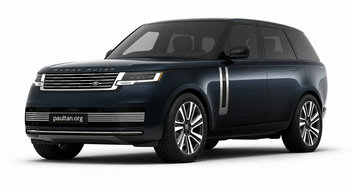
Pick the Land Rover Range Rover if 523 hp, a 4.6-second 0-100 km/h time and an 818-litre boot matter more than its RM2,488,000 price and petrol running costs.
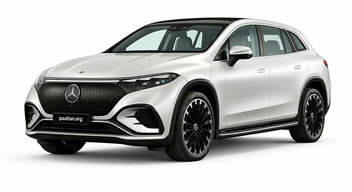
Pick the Mercedes-Benz EQS SUV if you want seven seats, 673 km claimed EV range and RM455 annual road tax for RM1,862,112 less.
Key differences
- Price: Land Rover Range Rover RM2,488,000; Mercedes-Benz EQS SUV RM625,888.
- Powertrain output: Range Rover 523 hp and 750 Nm; EQS SUV’s two motors 355 hp and 800 Nm.
- 0-100 km/h: Range Rover 4.6 seconds; EQS SUV 6.1 seconds.
- Seating and boot space: Range Rover 5 seats and 818 litres; EQS SUV 7 seats and 195 litres.
- Wheelbase and height: Range Rover 2,997 mm and 1,870 mm; EQS SUV 3,210 mm and 1,718 mm.
- Annual road tax: Range Rover RM3,872; EQS SUV RM455.
Range Rover
- 523 hp and a 4.6-second 0-100 km/h time.
- 818-litre boot.
- Five-year, 150,000-km manufacturer warranty.
- RM1,862,112 more expensive and RM3,417 costlier in annual road tax.
- Only five seats, versus the EQS SUV’s seven.
- No listed blind spot information system or head-up display.
EQS SUV
- 673 km claimed range from a 118 kWh battery, with 22 kW AC and 200 kW DC charging.
- Seven seats with a sliding second row and folding third row.
- Head-up display, blind spot information system and 15-speaker 710-watt Burmester audio.
- 6.1 seconds to 100 km/h, 1.5 seconds behind the Range Rover.
- 195-litre boot, 623 litres smaller than the Range Rover’s.
- Four-year vehicle warranty, against five years for the Range Rover.
| Price & overview | ||
|---|---|---|
| Price | RM2,488,000 | RM625,888✓ |
| Body type | SUV | SUV |
| Segment | Luxury | Luxury |
| Assembly | CBU | CBU |
| Ownership | ||
| Road tax / year | RM3,872 | RM455✓ |
| Powertrain | ||
| Engine Tech | 32-valve Turbocharged DOHC with VVT Dual VANOS | 400V architecture |
| Capacity | 4,395 cc | — |
| Horsepower | 523 hp | — |
| Torque | 750 Nm | — |
| Fuel | Petrol | Electric |
| Bore | 89 mm | — |
| Number of Motors | — | 2 |
| Motor Horsepower | — | 355 hp |
| Motor Torque | — | 800 Nm |
| Battery Capacity | — | 118 kWh |
| EV Range | — | 673 km |
| Charging Rate (AC) | — | 22 kW |
| Charging Rate (DC) | — | 200 kW |
| Drivetrain | ||
| Transmission | Conventional Automatic | Single Ratio Automatic |
| Transmission Name | ZF 8-speed Automatic | — |
| Gears | 8 | — |
| Transmission Manufacturer | ZF | Mercedes-Benz |
| Driveline | All Wheel Drive | All Wheel Drive |
| Performance & Efficiency | ||
| 0-100 km/h | 4.6 seconds✓ | 6.1 seconds |
| Top Speed | 250 km/h✓ | 210 km/h |
| Dimensions | ||
| Length | 5,052 mm | 5,125 mm |
| Width | 2,047 mm | 1,959 mm |
| Height | 1,870 mm | 1,718 mm |
| Wheelbase | 2,997 mm | 3,210 mm |
| Weight | — | 2,810 kg |
| Doors | 5 | 5 |
| Seats | 5 | 7 |
| Boot Space | 818 litres✓ | 195 litres |
| Front Tyre | 285/45R22 | 275/40R22 |
| Rear Tyre | 284/45R22 | 275/40R22 |
| Spare Tyre | — | Tyre Repair Kit |
| Factory Tyres | Pirelli P Zero | Cooper Zeon Crossrange |
| Chassis | ||
| Assembly | United Kingdom (CBU) | United States (CBU) |
| Front Suspension | MacPherson Strut | Four-link Axle |
| Rear Suspension | Five-link Setup | Multi-link |
| Front Wheels | 22" Alloys | 22" Alloys |
| Rear Wheels | 22" Alloys | 22" Alloys |
| Steering | Rack and Pinion (Electric Power Assist) | Rack and Pinion (Electric Power Steering) |
| Chassis Notes | — | AIRMATIC with Adaptive Damping System (ADS PLUS) |
| Safety | ||
| Airbags | Driver and Passenger, Driver Knee, Front Side, Front and Rear Curtain | Driver and Front Passenger, Front Side, Front and Rear Curtain, Driver's Knee |
| ABS/EBD | ✓ | ✓ |
| Stability Control | — | ✓ |
| Alarm | — | ✓ |
| Immobilizer | ✓ | — |
| Child Safety Lock | Electric for rear doors | Manual for Rear Doors |
| Seat Belts | 5 Three-point | 7 Three-point |
| Blind Spot Info System | — | ✓ |
| ISOFIX | Available for two outer middle row seats | Available on 2 Outer Middle Row Seats |
| Autonomous Braking System | Yes, with High-Speed Emergency Braking | Yes, PRE-SAFE Brake |
| Lane-keeping Assist | Steering Correction | Steering Correction |
| Collision Warning | ✓ | ✓ |
| Seatbelt Reminder | For All Seats | All Seats |
| Lighting | ||
| Headlamps | Matrix LED | Digital Light Matrix LEDs |
| Taillamps | LED | LED |
| LED Daytime Running Lights | ✓ | ✓ |
| Front Foglamps | ✓ | — |
| Rear Foglamps | ✓ | ✓ |
| Wing Mirror Turn Indicators | ✓ | ✓ |
| Cabin | ||
| Front Seats | Powered Driver and Front Passenger Seats, Heated and Ventilated and Memory Functions | Driver and Passenger Powered Seats, Heated and Ventilated with Memory Settings |
| Rear Seats | 40:20:40 Split-folding | 40:20:40 Split-folding and Sliding 2nd Row, 50:50 Split-folding 3rd Row |
| Front Air-con | Dual-zone Automatic Climate Control | Dual-zone Automatic Climate Control |
| Rear Air-con | Single-Zone Automatic Climate Control | Dual-zone Automatic Climate Control |
| Sunroof | Panoramic Glass Roof | Panoramic, Front Tilt and Slide |
| Power Sockets | 1 USB-C front, 2 USB-C rear | 1 Front, 2 Front USB-C, 2 Rear USB-C |
| Interior Lighting | Map Lights and Active Ambient Lights (30 Colours) | Map Lights and Ambient Lights (64 Colours) |
| Cup Holders | 2 Front, 2 Rear | 6 |
| Sun Shade | Powered Rear Sun Shade and Rear Door Window Shades | Yes |
| Audio | 13.1" Curved Pivi Pro Touchscreen with Wireless Apple CarPlay and Android Auto, Meridian Sound System | 17.7" OLED Touchscreen Mercedes-Benz User Experience (MBUX) with Apple CarPlay, Android Auto and Augmented Reality Navigation; 12.3" OLED Touchscreen for Front Passenger; 11.6" Rear Entertainment Displays; 7" Rear Android Tablet; 15-speaker, 710-watt Burmester 3D Surround Sound System |
| Convenience | ||
| Power Windows | Four Windows, Auto Up and Down with Anti Pinch | Four Windows, Auto Up and Down with Anti Pinch |
| Engine Start | Keyless Push Button | Keyless Push Button Start |
| Locks | Keyless Operation | Keyless Operation |
| Auto Start/Stop | ✓ | — |
| Auto Headlamps | ✓ | ✓ |
| Auto Wipers | ✓ | ✓ |
| Cruise Control | Adaptive Cruise Control | Adaptive Cruise Control |
| Paddle Shift | ✓ | ✓ |
| Steering Audio Control | ✓ | ✓ |
| Steering Tilt | ✓ | ✓ |
| Steering Telescopic | ✓ | ✓ |
| Electric Steering Adjustment | ✓ | ✓ |
| Boot Operation | Contactless Boot Opening | Contactless Boot Opening |
| Parking Sensor Front | 6 Sensors | 6 Sensors |
| Parking Sensor Rear | 6 Sensors | 6 Sensors |
| Reverse Camera | Yes, 360-degree View Monitor | Yes, 360-degree View Monitor |
| Auto Parking | Yes | Yes |
| Folding Wing Mirrors | ✓ | ✓ |
| Bluetooth | ✓ | ✓ |
| Navigation | ✓ | ✓ |
| Head-up Display | — | ✓ |
| Power Door | Yes | — |
| Hill Start Assist | ✓ | ✓ |
| Instrument Cluster | Full LCD Monitor | Full LCD Monitor |
| Parking Brake | Electronic | Electronic |
| Warranty | ||
| Warranty Mileage Manufacturer | 150,000 km | Unlimited✓ |
| Warranty Manufacturer | 5 years✓ | 4 years |
| Warranty Notes | — | 10 Years/250,000 km Warranty for Traction Battery |
Specs shown for the selected variant of each car. ✓ marks the better figure where lower/higher is objectively better. Road tax: West Malaysia, private registration.
Used Range Rover & EQS SUV for sale
Range Rover vs EQS SUV FAQ
Is the Land Rover Range Rover or Mercedes-Benz EQS SUV better?
The EQS SUV is the more rational Malaysian luxury SUV: it costs far less, seats seven and has 673 km claimed EV range. Choose the Range Rover only if its quicker 4.6-second sprint, 818-litre boot and five-year warranty are priorities.
What is the price difference?
The Land Rover Range Rover costs RM2,488,000 and the Mercedes-Benz EQS SUV costs RM625,888, so the Range Rover is RM1,862,112 more expensive.
Which is cheaper to tax and run in Malaysia?
The EQS SUV has annual road tax of RM455, compared with RM3,872 for the petrol Range Rover. It also has a 118 kWh battery, 673 km claimed range and charging capability of up to 22 kW AC or 200 kW DC.