
Ford Everest vs Mercedes-Benz EQS SUV
Verdict
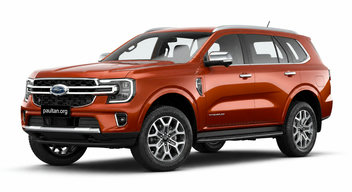
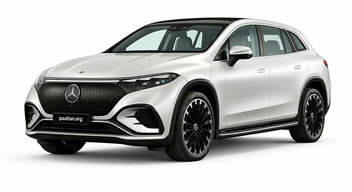
The seven-seat similarity hides two very different jobs. The Ford Everest is the diesel Truck/4X4 SUV with 167 hp, 405 Nm, rear-wheel drive and an 80-litre tank; the Mercedes-Benz EQS SUV is the electric luxury SUV with dual motors, 355 hp, all-wheel drive, a 118.0 kWh battery and 673 km of range. The Mercedes-Benz EQS SUV is longer with a 3,210 mm wheelbase, but the Ford Everest has the bigger boot, 259 litres against 195 litres. Both take seven, so buy by usage, not headcount.
Pick the Ford Everest if you want the lower-priced seven-seat diesel SUV, the larger quoted boot and a taller body for Truck/4X4 use.
Pick the Mercedes-Benz EQS SUV if you want electric drive, all-wheel drive, much stronger power and the listed 673 km EV range.
Key differences
- Price: Ford Everest RM266,388; Mercedes-Benz EQS SUV RM625,888
- Power: Ford Everest 167 hp; Mercedes-Benz EQS SUV 355 hp
- Drivetrain: Ford Everest rear-wheel drive; Mercedes-Benz EQS SUV all-wheel drive
- Size: Ford Everest 4,914 mm long; Mercedes-Benz EQS SUV 5,125 mm long
- Wheelbase: Ford Everest 2,900 mm; Mercedes-Benz EQS SUV 3,210 mm
- Boot space: Ford Everest 259 litres; Mercedes-Benz EQS SUV 195 litres
Everest
- Costs far less to buy
- Bigger quoted boot at 259 litres
- Diesel format with an 80-litre fuel tank
- Lower output at 167 hp
- Auto emergency braking is not listed
- Shorter 3-year warranty
EQS SUV
- 355 hp dual-motor electric drivetrain
- All-wheel drive and 6.1-second 0-100 km/h time
- 118.0 kWh battery with 673 km EV range
- RM359,500 dearer than the Ford Everest
- Smaller quoted boot at 195 litres
- Lower body height at 1,718 mm
| Price & overview | ||
|---|---|---|
| Price | RM 266,388✓ | RM 625,888 |
| Body type | SUV | SUV |
| Segment | Truck/4X4 | Luxury |
| Seats | 7 | 7 |
| Assembly | CBU | CBU |
| Powertrain | ||
| Fuel | Diesel | Electric |
| Engine | 1,996 cc | Dual motor |
| Power | 167 hp | 355 hp✓ |
| Torque | 405 Nm | — |
| Transmission | Conventional Automatic | Single Ratio Automatic |
| Driven wheels | Rear Wheel Drive | All Wheel Drive |
| Performance | ||
| 0–100 km/h | — | 6.1 s |
| Top speed | — | 210 km/h |
| Efficiency | ||
| Battery | — | 118.0 kWh |
| EV range | — | 673 km |
| Dimensions | ||
| Length | 4,914 mm | 5,125 mm |
| Width | 1,923 mm | 1,959 mm |
| Height | 1,841 mm | 1,718 mm |
| Wheelbase | 2,900 mm | 3,210 mm |
| Boot space | 259 L✓ | 195 L |
| Fuel tank | 80 L | — |
| Safety | ||
| Airbags | 7 | 9✓ |
| Auto emergency braking | — | Yes |
| Ownership | ||
| Warranty | 3 | 4✓ |
| Road tax / year | RM 438✓ | RM 455 |
Specs shown for the selected variant of each car. ✓ marks the better figure where lower/higher is objectively better. Road tax: West Malaysia, private registration.
Everest vs EQS SUV FAQ
Is the Ford Everest or Mercedes-Benz EQS SUV better?
The Mercedes-Benz EQS SUV is better for performance, EV range and safety kit on paper. The Ford Everest is better for price, diesel use and boot space. Both seat seven, so the better buy depends on how you drive.
What is the price difference?
The Mercedes-Benz EQS SUV is RM359,500 more expensive than the Ford Everest.
Which one has more luggage space?
The Ford Everest has more quoted boot space, at 259 litres versus 195 litres in the Mercedes-Benz EQS SUV.