
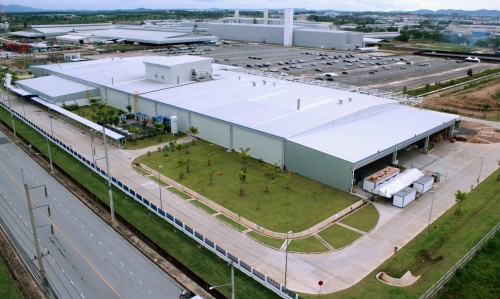
General Motors has officially opened a new diesel plant in Rayong, Thailand. The new plant which is worth $200 million and is the company’s first diesel factory in region will be the first in the world to produce the new line of Duramax 4-pot oil burners that will be first installed in the Colorado pickup.
These Duramax engines are made up by a 2.5 litre as well as a 2.8 litre variant featuring overhead cams, force-induction and aluminum cylinder heads. General Motors confirmed that the plant is able to churn out 120,000 engines per year and these engines will used for vehicles manufactured in the country and in other markets.
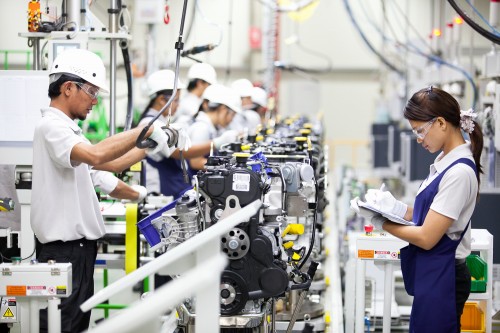
The 54,275 square meter plant will have up to 500 employees by the end of the year and houses various state-of-the-art computers and laser-guided equipments. It is also dust-free and features an in-house climate control system to ensure the best possible environment for engine production. Furthermore, the plant uses a lighting system that consumes 40% less energy compared to conventional systems.
General Motors also revealed that it is expected to source Thai-built components that is worth $94 million for the engine production by 2012. The opening of the new plant comes after the company announced plans to invest up to $150 million in the revival of its Bekasi manufacturing facility in Indonesia which will output a new line of people movers for other Southeast Asian markets.
Since the Chevrolet Colorado was brought up in this article, it is worth to point out that the pickup is expected to make its local debut sometime in December 2011 following a recent announcement by Naza Quest CEO Datuk Maruan Mohd Said.
Looking to sell your car? Sell it with Carro.


 justin bubur
on
justin bubur
on 

 MoFaz
on
MoFaz
on  Paul Tan for Prime Minister
on
Paul Tan for Prime Minister
on  RedBeanBun
on
RedBeanBun
on  nationalist
on
nationalist
on  WL
on
WL
on  Cowabunga!
on
Cowabunga!
on  Hameed Koyakuti
on
Hameed Koyakuti
on  anonymous
on
anonymous
on  lonelyobserve
on
lonelyobserve
on  ramli kareem
on
ramli kareem
on  MCdog
on
MCdog
on  MRL
on
MRL
on  Jason
on
Jason
on  Unforgiven
on
Unforgiven
on  Payne
on
Payne
on  Xefron
on
Xefron
on  lchan
on
lchan
on  Kondohon
on
Kondohon
on  squawk
on
squawk
on  Faiz
on
Faiz
on  Pinnacle
on
Pinnacle
on  A normal Malaysian struggling to survive
on
A normal Malaysian struggling to survive
on  KLbloke
on
KLbloke
on  armang
on
armang
on  barry
on
barry
on  asgard
on
asgard
on  Michael
on
Michael
on  azrai
on
azrai
on  durararararara
on
durararararara
on  Dave
on
Dave
on  tan ah kow
on
tan ah kow
on  Expatriate VN
on
Expatriate VN
on  autojohndoe
on
autojohndoe
on  Will
on
Will
on  zam
on
zam
on 


AI-generated Summary ✨
Comments express disappointment over Malaysia losing significant foreign investments like GM's new diesel engine plant to Thailand, citing Malaysia’s restrictive policies, bureaucratic hurdles, and lack of technology transfer. Many lament the protection of local car companies like Proton, which they feel hinder Malaysia’s growth. Sentiments highlight a sense of frustration with government policies, corruption, and the economic status quo, contrasting Malaysia's setbacks with Thailand's increasing automotive advancements and investments, leading to a feeling that Malaysia is being left behind.