
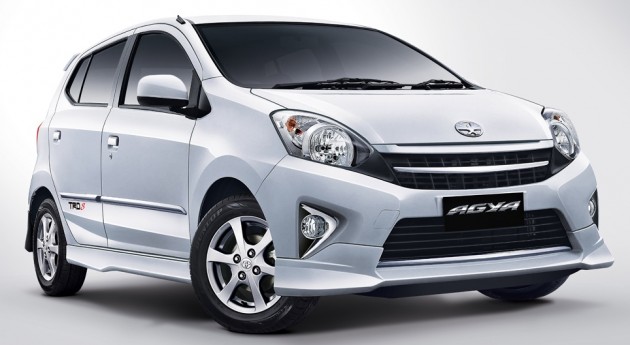
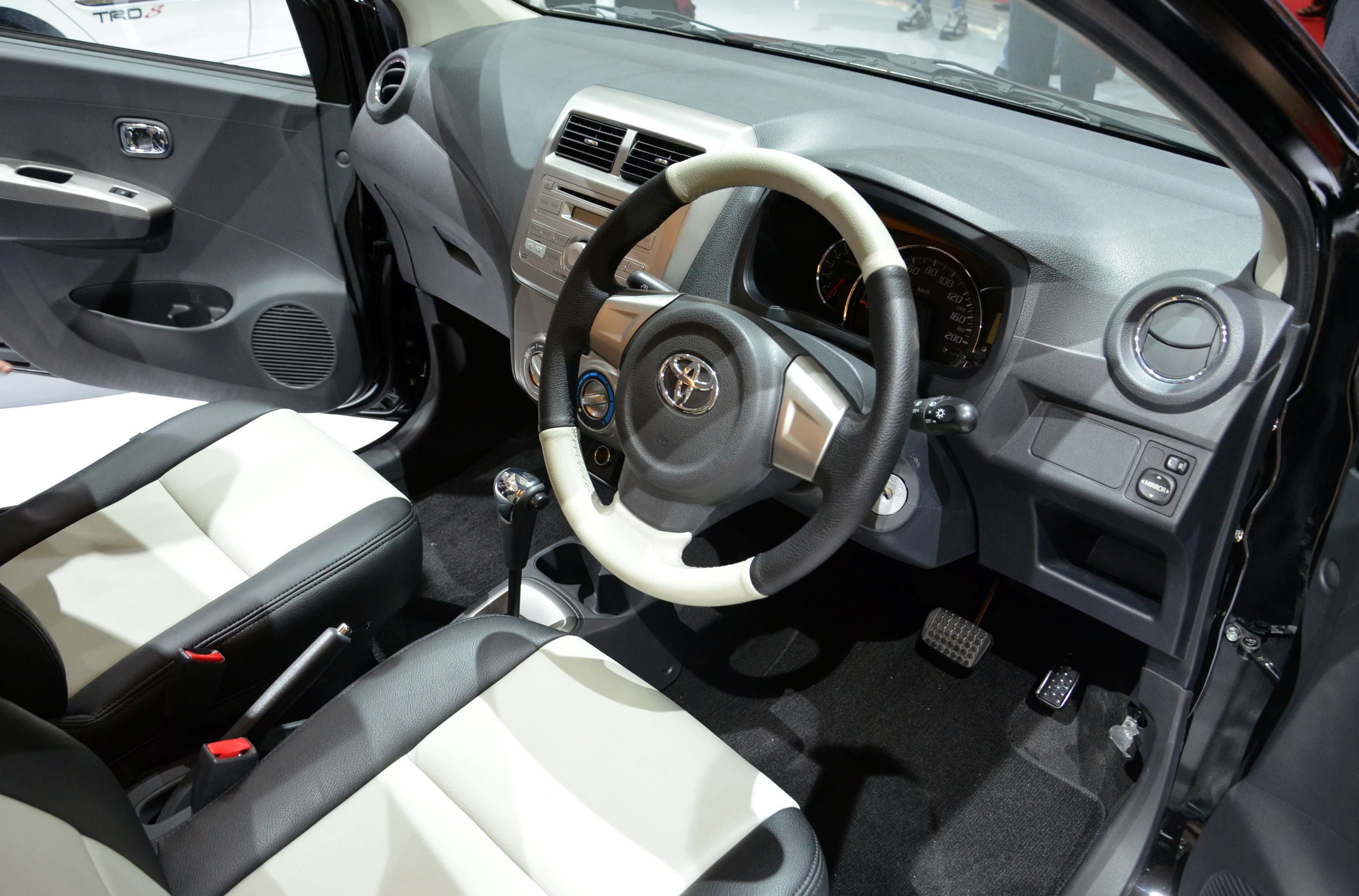
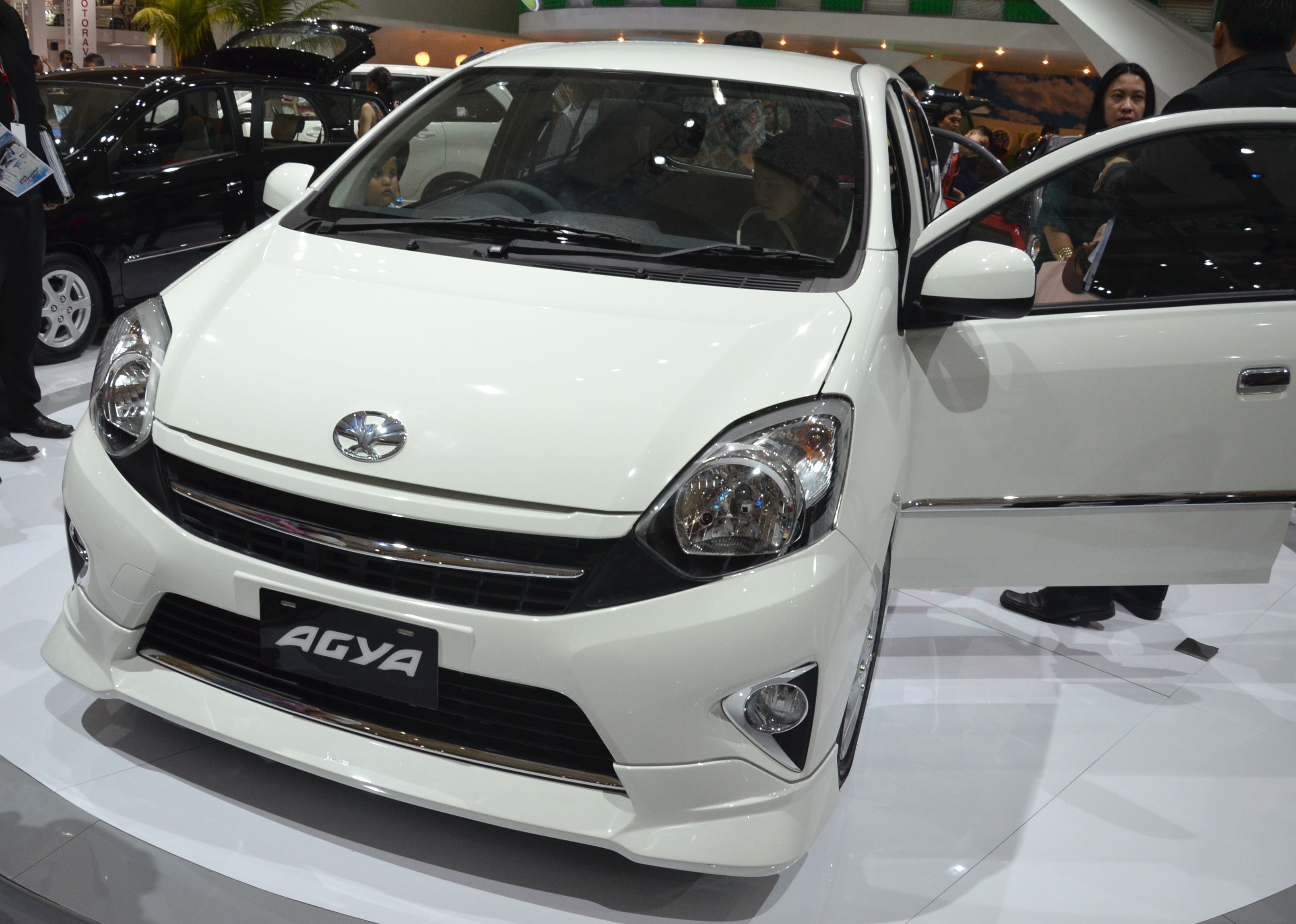
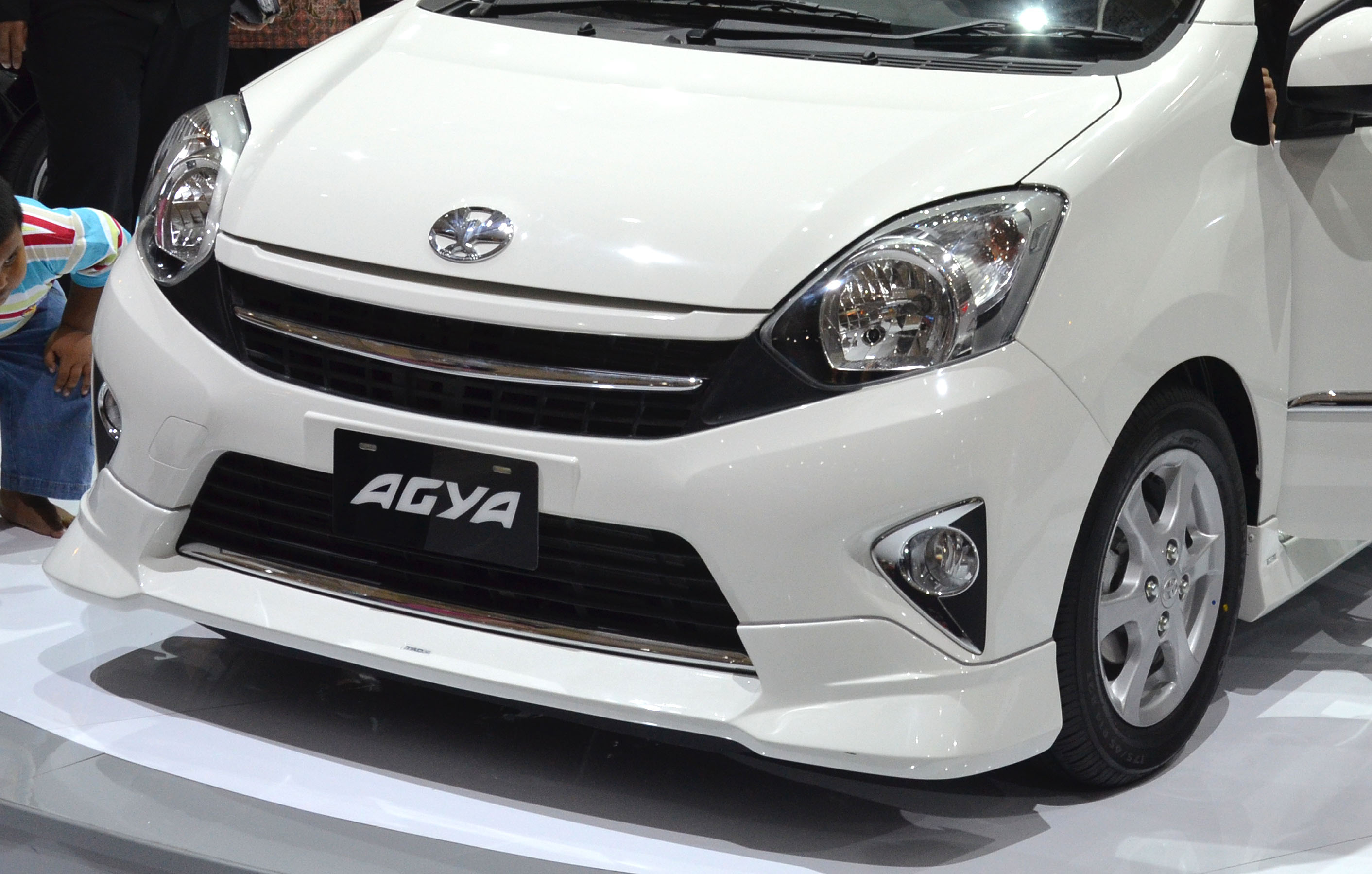
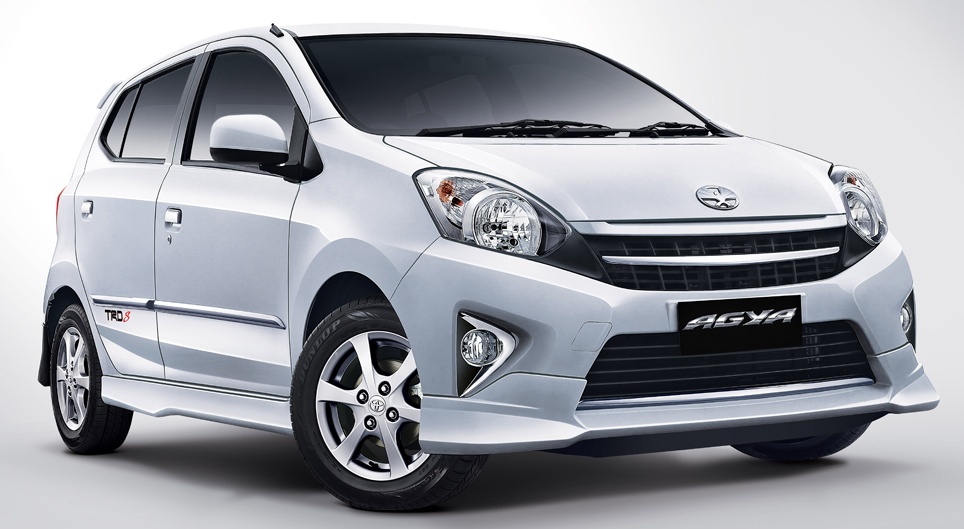
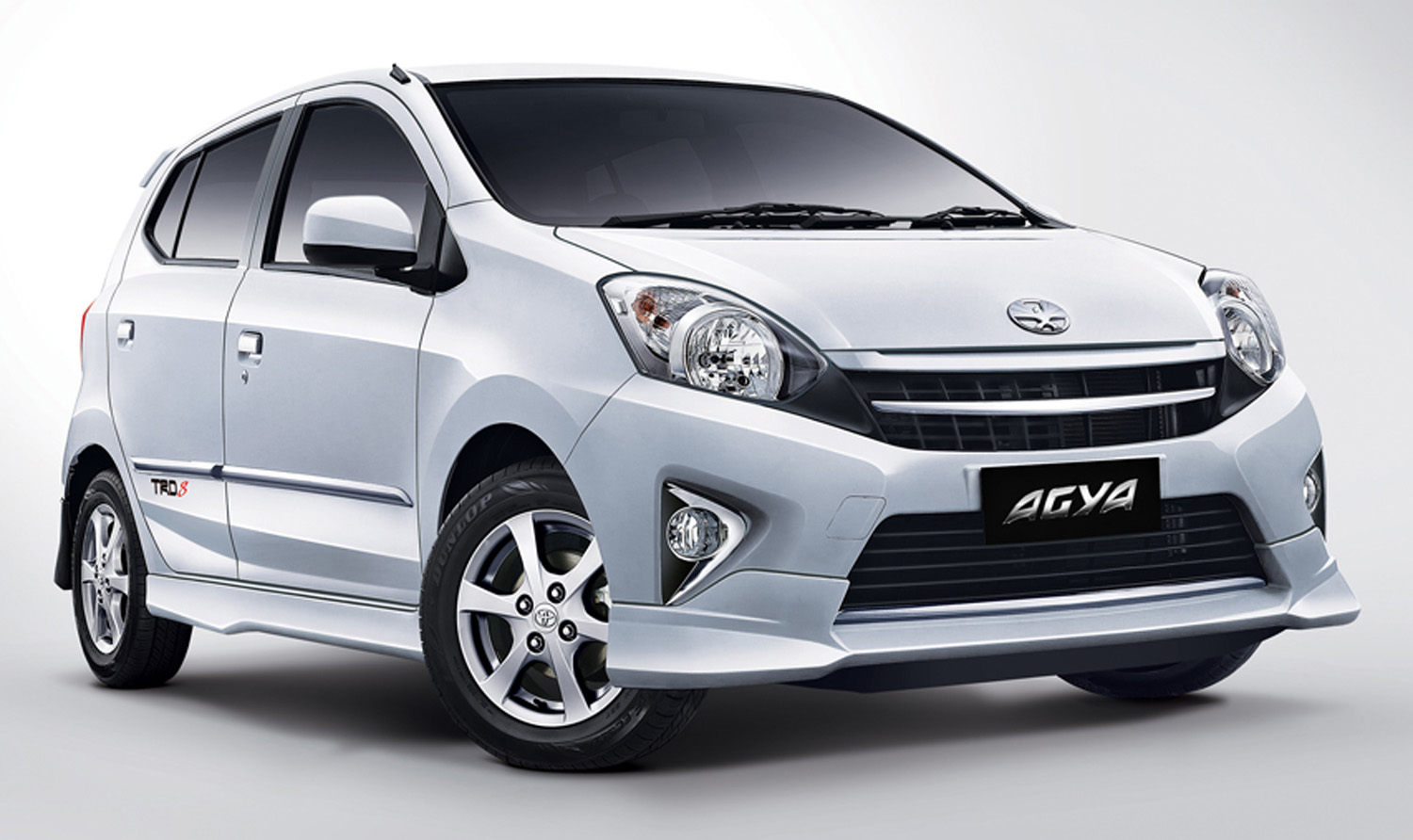
Toyota has finally launched its Agya compact car in Indonesia, almost a year after the five-door hatchback and its eco-car twin, the Daihatsu Ayla, premiered at the 2012 Indonesian International Motor Show. Similarly, Daihatsu announced the market debut of the Ayla.
Both cars were originally supposed to have begun selling in the country last December, following the completion of the new plant that would build them, but their market introduction was put on hold as the companies waited for the Indonesian government to announce support measures for its Low-Cost Green Cars (LCGC) programme.
Programme requirements for LCGC compliance include an engine capacity of below 1,200 cc and a minimum fuel consumption of 20-22 km per litre. Certified vehicles are eligible for reduced taxes, and the Agya and Ayla are the first vehicles to receive certification under the programme. Honda’s introduction of a 1.2 litre version of its Brio is likewise for LCGC certification purposes.
The Agya and Ayla are powered by a 997cc three-cylinder engine, coded the 1KR-FE for the Agya and D26F-1KR-DE for the Ayla. The aluminium-block unit, which weighs 69 kg, is good for 65 hp at 6,000 rpm and 87 Nm of twist at 3,600 rpm. Not copious by any means, the output, but the car is light, tipping the scales at 740 kg. Drivetrain choices are a five-speed manual and a four-speed auto.
The sales price for the Agya – the name of which is from the Sanskrit word meaning “fast” – will range from 99 million rupiah (RM29,008) to 120 million rupiah (RM35,163). Toyota is aiming for a monthly sales target of 5,000 units for the car in 2013.




Looking to sell your car? Sell it with Carro.
 Toyota Yaris Cross
from RM99,900
Toyota Yaris Cross
from RM99,900  Toyota Hilux
from RM226,300
Toyota Hilux
from RM226,300  Toyota Urban Cruiser
from RM198,000
Toyota Urban Cruiser
from RM198,000  Toyota bZ4X
from RM220,000
Toyota bZ4X
from RM220,000  Toyota GR Yaris
from RM315,600
Toyota GR Yaris
from RM315,600  Toyota GR Corolla
from RM368,950
Toyota GR Corolla
from RM368,950  Toyota Camry
from RM221,800
Toyota Camry
from RM221,800  Toyota Corolla Cross
from RM133,800
Toyota Corolla Cross
from RM133,800  Toyota Hiace
from RM169,000
Toyota Hiace
from RM169,000 
 nabill
on
nabill
on 

 kadajawa
on
kadajawa
on  kzm
on
kzm
on  redsupra
on
redsupra
on  Green
on
Green
on  bukapintubayartol
on
bukapintubayartol
on  drchan
on
drchan
on  pai
on
pai
on  Tatababai
on
Tatababai
on  Ben
on
Ben
on  halim
on
halim
on  timber8115
on
timber8115
on  toyox
on
toyox
on  Jimmy
on
Jimmy
on  brian
on
brian
on  Name
on
Name
on  2021
on
2021
on  do'oh
on
do'oh
on  CS
on
CS
on  OMG
on
OMG
on  hondaman
on
hondaman
on  tokmoh
on
tokmoh
on  ilsan
on
ilsan
on  walaweh
on
walaweh
on  omf
on
omf
on  emc2
on
emc2
on  lozer
on
lozer
on  Denaihati
on
Denaihati
on  magpie
on
magpie
on  Juan
on
Juan
on  r888
on
r888
on  Indo
on
Indo
on  usmat
on
usmat
on  Die Maker
on
Die Maker
on  nzain
on
nzain
on  King Khong
on
King Khong
on  Shin
on
Shin
on  Babi Negara
on
Babi Negara
on  Love Malaysia
on
Love Malaysia
on  tongK
on
tongK
on  junaidi juned
on
junaidi juned
on
AI-generated Summary ✨
Comments express interest in the Toyota Agya's affordable pricing and fuel efficiency, especially compared to larger or imported vehicles. Some concerns are raised about safety, quality, and warranty of non-OEM parts. There’s speculation about local manufacturing and potential replacement by Perodua models. Several commenters criticize high taxes and prices in Malaysia, advocating for more government support for affordable, fuel-efficient cars. Overall, the tone is mixed but leans toward enthusiasm for the vehicle’s value and practicality.