
Charging your electric car at home might get more expensive soon if the government’s electricity subsidy scheme is revised.
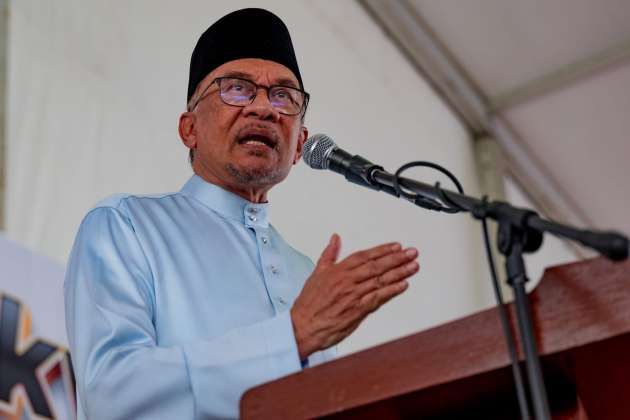
According to MKini reporting from the National Economic Action Council (NEAC) meeting press conference earlier today, PM Anwar Ibrahim said households with “excessive” power consumption will no longer enjoy electricity subsidies.
The PM did not go into specifics at what level of kWh usage per month is power consumption deemed to be excessive, but he gave an example of three fans and four air conditioners running at the same time.
If your household happens to be categorised as not qualifying for electricity subsidies anymore, you could see your per kWh cost rise from RM0.571 per kWh up to RM0.841 per kWh.
The difference of RM0.27 per kWh is the ICPT cost that the government has decided to subsidise for the period of January to June 2023.
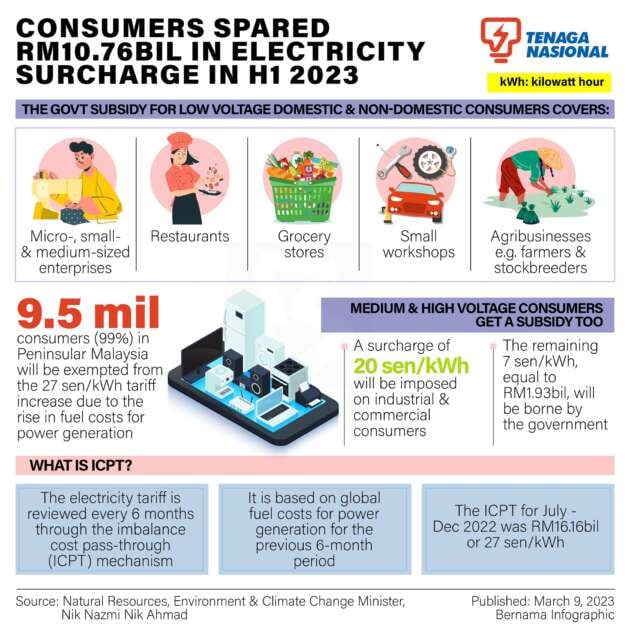
ICPT is basically a mechanism to review the electricity tariff every six months to take into account fluctuating fuel pricing, which contributes to 65% of the cost component of the electricity tariff.
It is revised every six months based on the six months period before it. Based on actual fuel costs from July 2022 to December 2022, the ICPT for January 2023 to June 2023 has been determined to be a 27 sen surcharge. The ICPT rate will be calculated again for the July 2023 to December 2023 period.
Subsidising this 27 sen surcharge for domestic users is expected to cost RM10.76 billion for this six month period of January to June 2023.
We previously calculated who gets more subsidies – does an ICE car user get more fuel subsidies or does an EV car user get more electricity subsidies?
Looking to sell your car? Sell it with Carro.

 todak
on
todak
on 

 call me by your name
on
call me by your name
on  Civic Turbo 2018
on
Civic Turbo 2018
on  driver
on
driver
on  Elon the Musketeer
on
Elon the Musketeer
on  Lotpi
on
Lotpi
on  2 cents opinion
on
2 cents opinion
on  i see you're a man of culture too
on
i see you're a man of culture too
on  driver
on
driver
on  Gary
on
Gary
on  ioma
on
ioma
on  4GR-FSE
on
4GR-FSE
on  Poor Man
on
Poor Man
on  Eric
on
Eric
on  QuackMcGuffin
on
QuackMcGuffin
on  roastmah gemok
on
roastmah gemok
on  YouPandai
on
YouPandai
on  Janji dicapati
on
Janji dicapati
on  Independent Malaysian
on
Independent Malaysian
on  ceramah PAS
on
ceramah PAS
on  jinggo
on
jinggo
on  Golfer
on
Golfer
on  Sohai
on
Sohai
on  James Pos
on
James Pos
on  Nasi Lemak
on
Nasi Lemak
on  Jacx
on
Jacx
on  Aaas
on
Aaas
on  Right?
on
Right?
on  Bob Mal
on
Bob Mal
on  Joe
on
Joe
on  Mat U
on
Mat U
on  X y F
on
X y F
on  Carpro
on
Carpro
on  Ben Yap
on
Ben Yap
on  mamakthir
on
mamakthir
on  Bieight8
on
Bieight8
on  syd
on
syd
on  Maybe
on
Maybe
on  true sam brown
on
true sam brown
on  lim
on
lim
on  Lai yew beng
on
Lai yew beng
on  RichMalaysian
on
RichMalaysian
on  sohai
on
sohai
on  Yeahsure
on
Yeahsure
on  Fauzi
on
Fauzi
on  WMD
on
WMD
on  Joshua Silbarajoo
on
Joshua Silbarajoo
on  ROTI CANAI
on
ROTI CANAI
on  Roti Prata
on
Roti Prata
on  ROTI CANAI
on
ROTI CANAI
on  Gomorrah
on
Gomorrah
on  Iz
on
Iz
on  mamathir
on
mamathir
on  jomkayuh
on
jomkayuh
on  rosmah gemok
on
rosmah gemok
on  Bumiputera sebenar Kadazan
on
Bumiputera sebenar Kadazan
on  Autodriver
on
Autodriver
on  Mamak man
on
Mamak man
on  starbaku custemer
on
starbaku custemer
on  Thiva
on
Thiva
on  donovan
on
donovan
on  kathirica
on
kathirica
on  joker404
on
joker404
on  Ativa Hybrid
on
Ativa Hybrid
on  Ghost in a car
on
Ghost in a car
on  Maksiat Madani
on
Maksiat Madani
on  Hartini Devi
on
Hartini Devi
on  ahbeng
on
ahbeng
on  Ghost in a car
on
Ghost in a car
on  confuse
on
confuse
on  Paul Tan
on
Paul Tan
on  look again
on
look again
on  fixit ralph
on
fixit ralph
on  Adam Malek
on
Adam Malek
on  dompet ringan
on
dompet ringan
on  maDani
on
maDani
on  Betterpearson
on
Betterpearson
on  John phoon
on
John phoon
on  Dean
on
Dean
on 


AI-generated Summary ✨
Comments express concerns that increased electricity rates from 57.1 to potentially 84.1 sen per kWh will burden EV owners and households, especially with comparisons to international tariffs. Many skepticism about the actual environmental benefits of EVs, noting reliance on fossil fuels and battery production impacts. Some criticize the government’s policies, subsidy withdrawals, and the higher costs for the privileged, while a few see the move as a necessary transition or lament the infrastructure and affordability hurdles. Overall, sentiments are mixed, leaning toward apprehension over rising costs and efficacy.