
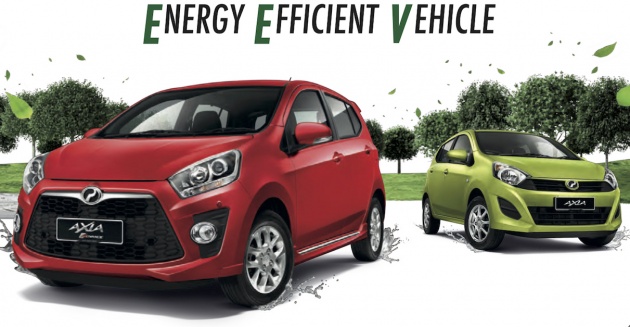
The Malaysia Automotive Institute (MAI) targets the production of Energy Efficient Vehicles (EEV) to be ramped up to as much as 85% of total production in Malaysia by the year 2020, according to News Straits Times. Its CEO Madani Sahari said that the target is within reach, as the industry is already expected to reach MAI’s 40% target by the end of this year.
Madani added that a local company has shown interest in producing EEVs. “There will be EEV production and testing centre set up in Glenmarie that would be carried out by a local company with joint ventures with other foreign companies,” he said. “Malaysia will be the first country in the region to produce such vehicles that were underlined under the NAP (National Automotive Policy) 2014 strategy.”
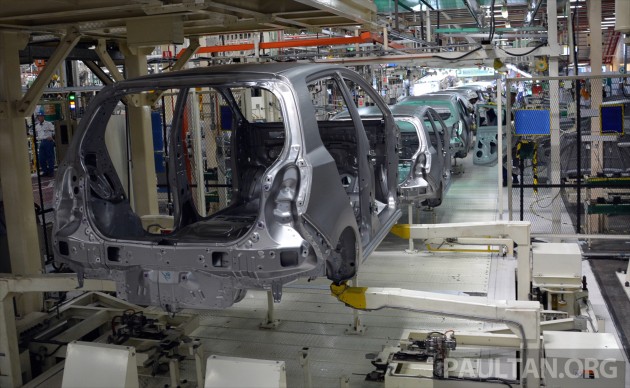
Also mentioned is a new National Automotive Roadmap 2050 which will be presented to the government soon – this would include plans for the future of automotive driving.
“The current NAP roadmap is only for up to 2030, and we came up with a new roadmap that would be inclusive for the automotive sector until 2050,” Madani said. “Although the technologies are fast evolving for the automotive industry, our regulations and enforcement have yet to follow suit and this would also be contained in the new framework.”

 Madani
on
Madani
on 

 Albert
on
Albert
on  john
on
john
on  john
on
john
on  George Abdul
on
George Abdul
on  Md Shamsul Akhbar
on
Md Shamsul Akhbar
on  PRU13
on
PRU13
on  AVH
on
AVH
on  Nonsense Logic
on
Nonsense Logic
on  LittleMin
on
LittleMin
on  fg
on
fg
on  Lockhart
on
Lockhart
on  applegreen
on
applegreen
on  ali
on
ali
on  tokmoh.
on
tokmoh.
on  Betol Tak??
on
Betol Tak??
on  Operation Manager
on
Operation Manager
on  AutoFrenz (the original)
on
AutoFrenz (the original)
on  civis
on
civis
on  Sgt Scoop
on
Sgt Scoop
on  Mikey
on
Mikey
on  Ex VGM staff
on
Ex VGM staff
on  Same L00
on
Same L00
on  fatalairbags
on
fatalairbags
on  Anything But P1, Greedy P2, Toyota Nirvana
on
Anything But P1, Greedy P2, Toyota Nirvana
on  kzm (Member)
on
kzm (Member)
on  jc
on
jc
on  Hooman
on
Hooman
on  deeppocket
on
deeppocket
on  John Travolta
on
John Travolta
on  gt4
on
gt4
on  Ben
on
Ben
on  old horse
on
old horse
on  personaq
on
personaq
on  Vamp00
on
Vamp00
on  Ollie
on
Ollie
on  Thai bro
on
Thai bro
on  carguy
on
carguy
on  Rajib
on
Rajib
on
AI-generated Summary ✨
Comments express skepticism about the EEV program, questioning its actual impact on car prices and fuel efficiency, highlighting that many cars already qualify despite questionable criteria. Some mention that EEV incentives have not led to significant price reductions and that the program is overshadowed by high taxes and AP system issues. Others note that local manufacturers and luxury vehicles might unfairly benefit, while many feel the policy is ineffective in making vehicles more affordable or environmentally friendly.