
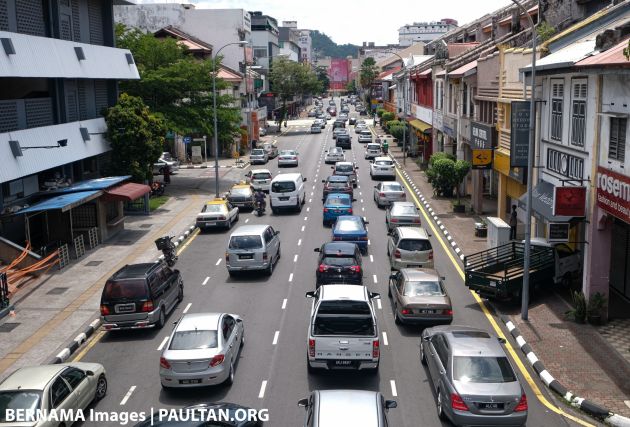
What’s the best way to reduce traffic congestion and boost public transport usage? A surcharge for single or low-occupancy vehicles entering KL city is one of the ways to do so, says Universiti Putra Malaysia road safety research centre head Assoc Prof Dr Law Teik Hwa.
He said some six million vehicles enter KL daily and at least 2.2 million do so during peak hours, as compiled in a study carried out in April and conducted using the Automatic Real-time Incident Detection System. ARIDS is powered by artificial intelligence that uses social media apps and Google traffic data to detect incidents that impact traffic speed, such as accidents and vehicle breakdowns.
“Among the busiest roads are Jalan Sungai Besi, Jalan Kuching, Jalan Sultan Azlan Shah, Jalan Klang Lama, Jalan Kuchai Lama, Jalan Cheras, Jalan Tarawih, Jalan Damansara and the Duke, Salak and KL-Seremban highways. Based on DBKL findings, motorists in the Klang Valley spend about RM6.8 billion annually on petrol while stuck in traffic during their daily commute to and from work. Efforts should be made to reduce this burden,” he said, reported by The Sun.
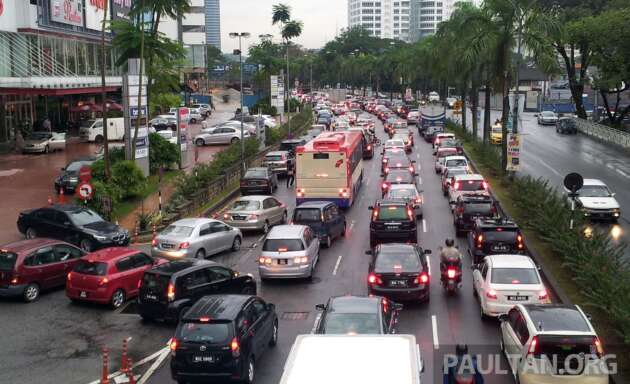
The obvious answer is public transport, which are involved in fewer accidents per passenger mile compared with private cars and contribute to safer streets by reducing the number of vehicles on the road and promoting pedestrian friendly spaces, Law said.
But with commuters stubbornly sticking to their cars, other methods to control vehicle numbers should be enforced, and Law suggested surcharges in several forms, including ‘Variable Charging Based on Occupancy’, which varies based on the number of passengers in vehicles. “Higher charges apply to vehicles with fewer passengers, with rates decreasing as vehicle occupancy increases. This would encourage carpooling and reduce single-occupancy vehicle trips,” he said.
Meanwhile, ‘Time of Day Pricing’ levies higher charges during peak hours when congestion is typically worse. If motorists avoid peak hours, it would help spread out traffic flow. ‘Integration with Public Transport’ offers incentives or exemptions for vehicles that integrate with public transport networks, such as park-and-ride facilities or preferential access to designated lanes for buses and carpools.
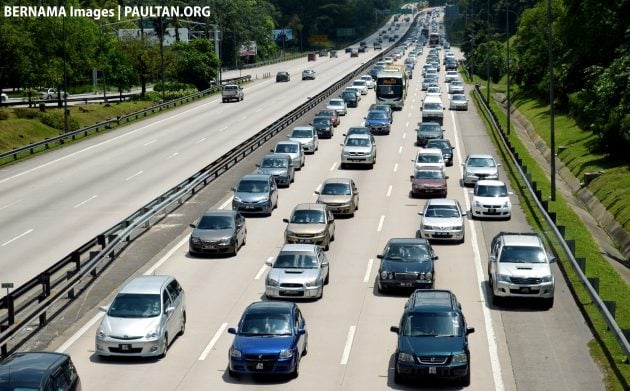
The most complex suggestion is ‘Dynamic Adjustment’, which adjusts charges based on real-time traffic conditions and congestion levels.
“Authorities could implement the methods after a study to ascertain which would be most effective. Considering the majority of Malaysians rely on private vehicles and nearly 90% of daily road users commute alone, discouraging private vehicle usage would contribute to better traffic conditions,” the academic said.
Is traffic jam solely the fault of motorists? Aside from the high number of cars, Law said that traffic management issues such as inefficient traffic light systems and timing, poor traffic flow management and a lack of synchronised traffic signals are among the main reasons for congestion.

 azah
on
azah
on 

 Lets See
on
Lets See
on  KL Commuter
on
KL Commuter
on  Road safety research head university pangsai maresya
on
Road safety research head university pangsai maresya
on  Penguin
on
Penguin
on  coy minisinster
on
coy minisinster
on  Sick & Tired
on
Sick & Tired
on  ioma
on
ioma
on  syd
on
syd
on  stranger
on
stranger
on  Autodriver
on
Autodriver
on  Mike Tee
on
Mike Tee
on  Laugh
on
Laugh
on  Dumdeedum
on
Dumdeedum
on  Goh Michael
on
Goh Michael
on  Fireant
on
Fireant
on  Memantau...the magic excuse phrase
on
Memantau...the magic excuse phrase
on  ROTI CANAI
on
ROTI CANAI
on  Raja Kamarul
on
Raja Kamarul
on  Gomorrah
on
Gomorrah
on  Adel Wise
on
Adel Wise
on  anwar menang, rakyat dikencingkan
on
anwar menang, rakyat dikencingkan
on  Tan
on
Tan
on  FireAce
on
FireAce
on  Mior
on
Mior
on  TripleY21
on
TripleY21
on  Jake
on
Jake
on  Azmi
on
Azmi
on  AK
on
AK
on  Steven
on
Steven
on  4G63T DSM
on
4G63T DSM
on  stella
on
stella
on  KY Leong
on
KY Leong
on  Fixie
on
Fixie
on  Kang bin King
on
Kang bin King
on  Law teik hwa
on
Law teik hwa
on  Meng
on
Meng
on  Aziz
on
Aziz
on
AI-generated Summary ✨
Comments express mixed opinions on the proposed surcharge for low-occupancy vehicles, with many criticizing it as unfair, ineffective, or expensive, especially for those with no viable public transport alternatives. Several highlight persistent issues like poor city planning, inadequate public transport infrastructure, and traffic congestion caused by urban sprawl. Some suggest solutions such as better city planning, improved public transit, flexible work hours, WFH options, and congestion charges like Singapore's ERP, but overall, there is skepticism about the effectiveness of car surcharge policies.