
Verdict
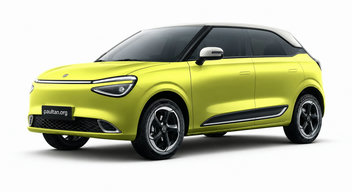
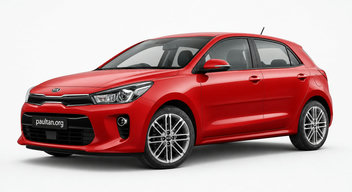
These B-segment hatchbacks take markedly different routes. The RM100,000 Dongfeng Box costs RM24,619 more, but brings a 94 hp/160 Nm motor, 42.3 kWh battery and claimed 430 km range, plus 70 kW DC charging. It is also 85 mm wider and rides on a 80 mm longer wheelbase, while boot space is effectively tied at 326 versus 325 litres. The Kia Rio’s 99 hp, 133 Nm 1.4-litre petrol engine and 45-litre tank suit buyers who want conventional refuelling, but its stronger airbag count and split rear seat remain meaningful advantages.
Pick the Dongfeng Box if you can charge regularly and want 430 km claimed EV range, ADAS and substantially more cabin width.
Pick the Kia Rio if you prefer petrol refuelling, need six airbags and value a 60:40 split-folding rear seat for RM24,619 less.
Key differences
- Price: Dongfeng Box RM100,000; Kia Rio RM75,381.
- Powertrain: Dongfeng Box 94 hp/160 Nm electric motor and 42.3 kWh battery; Kia Rio 99 hp/133 Nm 1,368 cc petrol engine.
- Range or fuel storage: Dongfeng Box 430 km claimed EV range; Kia Rio 45-litre petrol tank.
- Dimensions: Dongfeng Box 4,030 mm long, 1,810 mm wide and 2,660 mm wheelbase; Kia Rio 4,065 mm, 1,725 mm and 2,580 mm.
- Safety equipment: Dongfeng Box has two airbags and autonomous braking; Kia Rio has six airbags but no autonomous braking.
- Rear-seat practicality: Dongfeng Box has a one-piece folding rear seat; Kia Rio has a 60:40 split-folding rear seat.
Box
- 430 km claimed range from a 42.3 kWh battery
- 70 kW DC charging and 3.6 kW V2L
- Autonomous braking, lane-keeping assist and adaptive cruise control
- Two airbags versus the Rio’s six
- One-piece rear-seat folding versus the Rio’s 60:40 split
- No front foglamps, auto wipers or steering reach adjustment
Rio
- Six airbags, including front side and front/rear curtain airbags
- 60:40 split-folding rear seats
- Front foglamps, auto wipers and telescopic steering adjustment
- No autonomous braking, lane-keeping assist or adaptive cruise control
- Smaller 2,580 mm wheelbase and 1,725 mm width
- No EV range, DC charging or V2L capability
| Price & overview | ||
|---|---|---|
| Price | RM100,000 | RM75,381✓ |
| Body type | Hatchback | Hatchback |
| Segment | B-Segment | B-Segment |
| Assembly | CBU | CKD |
| Ownership | ||
| Road tax / year | RM50✓ | RM70 |
| Powertrain | ||
| Engine Tech | 400V architecture | 16-Valve DOHC, Naturally Aspirated with Variable Valve Timing |
| Capacity | — | 1,368 cc |
| Horsepower | — | 99 hp |
| Torque | — | 133 Nm |
| Fuel | Electric | Petrol |
| Bore | — | 72 mm |
| Compression Ratio | — | 10.5 |
| Number of Motors | 1 | — |
| Motor Horsepower | 94 hp✓ | — |
| Motor Torque | 160 Nm✓ | — |
| Battery Capacity | 42.3 kWh | — |
| EV Range | 430 km✓ | — |
| Charging Rate (AC) | 6.6 kW | — |
| Charging Rate (DC) | 70 kW | — |
| V2L | 3.6 kW | — |
| Drivetrain | ||
| Transmission | Single Ratio Automatic | Conventional Automatic |
| Transmission Name | — | 4-Speed Automatic |
| Gears | — | 4 |
| Transmission Manufacturer | — | Hyundai |
| Driveline | Front Wheel Drive | Front Wheel Drive |
| Performance & Efficiency | ||
| Top Speed | 140 km/h✓ | — |
| Dimensions | ||
| Length | 4,030 mm | 4,065 mm |
| Width | 1,810 mm | 1,725 mm |
| Height | 1,570 mm | 1,460 mm |
| Wheelbase | 2,660 mm | 2,580 mm |
| Weight | 1,342 kg | 1,162 kg |
| Fuel Tank | — | 45 litres |
| Doors | 5 | 5 |
| Seats | 5 | 5 |
| Boot Space | 326 litres✓ | 325 litres |
| Front Tyre | 215/55R17 | 205/45R17 |
| Rear Tyre | 215/55R17 | 205/45R17 |
| Spare Tyre | Tyre Repair Kit | Space Saver |
| Factory Tyres | Wanli Harmonic Plus | Continental ContiSportContact 5 |
| Chassis | ||
| Assembly | China (CBU) | Malaysia (CKD) |
| Front Suspension | MacPherson Struts | MacPherson Strut |
| Rear Suspension | Torsion Beam | Torsion Beam |
| Front Wheels | 17" Alloys | 17" Alloy |
| Rear Wheels | 17" Alloys | 17" Alloy |
| Steering | Rack and Pinion (Electric Power Steering) | Rack and Pinion (Electric Power Steering) |
| Safety | ||
| Airbags | Driver and Front Passenger | Driver and Passenger, Front Side, Front and Rear Curtain |
| ABS/EBD | ✓ | ✓ |
| Stability Control | ✓ | ✓ |
| Alarm | — | ✓ |
| Immobilizer | — | ✓ |
| Airbag Disable Function | — | ✓ |
| Child Safety Lock | Manual For Rear Doors | Manual for rear doors |
| Seat Belts | 5 Three-point | 5 Three-point |
| ISOFIX | Available On Outer Two Rear Seats | Available for two outer rear passenger seats |
| Autonomous Braking System | Yes | — |
| Lane-keeping Assist | Steering Correction | No |
| Collision Warning | ✓ | — |
| Seatbelt Reminder | All Seats | Front Seats Only |
| Lighting | ||
| Headlamps | LED Projectors | Halogen Projector |
| Taillamps | LED Combination | LED Combination |
| LED Daytime Running Lights | ✓ | ✓ |
| Front Foglamps | — | ✓ |
| Rear Foglamps | ✓ | ✓ |
| Wing Mirror Turn Indicators | ✓ | ✓ |
| Cabin | ||
| Front Seats | Manual Adjustable | Manual Adjustable |
| Rear Seats | One-piece Folding | 60:40 Split-folding |
| Front Air-con | Single-zone Automatic Climate Control | Single-zone Automatic Climate Control System |
| Sunroof | — | Front, Tilt and Slide |
| Power Sockets | 1 Front, 1 USB | 1 Front |
| Interior Lighting | Map Lights and Ambient Lighting | Map Lights and Ambient Lights |
| Cup Holders | 2 Front | 2 Front |
| Audio | 12.8" Touchscreen | 5" Floating Screen with 6 Speakers |
| Convenience | ||
| Power Windows | Four Windows, Auto Up & Down | Four Windows, Driver Side Auto Up and Down with Anti-Pinch |
| Engine Start | Keyless Start (Depress Brake Pedal) | Keyless Push Button |
| Locks | Keyless Operation | Keyless Operation |
| Auto Headlamps | ✓ | ✓ |
| Auto Wipers | — | ✓ |
| Cruise Control | Adaptive Cruise Control | — |
| Steering Audio Control | ✓ | ✓ |
| Steering Tilt | ✓ | ✓ |
| Steering Telescopic | — | ✓ |
| Boot Operation | Remote Control Activation | Remote Control Activation |
| Parking Sensor Front | 6 Sensors | — |
| Parking Sensor Rear | 6 Sensors | 2 Sensors |
| Reverse Camera | Yes, 360-degree Surround View | Yes |
| Auto Parking | Yes | — |
| Folding Wing Mirrors | ✓ | ✓ |
| Bluetooth | ✓ | ✓ |
| Hill Start Assist | ✓ | ✓ |
| Instrument Cluster | Full LCD Monitor | Electroluminescent Analogue |
| Parking Brake | Electronic | Handbrake |
| Warranty | ||
| Warranty Mileage Manufacturer | Unlimited | Unlimited |
| Warranty Manufacturer | 7 years✓ | 5 years |
| Warranty Notes | Limited to the first owner only; 8-year/unlimited mileage battery warranty | — |
Specs shown for the selected variant of each car. ✓ marks the better figure where lower/higher is objectively better. Road tax: West Malaysia, private registration.
Used Box & Rio for sale
Box vs Rio FAQ
Is the Dongfeng Box or Kia Rio better?
The Dongfeng Box is the better-equipped choice for home or workplace charging, with 430 km claimed range, ADAS and a wider body. Choose the Kia Rio for petrol convenience, six airbags and its more flexible 60:40 rear seat.
What is the price difference?
The Dongfeng Box costs RM24,619 more than the Kia Rio. That gap buys a 42.3 kWh EV battery, 70 kW DC charging, V2L, autonomous braking, lane-keeping assist and adaptive cruise control.
Which car has the better safety equipment?
The Kia Rio has six airbags to the Dongfeng Box’s two. The Box counters with autonomous braking, collision warning and steering-correction lane-keeping assist, which the Rio does not have.