

Honda City Hatchback
Launched
RM112,900
75 hybrids on sale · from RM99,800 to RM2,238,888
Every hybrid and plug-in hybrid on sale in Malaysia: prices, EV-only range and what actually separates a full hybrid from a plug-in. The guide below answers the questions Malaysian buyers ask most — whether hybrids need charging, what they really save, and how their road tax is calculated.
A proven full hybrid that needs no charger, sips fuel in traffic and holds its value the Toyota way.
Picks update automatically with prices, registrations and market data.
Cheapest hybrids
Cheapest plug-in hybrids
Longest EV-only range (PHEV)
Launched
RM112,900

Launched
RM111,900
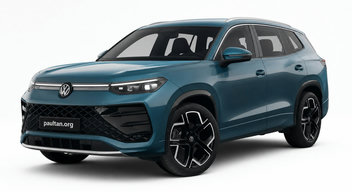
Launched
RM190,660
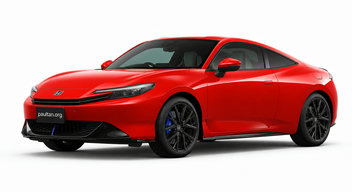
Launched
RM278,000

Launched
RM1,540,000–RM1,715,000
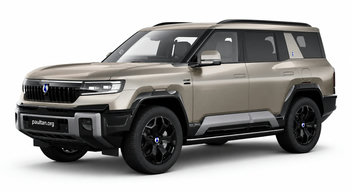
Launched
RM459,939–RM519,939
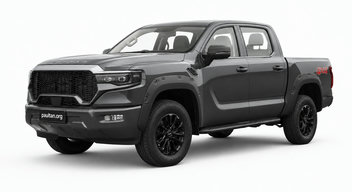
Launched
RM123,800–RM143,800
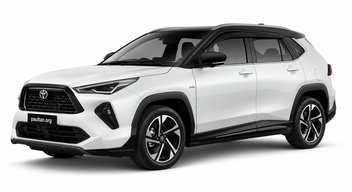
Launched
RM109,900
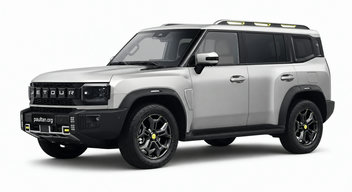
Launched
RM162,800
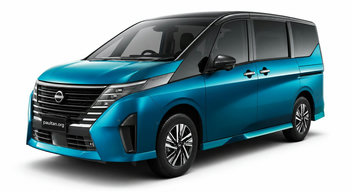
Launched
RM154,800–RM179,800
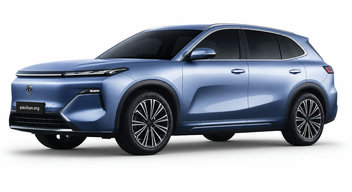
Launched
RM109,800–RM129,800
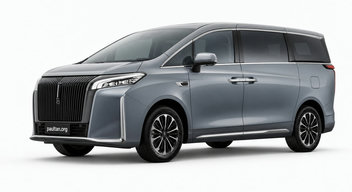
Launched
RM249,800–RM269,800
Three broad kinds. A full hybrid (HEV, like most Toyota and Honda hybrids) drives short distances on electric power and recharges itself — you never plug it in. A mild hybrid (MHEV) uses a small motor to assist the engine and smooth the stop-start system; it cannot drive on electricity alone. A plug-in hybrid (PHEV) carries a much bigger battery you charge from a socket, giving a usable electric-only range before the petrol engine takes over. This site labels each variant's type on its spec sheet.
Only a plug-in hybrid. Full and mild hybrids recharge their small batteries from the engine and from braking — there is no charging port, nothing to install at home, and no change to how you refuel. That self-sufficiency is exactly why full hybrids suit buyers who want lower fuel bills without thinking about chargers.
It keeps driving — the car simply behaves like a normal full hybrid, using the engine plus whatever charge regenerative braking recovers. You never get stranded by an empty PHEV battery. The catch is economy: an uncharged PHEV is usually thirstier than an equivalent full hybrid, because it hauls a heavy battery it is not using. A PHEV only makes financial sense if you can charge it regularly.
It depends on where you drive. Hybrids shine in stop-go traffic — braking energy is recovered and the engine shuts off when idling or crawling, which is why city fuel savings of 30–50% over a comparable petrol car are realistic in KL traffic. On a steady highway cruise the electric side contributes little, so savings shrink to roughly 10–20%. A PHEV charged daily and driven mostly within its electric range can use almost no petrol at all.
By engine capacity (cc), exactly like a petrol car — the electric motor is not counted. That applies to plug-in hybrids too: a PHEV with a 1.5-litre engine pays 1.5-litre road tax however big its battery is. Only full EVs use the kW-based schedule. Every variant page on this site shows that car's computed annual road tax.
Most brands in Malaysia warrant the hybrid battery separately from the car, commonly 8 years or 160,000 km — some offer extensions tied to inspections. Hybrid batteries are far smaller than EV batteries and are buffered to avoid deep charge cycles, which is why gradual capacity loss rarely troubles a first or second owner. The Warranty section of every variant spec sheet lists what each model carries.
Usually not — most PHEVs sold in Malaysia charge on AC only, and their batteries are small enough that this hardly matters: a typical PHEV pack fills overnight on a 3-pin socket, or in a few hours on a home wallbox. A handful of newer, larger-battery PHEVs do accept DC fast charging — where a variant supports it, the charging rates appear on its spec sheet here.
Start with one question: can you charge at home or at work? If you cannot, a full hybrid is the honest answer — big city fuel savings, zero charging dependence. If you can charge daily and want a safety net for long trips or balik kampung runs, a PHEV covers the daily commute on electricity with petrol in reserve. If you can charge reliably and your long-distance pattern suits the range, a full EV is the cheapest of all to run — compare running costs on each model page on this site.


