
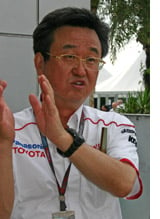
 Toyota will not be returning to Formula 1, saying that the pinnacle of motor racing is out of touch with its customer base. The Japanese automaker pulled out of F1 last year after seven years in the sport. Racing events that allow closer connection with the fans, such as Nascar in the US and the Nurburgring 24-hour endurance race in Germany are the new priorities, revealed Toyota’s racing program head and ex F1-team boss Tadashi Yamashina.
New president Akio Toyoda, who assumed the role in June 2009, is the main influence behind this change of thinking. Throw in the company’s worst financial showing in 70 years and the F1 pull out was inevitable. But it wasn’t the sole reason, as many believe. “It might not have been so abrupt, but it would have happened,” Yamashina said of the pull out. “President Toyoda’s stance on motor sports is geared more toward the customer. There is a big gap between Formula 1 and Toyota’s actual car users.” Calling F1 too “elitist”, Yamashina pointed out that the Nurburgring race, for instance, allowed fans to get into the pit lane, mingle with the teams and even touch the cars. In F1, you’ve got to be either rich, famous, well connected (or a combination of the above) to stroll the paddock!
Looking to sell your car? Sell it with Carro.
 Toyota Yaris Cross
from RM99,900
Toyota Yaris Cross
from RM99,900  Toyota Hilux
from RM226,300
Toyota Hilux
from RM226,300  Toyota Urban Cruiser
from RM198,000
Toyota Urban Cruiser
from RM198,000  Toyota bZ4X
from RM220,000
Toyota bZ4X
from RM220,000  Toyota GR Yaris
from RM315,600
Toyota GR Yaris
from RM315,600  Toyota GR Corolla
from RM368,950
Toyota GR Corolla
from RM368,950  Toyota Camry
from RM221,800
Toyota Camry
from RM221,800  Toyota Corolla Cross
from RM133,800
Toyota Corolla Cross
from RM133,800  Toyota Hiace
from RM169,000
Toyota Hiace
from RM169,000 
 ben
on
ben
on 

 Gump
on
Gump
on  pomen_GTR (Member)
on
pomen_GTR (Member)
on  BMW M-Problem
on
BMW M-Problem
on  darren
on
darren
on  MyCarMyLife
on
MyCarMyLife
on  dzat
on
dzat
on  rexis
on
rexis
on  narmia
on
narmia
on  turtlebusiness
on
turtlebusiness
on  Mona
on
Mona
on  Moneyless
on
Moneyless
on  frossonice
on
frossonice
on  Ryan
on
Ryan
on  1Malaysia
on
1Malaysia
on  bmpower
on
bmpower
on  rost
on
rost
on  BMALOI
on
BMALOI
on  mitlanevo
on
mitlanevo
on  Jaybond
on
Jaybond
on  beatnik
on
beatnik
on  KZM
on
KZM
on  bolo
on
bolo
on  boloq
on
boloq
on  king
on
king
on  trav_da_man
on
trav_da_man
on  leng chai
on
leng chai
on  likehondanotsomuch
on
likehondanotsomuch
on  mystvearn
on
mystvearn
on  Squawk
on
Squawk
on  scgtimk1
on
scgtimk1
on  epul
on
epul
on  MRL
on
MRL
on  bobdbilder
on
bobdbilder
on  laser
on
laser
on  Najibest
on
Najibest
on  scanzew
on
scanzew
on  Richie Rich
on
Richie Rich
on  tbo
on
tbo
on  callenish
on
callenish
on  blacky
on
blacky
on  tokmoh
on
tokmoh
on  Peter
on
Peter
on  wallstreet
on
wallstreet
on  nighttrain
on
nighttrain
on  Sexythang
on
Sexythang
on  kimi_
on
kimi_
on  azlan
on
azlan
on  N@ndesk@
on
N@ndesk@
on  RM
on
RM
on 


AI-generated Summary ✨
Comments generally agree that F1 is elitist and lacks fan interaction, with many criticizing its disconnect from everyday racing and road car relevance. Some highlight that Toyota's involvement in F1 did not lead to improvements in their road cars and is more about ego and marketing. Several suggest that regional racing like WTCC, WRC, and touring cars are more authentic and fan-friendly. A few defend Toyota and F1 but overall, the sentiment is that F1 is exclusive, disconnected from fans, and not beneficial for manufacturers' road cars.