
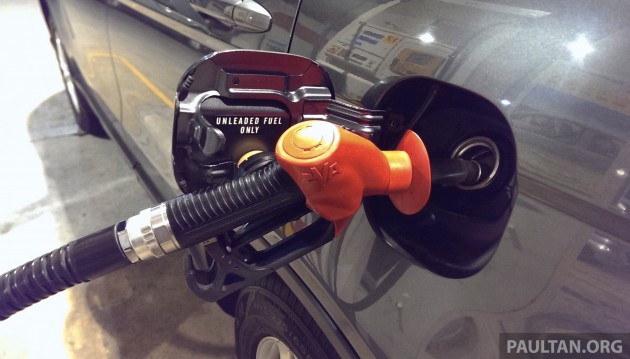
Ahead of Budget 2014, which will be tabled by Prime Minister Datuk Seri Najib Tun Razak on October 25, Parliament yesterday approved the Supplementary Supply (2013) Bill for RM15 billion, and of this amount, RM8.9 billion is set to be channeled towards fuel subsidies, reports indicate.
“The petroleum subsidies are a huge burden on the government. Back then, one tong was US$102, but it increased to US$115 in August. This supplementary bill allocates RM8.853 billion for subsidies,” Deputy Finance Minister Datuk Ahmad Maslan told reporters.
Last month, the government reduced subsidies for RON 95 and diesel by 20 sen in a move it said would save about RM1.1 billion this year, and if extrapolated to a full year, can reach savings of RM3.3 billion annually. A massive RM24.8 billion had earlier been allocated for fuel subsidies this year.

In August, the actual price of RON 95 petrol was RM2.79 per litre, while that of diesel was RM2.73 – at the previous retail rate at the pump of RM1.90 per litre for RON 95 and RM1.80 for diesel, per litre government subsidisation was 89 sen for RON 95 and 93 sen for diesel.
In September, the unsubsidised price of RON 95 was listed as RM2.73 per litre, and that of diesel at RM2.80. As a result of the price increase for both on September 3, government subsidisation at the pump dropped to 63 sen for RON 95 and 80 sen for diesel. The price of market float RON 97 was also increased by 15 sen to RM2.85 on September 4.
According to a report on Monday, Malaysians can expect no fuel price increase in the near future. Rumours had surfaced last week regarding another fuel price increase, leading Ahmad Maslan to come out and deny talks that such a hike would take place.

 Wan Malaysia
on
Wan Malaysia
on 

 Jimmy
on
Jimmy
on  bntipu
on
bntipu
on  pai
on
pai
on  Cosmo Artemis
on
Cosmo Artemis
on  Autokennzeichen
on
Autokennzeichen
on  tdci
on
tdci
on  Facebook
on
Facebook
on  flat_tire
on
flat_tire
on  protonsucks
on
protonsucks
on  Anthony Lim (Member)
on
Anthony Lim (Member)
on  benzs
on
benzs
on  salambangi
on
salambangi
on  Dreagon
on
Dreagon
on  :)
on
:)
on  Rain
on
Rain
on  lcms
on
lcms
on  oilworker
on
oilworker
on  mangata
on
mangata
on  poor petronas
on
poor petronas
on  GG
on
GG
on  james
on
james
on  brown kid
on
brown kid
on  Abuamir
on
Abuamir
on  Hangit!
on
Hangit!
on  farghmee
on
farghmee
on  crz
on
crz
on  Kent
on
Kent
on  petrolhead
on
petrolhead
on  amfin
on
amfin
on  albag
on
albag
on  Alifzz
on
Alifzz
on  annoy_namous
on
annoy_namous
on  5050
on
5050
on  Sam Loo
on
Sam Loo
on  BN Penipu
on
BN Penipu
on  Nicholas
on
Nicholas
on
AI-generated Summary ✨
Comments express frustration over fuel subsidies, questioning if they benefit the people or simply fill government and cronies' pockets. Many highlight that Malaysians are already paying indirectly through high car prices and taxes. Some compare Malaysia’s fuel pricing unfavorably to countries like Brunei, criticizing government corruption and lack of transparency on subsidy breakdowns. There's skepticism about claims that subsidies are used for development and concerns that removing subsidies may lead to corruption. Overall, sentiments are largely negative regarding government handling of fuel subsidies.