
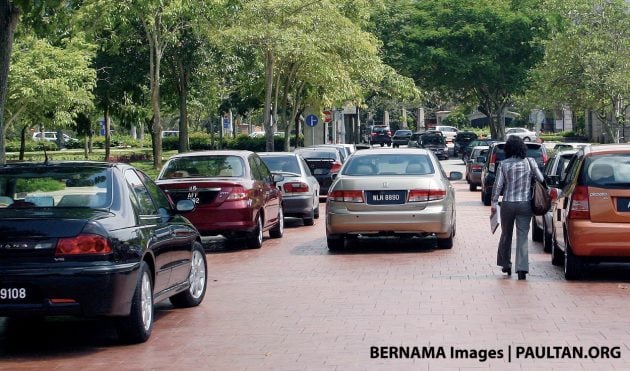
Starting from July 18, on-road, metered parking will now be limited to two hours in certain areas in Kuala Lumpur, The Sun reports. The limited time ruling will cover metered roadside parking in busy areas within the city centre such as Bukit Bintang, KLCC and Ampang.
The move is being taken to deter motorists from hogging parking spaces for long periods, Federal Territories Minister Datuk Seri Tengku Adnan Tengku Mansor said. Aside from the two-hour cap, parking fees are also being increased for the duration.
“We will increase the parking fee to RM2 for the first hour and RM3 for the second hour. Anyone who surpasses the two-hour limit will find your cars clamped or towed; in fact we won’t even summon,” he told reporters.
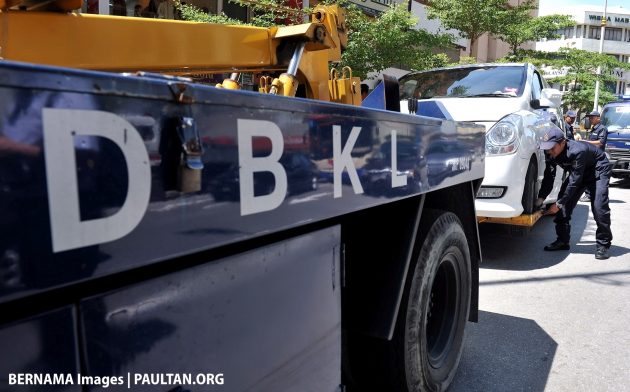
He added that the move was also meant to encourage people to take public transportation when they come into the city. “This will also encourage people to park at designated parking centres and walk,” Tengku Adnan said.
He said that his ministry is still studying the implementation of the new scheme in Brickfields, but added that townships like Bangsar, Kepong, Hartamas will not be affected yet. He also said that Kuala Lumpur City Hall (DBKL) will be installing more electronic boards to show the number of available parking bay inside complexes and commercial buildings in the city.
What do you think of the move to impose a two-hour time limit for metered parking in the city centre – bane or boon for motorists? Share your thoughts with us in the comments section.
Looking to sell your car? Sell it with Carro.


 KT
on
KT
on 

 john
on
john
on  RebelScum
on
RebelScum
on  Susukotak
on
Susukotak
on  WT Fuchhhh
on
WT Fuchhhh
on  dumb pt reader
on
dumb pt reader
on  George Abdul
on
George Abdul
on  MeToo
on
MeToo
on  My simple comment
on
My simple comment
on  Black Dog
on
Black Dog
on  Maslan
on
Maslan
on  xyz
on
xyz
on  spongewai
on
spongewai
on  orang biasa
on
orang biasa
on  nezt
on
nezt
on  Semi-Value (Member)
on
Semi-Value (Member)
on  hailthepurist
on
hailthepurist
on  TTM
on
TTM
on  kapchai
on
kapchai
on  Middle Age Driver (Member)
on
Middle Age Driver (Member)
on  KO
on
KO
on  Soo
on
Soo
on  Beruk
on
Beruk
on  robert
on
robert
on  DK
on
DK
on  Mr. Serious
on
Mr. Serious
on  Haha
on
Haha
on  tokmoh.
on
tokmoh.
on  thepolygonal
on
thepolygonal
on  Yokohama24
on
Yokohama24
on  Bernard
on
Bernard
on  No
on
No
on  Angry Bird
on
Angry Bird
on  Jejambu
on
Jejambu
on  AfirdausB
on
AfirdausB
on  ehue
on
ehue
on 


AI-generated Summary ✨
Comments generally support the two-hour parking limit, seeing it as a way to increase turnover and encourage public transport. Many believe it will reduce congestion and promote better parking management, but some express concern about enforcement, existing traffic issues, and the lack of proper public transport infrastructure. Several suggest improving infrastructure first before implementing such restrictions, while others criticize the system as unfair or ineffective without proper enforcement. Overall, there's cautious optimism with calls for better city planning.