
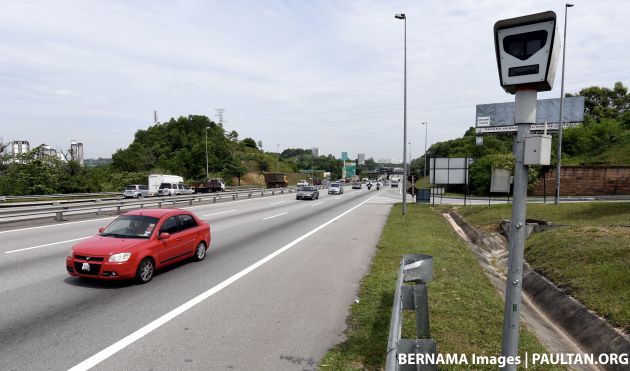
The government intends to install more Automated Awareness Safety System (AWAS) cameras across Malaysia. The speed cameras, previously known as Automated Enforcement System (AES) cameras, are very effective – compliance is over 99%, according to the Malaysian Institute of Road Safety Research (MIROS).
This was revealed by deputy transport minister Datuk Hasbi Habibollah in parliament today, reported by Astro Awani. “This (AWAS cameras) has succeeded in raising the level of perception of being caught for not following traffic regulations, and has reduced the risk of accidents in AWAS enforcement areas,” he said, answering a question by Port Dickson MP Datuk Seri Aminuddin Harun.
“The use of such cameras have allowed enforcement activity to happen 24 hours and 365 days, as well as reduce the dependence on human resource,” he said, adding that the purpose of AWAS cameras is not to trap motorists, bur to ensure that all users follow traffic regulations, especially at ‘black spots’ where accidents happen frequently.
The deputy MoT minister said that at present, there are 45 AWAS cameras in operation, and of that total, only one camera is under maintenance.
Looking to sell your car? Sell it with Carro.

 Kam
on
Kam
on 

 Lets See
on
Lets See
on  jangan ketawa
on
jangan ketawa
on  Rakyat Malaysia
on
Rakyat Malaysia
on  JBM2
on
JBM2
on  Amran
on
Amran
on  Concerned citizen
on
Concerned citizen
on  copy pasted
on
copy pasted
on  AY
on
AY
on  K
on
K
on  the driver
on
the driver
on  Chen
on
Chen
on  Yeahsure
on
Yeahsure
on  Bolehland
on
Bolehland
on  KikifromSingapore
on
KikifromSingapore
on  Kiasso
on
Kiasso
on  Tt
on
Tt
on  syd
on
syd
on  Ismail Ras
on
Ismail Ras
on  Susukotak
on
Susukotak
on  Ben Yap
on
Ben Yap
on  Juragan
on
Juragan
on  here we go again
on
here we go again
on  Celup King
on
Celup King
on  Helenesssssssssssssssss
on
Helenesssssssssssssssss
on  JPJeaduan contributor
on
JPJeaduan contributor
on  Waze
on
Waze
on  ioma
on
ioma
on  frequent driver
on
frequent driver
on  Mohd Afiq
on
Mohd Afiq
on  ROTI CANAI
on
ROTI CANAI
on  hungry customer
on
hungry customer
on  Lol
on
Lol
on  Anonymous
on
Anonymous
on  afiq
on
afiq
on  Stupid Idea
on
Stupid Idea
on 


AI-generated Summary ✨
Comments express skepticism about the effectiveness of the AES cameras, questioning their real impact on reducing accidents and mat rempit activities. Many highlight issues of enforcement, corruption, and misuse of funds, with some suggesting alternative solutions like using dashcams and stricter enforcement. There’s criticism of past scandals related to safety ratings and alleged misappropriation. Overall, sentiments lean toward distrust of the current camera initiative and concerns that it may cause more traffic jams and unnecessary expenses.