
In an effort to promote the adoption of electrified vehicles (xEVs), Malaysia will implement strict exhaust emissions standards to limit the production of non-EEV cars. This was revealed in the National Energy Transition Roadmap (NETR) by the ministry of economy, which outlines initiatives aligned with the country’s goal of achieving net-zero greenhouse gas (GHG) emissions as early as 2050.
According to the NETR (announced in August this year), transportation still contributes significantly to GHG emissions in Malaysia, primarily driven by internal combustion engine (ICE) vehicles. It added that Malaysia ranks highest in terms of car ownership compared to other nations in the East Asian region with a car ownership penetration of nearly 400 per 1,000 people in 2018.
To address the matter, the NETR builds on existing national targets outlined by the Low Carbon Mobility Blueprint (LCMB) and National Energy Policy 2022-2040 (DTN). Among the key targets laid out include increasing the share of xEV four-wheelers in the vehicle fleet to 80%, continued improvements in ICE fuel economy as well as fostering robust local electric vehicle (EV) manufacturing capabilities to achieve 90% local xEV manufacturing.

One of the initiatives to achieve these targets was already mentioned at the start, and that is to implement stringent emissions standards to limit non-EEV manufacturing. The term ‘EEV’ refers to energy efficient vehicles, which is a programme that was first introduced with the National Automotive Policy (NAP) 2014.
The programme outlines specifications in terms of carbon emission level (g/km) and fuel consumption (l/100 km) that a vehicle must meet in order to qualify for EEV status (and incentives for the vehicle manufacturer) – we’ve covered this topic in-depth in the past. EEVs also include fuel efficient vehicles, hybrids, EVs as well as alternatively-fuelled vehicles (CNG, LPG, biodiesel, ethanol, hydrogen and fuel cell).


Even so, in the years since its introduction, our EEV standards are purely based on fuel consumption/vehicle weight and do not factor in carbon emission levels. As such, we’ll see how CO2 emissions will be enforced in accordance with the NETR. Malaysia has the National Emissions Test Centre in Rawang, which is paid for by Perodua and open to all brands.
With stricter specifications needed to be met, vehicle manufacturers would be pushed to make cars that are more eco-friendly – xEVs would fit the bill. Additionally, the NETR will incentivise companies to invest to build local manufacturing capacity and capability, with a notable accompanying initiative being identifying key localisation opportunities in EVs.
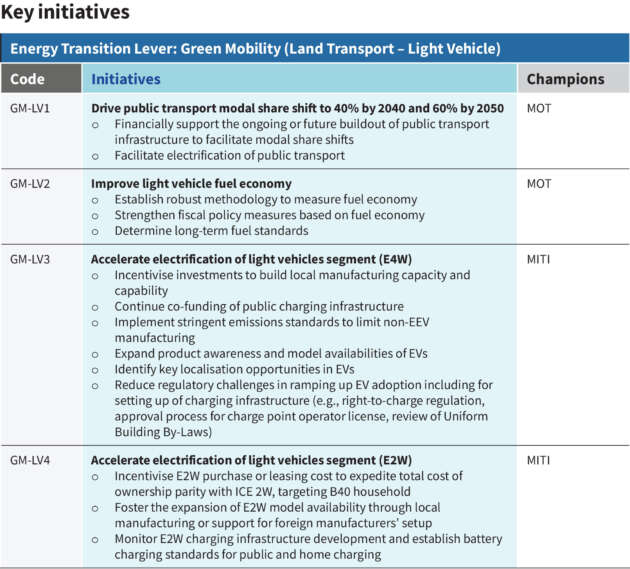
Other initiatives involve increasing EV adoption, including continuing co-funding of public charging infrastructure, expanding product awareness and model availabilities of EVs as well as reduce regulatory challenge in regards to setting up charging infrastructure. The ministry of investment, trade and industry (MITI) will be championing these initiatives, which are bundled under the title ‘Accelerate electrification of light vehicles segment (E4W)’.
So, what do you think of this initiative to boost EV adoption in Malaysia? If implemented, we may soon see cars with high fuel consumption and/or carbon emissions no longer allowed on sale in Malaysia. Is this the right way forward? Comment below.
Looking to sell your car? Sell it with Carro.



Do that but remember our fuel quality still not on par with EU so how to be more clean? Implement Euro 6 for both diesel and petrol then only we talk about cleaner emmisions.
How about open burning, jual lemang & satay tepi jalan?
Haiya, is that activities done ALL THE TIME, EVERYWHERE?
This is a good move but gomen – may you please, please also do something about the heavy vehicles and diesel buses that clearly has soot and toxic black smoke coming out of their exhausts especially at every acceleration ? They have to pass their regular inspections but seeing so many of the black puffing smokes while plying our roads daily is killing our rakyats slowly.
We told them to install and turn on the cheat switch when they send their vehicles for inspection or bila nampak jpj roblok. Kita pun boleh diesel pagar bukan VW je
Whenever I hear a plan to do something by 2050… my mind blur and lose interest.
Same here. The government should currently promote hybrid vehicles ownership while they built the charging infrastructure for EVs and push for mass adoption.
I like this term (Malaysia to impose strict emissions standards) while we still do not have the vehicle end-of-life (ELV) policy – Syok Sendiri.
Spot on. The 70 years old Bedford / Mercedes trucks are still carrying logs. We still hesitant to force heavy vehicles to switch to Euro 5 stds. Potong Kereta scams still persistent, can even implement Digital License Plate or Install Vehicle Identification Camera. 90% of sabd trucks are illegal.
Why want to copy sinkapor
? Want make government kaya sell COE also ? Not all cars are equal. A 20 year old merc still emits less pollution than a brand new diesel Hilux or some modified rempit bikes.
Yes. Start with bas kilang and lorries.
Talk first do later. Or. talk first later still can change.
Btw it is 27 years to go. So its ok. Can still buy nissan gtr now
Hang on to your ICE cars la.
They will become classics and hold their values better as new cars become increasingly EV. Old is Gold.
What about eliminating ICE motorbikes? Surely, no politician would want to touch that with a ten foot pole?
Eliminate? Hell no! That category of voters are our fixed deposits
And what is your point of eliminating ICE motorcycle since motorcycles uses less fuel and spends less time on the road(therefore less carbon emissions)? In fact the government should start reducing car ownership since it is the biggest contributors of carbon emissions and traffic jams
Retire CAMPRO engine
How about we reduce the number of cars instead by revamping zoning laws, make towns and cities walkable and improve public transport infrastructure and network?
Reduce car reliance = reduce cars on the road = less traffic = less emissions = lower overall carbon emissions. Also lowers the cost of living as car ownership won’t ne necessary unless needed.
Case and point Japan, UK and European cities. Yes, cars can provide more flexibility, but you pay a higher price for flexibility, or you can sacrifice your time but save a lot of money.
Is the future. Of coz is matter how and what to make it sustainable. EV charging still consume fossils fuel and etc
Yeah plus more car have catalytic converter to change those toxic fumes to clean air and if they want to combat gas house then plant more tree this is basic science Government targeting gas car just an excuse to free up more land space by cutting trees to attract foreign investor to buy their land.
Aren’t EV cause more damage to the environment via coal burning.
Is there a reason this is suddenly highlighted now, not in August when NETR was annunced? Some big announcement expected (after Budget 2024)?
When will they increase road tax based on pollution on filthy vehicles like Hilux and lorries?
Out politicians don’t really know what they are doing.
In EU, they are going crazy with green house gasses. Farms are forced to shut as it produces too much carbon.
We want to follow that idiocy?
Diesel, the main source of fuel for transportation, will be affected.
And most of our power stations still Uses coal. That coal will be used to charge the EV’s.
Remove from roads all the thousands of lorries who polute 100 times more than a family car. Will be more efficient
All vehicles above 20yrs must scrap
How do you think EV worked out in Sabah or Sarawak or any remote rural Areas? How about the torque of the EV and power consumation when driving MUD, Hills, extreme hills, long hills, and very high hills? Malaysia are not ready for EVs Not in Sabah and Sarawak.
How do you think EV worked out in Sabah or Sarawak or any remote rural Areas? How about the torque of the EV and power consumation when driving MUD, Hills, extreme hills, long hills, and very high hills? Malaysia are not ready for EVs Not in Sabah and Sarawak where we drove extreme type of roads.