
Maxus V80 vs Nissan Leaf
Verdict
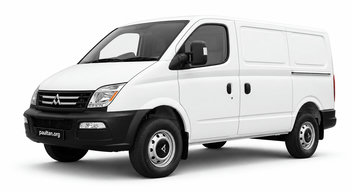
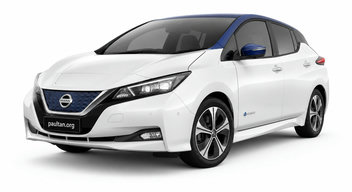
The Maxus V80 and Nissan Leaf solve very different jobs. The V80 is a 5,700 mm diesel commercial with two seats, a manual gearbox, 330 Nm and an 80-litre tank, so it is the workhorse choice. The Leaf is a 4,480 mm C-segment electric hatch with five seats, a 40.0 kWh battery, 270 km range and a 7.9-second 0-100 km/h time. For a Malaysian buyer, this is less about size than use case: cargo and cost control, or passengers and EV running.
Pick the Maxus V80 if you need a large two-seat diesel commercial vehicle with a manual gearbox, front-wheel drive and an 80-litre fuel tank.
Pick the Nissan Leaf if you want a five-seat electric hatchback with 270 km range, six airbags and auto emergency braking.
Key differences
- Price: Maxus V80 RM102,076; Nissan Leaf RM168,888
- Seats: Maxus V80 2; Nissan Leaf 5
- Powertrain: Maxus V80 2,499 cc diesel manual; Nissan Leaf single-motor EV single-ratio automatic
- Power: Maxus V80 136 hp; Nissan Leaf 148 hp
- Size: Maxus V80 5,700 mm long; Nissan Leaf 4,480 mm long
- Road tax: Maxus V80 RM839/year; Nissan Leaf RM100/year
V80
- Much larger body at 5,700 mm long and 2,552 mm tall
- 330 Nm diesel torque and 80-litre fuel tank
- Lower purchase price than the Leaf
- Only two seats
- Two airbags and no listed auto emergency braking
- Manual gearbox only
Leaf
- Five seats and 435-litre boot
- 270 km EV range from a 40.0 kWh battery
- Six airbags and auto emergency braking
- Costs RM66,812 more than the V80
- Shorter and narrower than the V80
- No fuel tank option if charging access is an issue
| Price & overview | ||
|---|---|---|
| Price | RM 102,076✓ | RM 168,888 |
| Body type | Commercial | Hatchback |
| Segment | Commercial | C-Segment |
| Assembly | CKD | CBU |
| Powertrain | ||
| Engine Tech | 16-valve, common-rail direct fuel injection, turbodiesel | — |
| Capacity | 2,499 cc | — |
| Horsepower | 136 hp | — |
| Torque | 330 Nm | — |
| Cylinder Arrangement | Inline | — |
| Fuel | Diesel | Electric |
| Bore | 92 mm | — |
| Compression Ratio | 17.5 | — |
| Number of Motors | — | 1 |
| Motor Horsepower | — | 148 hp✓ |
| Motor Torque | — | 320 Nm✓ |
| Battery Type | — | Lithium-ion |
| Battery Capacity | — | 40.0 kWh |
| EV Range | — | 270 km✓ |
| Charger Type (AC) | — | Type 1 |
| Charging Rate (AC) | — | 6.6 kW |
| Charger Type (DC) | — | CHAdeMO |
| Charging Rate (DC) | — | 50.0 kW |
| Drivetrain | ||
| Transmission | Manual | Single Ratio Automatic |
| Transmission Name | 5 Speed Manual | Constant Ratio Gearbox for EV |
| Gears | 5 | — |
| Transmission Manufacturer | — | Nissan |
| Driveline | Front Wheel Drive | Front Wheel Drive |
| Performance & Efficiency | ||
| 0-100 km/h | —✓ | 7.9 seconds |
| Rated Economy | 9.1 L/100 km | — |
| Top Speed | — | 155 km/h✓ |
| Dimensions | ||
| Length | 5,700 mm | 4,480 mm |
| Width | 2,383 mm | 1,790 mm |
| Height | 2,552 mm | 1,540 mm |
| Wheelbase | 3,850 mm | 2,690 mm |
| Weight | 3,500 kg | 1,544 kg |
| Fuel Tank | 80 litres | — |
| Doors | 6 | 5 |
| Seats | 2 | 5 |
| Boot Space | — | 435 litres |
| Front Tyre | 215/75R16 | 215/50R17 |
| Rear Tyre | 215/75R16 | 215/50R17 |
| Spare Tyre | Full-size 16" Steel | Space Saver |
| Factory Tyres | — | Dunlop Enasave EC300 |
| Chassis | ||
| Assembly | Malaysia (CKD) | Japan (CBU) |
| Chassis | Unibody | Unibody |
| Front Suspension | MacPherson Strut | MacPherson Strut |
| Rear Suspension | Leaf Spring | Torsion Beam |
| Front Wheels | 16" Steel | 17" Alloy |
| Rear Wheels | 16" Steel | 17" Alloy |
| Front Brakes | Ventilated Disc | Ventilated Disc |
| Rear Brakes | Solid Disc | Solid Disc |
| Steering | Rack and Pinion (Hydraulic Power Steering) | Rack and Pinion (Electric Power Steering) |
| Chassis Notes | — | e-Pedal, Intelligent Ride Control, Intelligent Trace Control |
| Crash Safety Ratings | ||
| EuroNCAP | — | 5 stars — With 6 Airbags and Autonomous Emergency Braking |
| Safety | ||
| Airbags | Driver and Passenger | Driver and Passenger, Front Side, Front and Rear Curtain |
| ABS/EBD | ✓ | ✓ |
| Stability Control | — | ✓ |
| Alarm | ✓ | ✓ |
| Immobilizer | ✓ | ✓ |
| Child Safety Lock | — | Manual for Rear Doors |
| Seat Belts | 2 Three-point | 5 Three-point |
| ISOFIX | — | Available on Two Outer Rear Passenger Seats |
| Autonomous Braking System | — | Yes |
| Lane-keeping Assist | — | No |
| Collision Warning | — | ✓ |
| Seatbelt Reminder | — | Front Seats Only |
| Lighting | ||
| Headlamps | Halogen Reflector | LED Projector |
| Taillamps | Normal Bulb | LED Combination |
| LED Daytime Running Lights | — | ✓ |
| Front Foglamps | — | ✓ |
| Rear Foglamps | — | ✓ |
| Wing Mirror Turn Indicators | ✓ | ✓ |
| Cabin | ||
| Front Seats | Manual Adjustable | Manual Adjustment |
| Rear Seats | — | 60:40 Split-folding |
| Front Air-con | Manual Air-con | Single-zone Automatic Climate Control |
| Rear Air-con | Rear Vents with Blower Control | — |
| Power Sockets | 1 Front | 1 Front |
| Interior Lighting | Map Lights | Map Lights |
| Cup Holders | — | 2 Front |
| Audio | Radio CD/MP3 Player with 4 Speakers | 5" Display Radio/CD Player with USB, Bluetooth, AUX-in and 4 Speakers |
| Convenience | ||
| Power Windows | Two Windows | Four Windows, Driver's Side Auto Up and Down with Anti-Pinch |
| Engine Start | Manual Key | Keyless Push Button |
| Locks | Remote Control Activation | Keyless Operation |
| Auto Headlamps | — | ✓ |
| Cruise Control | — | Passive Cruise Control |
| Steering Audio Control | — | ✓ |
| Steering Tilt | — | ✓ |
| Boot Operation | — | Manual Operation |
| Parking Sensor Rear | 4 Sensors | — |
| Reverse Camera | — | Yes, with Around View Monitor (AVM) |
| Folding Wing Mirrors | — | ✓ |
| Bluetooth | — | ✓ |
| Navigation | — | ✓ |
| Hill Start Assist | — | ✓ |
| Instrument Cluster | — | Digital/Analogue |
| Parking Brake | — | Electronic |
| Convenience Notes | — | 6.6 kW Wallbox, 7" Information Display, Climate Control Timer |
| Warranty | ||
| Warranty Mileage Manufacturer | 100,000 km | 100,000 km |
| Warranty Manufacturer | 3 years | 3 years |
| Warranty Notes | — | 3-year/60,000 km Free Service, 8-year/160,000 km Battery Warranty, Complimentary Usage of Nissan SUV, MPV or Pick-up for 23 Days per Year |
| Ownership | ||
| Road tax / year | RM 839 | RM 100✓ |
Specs shown for the selected variant of each car. ✓ marks the better figure where lower/higher is objectively better. Road tax: West Malaysia, private registration.
V80 vs Leaf FAQ
Is the Maxus V80 or Nissan Leaf better?
The Nissan Leaf is better for family or passenger use, with five seats, six airbags, AEB and 270 km EV range. The Maxus V80 is better if the job is commercial carrying, with a much larger body and diesel running.
What is the price difference?
The Nissan Leaf costs RM168,888, while the Maxus V80 costs RM102,076. That makes the Leaf RM66,812 more expensive before considering road tax, which is RM100 per year for the Leaf and RM839 for the V80.
Which one is quicker?
The Nissan Leaf is the only one here with a listed 0-100 km/h figure, at 7.9 seconds, and it has 148 hp. The Maxus V80 has 136 hp and 330 Nm, but its acceleration and top speed figures are not meaningfully listed.