
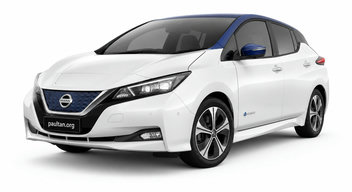
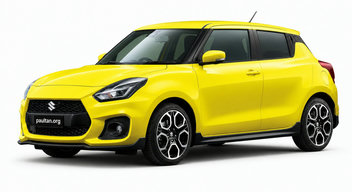
Verdict
These hatchbacks serve sharply different Malaysian briefs. The Nissan Leaf’s 148 hp motor and 320 Nm cut the 0-100 km/h time to 7.9 seconds, just 0.1 seconds ahead of the Suzuki Swift Sport, but its 40 kWh battery brings a 270 km range and RM100 annual road tax. It is also 590 mm longer, with a 435-litre boot against 265 litres. The 970 kg Swift counters with a 205 km/h top speed, 6.1 L/100 km rating and RM70 road tax. Choose around charging access, not the near-identical sprint times.
Pick the Nissan Leaf if you can charge at home or work and need its 270 km EV range, 435-litre boot and autonomous emergency braking.
Pick the Suzuki Swift Sport if you want the lighter 970 kg hatch, a 205 km/h top speed and petrol refuelling flexibility.
Key differences
- Price: Nissan Leaf RM168,888; Suzuki Swift Sport RM130,900
- Powertrain: Nissan Leaf 148 hp/320 Nm electric motor; Suzuki Swift Sport 1,373 cc 140 hp/230 Nm turbo petrol engine
- Range/economy: Nissan Leaf 270 km EV range; Suzuki Swift Sport 6.1 L/100 km rated economy
- Dimensions: Nissan Leaf 4,480 mm long with 2,690 mm wheelbase; Suzuki Swift Sport 3,890 mm long with 2,450 mm wheelbase
- Weight: Nissan Leaf 1,544 kg; Suzuki Swift Sport 970 kg
- Boot space: Nissan Leaf 435 litres; Suzuki Swift Sport 265 litres
Leaf
- 270 km EV range from a 40 kWh battery
- 435-litre boot and five seats
- Autonomous emergency braking and Around View Monitor
- RM37,988 more expensive
- 155 km/h top speed versus 205 km/h
- No auto wipers, rear parking sensors or steering reach adjustment
Swift Sport
- 970 kg kerb weight
- 205 km/h top speed
- 7.0-inch touchscreen with navigation and six speakers
- 265-litre boot is 170 litres smaller
- No autonomous emergency braking or collision warning
- 6.1 L/100 km petrol consumption instead of EV driving
| Price & overview | ||
|---|---|---|
| Price | RM168,888 | RM130,900✓ |
| Body type | Hatchback | Hatchback |
| Segment | C-Segment | B-Segment |
| Assembly | CBU | CBU |
| Ownership | ||
| Road tax / year | RM100 | RM70✓ |
| Powertrain | ||
| Engine Tech | 400V architecture | 16-valve DOHC, turbocharged with variable valve timing |
| Capacity | — | 1,373 cc |
| Horsepower | — | 140 hp |
| Torque | — | 230 Nm |
| Fuel | Electric | Petrol |
| Bore | — | 73 mm |
| Compression Ratio | — | 9.9 |
| Number of Motors | 1 | — |
| Motor Horsepower | 148 hp | — |
| Motor Torque | 320 Nm | — |
| Battery Capacity | 40.0 kWh | — |
| EV Range | 270 km | — |
| Charging Rate (AC) | 6.6 kW | — |
| Charging Rate (DC) | 50.0 kW | — |
| Drivetrain | ||
| Transmission | Single Ratio Automatic | Conventional Automatic |
| Transmission Name | Constant Ratio Gearbox for EV | 6AT |
| Gears | — | 6 |
| Transmission Manufacturer | Nissan | — |
| Driveline | Front Wheel Drive | Front Wheel Drive |
| Performance & Efficiency | ||
| 0-100 km/h | 7.9 seconds✓ | 8 seconds |
| Rated Economy | — | 6.1 L/100 km |
| Top Speed | 155 km/h | 205 km/h✓ |
| Dimensions | ||
| Length | 4,480 mm | 3,890 mm |
| Width | 1,790 mm | 1,735 mm |
| Height | 1,540 mm | 1,495 mm |
| Wheelbase | 2,690 mm | 2,450 mm |
| Weight | 1,544 kg | 970 kg |
| Fuel Tank | — | 37 litres |
| Doors | 5 | 5 |
| Seats | 5 | 5 |
| Boot Space | 435 litres✓ | 265 litres |
| Front Tyre | 215/50R17 | 195/50R16 |
| Rear Tyre | 215/50R17 | 195/50R16 |
| Spare Tyre | Space Saver | Space Saver |
| Factory Tyres | Dunlop Enasave EC300 | Yokohama Advan A13C |
| Chassis | ||
| Assembly | Japan (CBU) | Japan (CBU) |
| Front Suspension | MacPherson Strut | MacPherson Strut |
| Rear Suspension | Torsion Beam | Torsion Beam |
| Front Wheels | 17" Alloy | 16" Alloy |
| Rear Wheels | 17" Alloy | 16" Alloy |
| Steering | Rack and Pinion (Electric Power Steering) | Rack and Pinion (Electric Power Assist) |
| Chassis Notes | e-Pedal, Intelligent Ride Control, Intelligent Trace Control | — |
| Crash Safety Ratings | ||
| EuroNCAP | 5 stars — With 6 Airbags and Autonomous Emergency Braking | — |
| Safety | ||
| Airbags | Driver and Passenger, Front Side, Front and Rear Curtain | Driver and Passenger, Front Side, Front Curtain |
| ABS/EBD | ✓ | ✓ |
| Stability Control | ✓ | ✓ |
| Alarm | ✓ | — |
| Immobilizer | ✓ | ✓ |
| Airbag Disable Function | — | ✓ |
| Child Safety Lock | Manual for Rear Doors | Manual for rear doors |
| Seat Belts | 5 Three-point | 5 three-point |
| ISOFIX | Available on Two Outer Rear Passenger Seats | Available for two outer rear passenger seats |
| Autonomous Braking System | Yes | — |
| Lane-keeping Assist | No | No |
| Collision Warning | ✓ | — |
| Seatbelt Reminder | Front Seats Only | Driver and Front Passenger |
| Lighting | ||
| Headlamps | LED Projector | LED Projector |
| Taillamps | LED Combination | LED Combination |
| LED Daytime Running Lights | ✓ | ✓ |
| Front Foglamps | ✓ | ✓ |
| Rear Foglamps | ✓ | — |
| Wing Mirror Turn Indicators | ✓ | ✓ |
| Cabin | ||
| Front Seats | Manual Adjustment | Manual Adjustable, Driver's seat height adjustable |
| Rear Seats | 60:40 Split-folding | 60:40 Split-Folding |
| Front Air-con | Single-zone Automatic Climate Control | Single-zone Automatic Climate Control |
| Power Sockets | 1 Front | 1 Front |
| Interior Lighting | Map Lights | Front Cabin Light |
| Cup Holders | 2 Front | 2 Front, 2 Rear |
| Audio | 5" Display Radio/CD Player with USB, Bluetooth, AUX-in and 4 Speakers | 7.0" Touchscreen Radio DVD/MP3 Player with Bluetooth, Navigation and 6 speakers |
| Convenience | ||
| Power Windows | Four Windows, Driver's Side Auto Up and Down with Anti-Pinch | All Four Windows, Driver Auto Up and Down |
| Engine Start | Keyless Push Button | Keyless Push Button |
| Locks | Keyless Operation | Keyless Operation |
| Auto Headlamps | ✓ | ✓ |
| Auto Wipers | — | ✓ |
| Cruise Control | Passive Cruise Control | Passive Cruise Control |
| Paddle Shift | — | ✓ |
| Steering Audio Control | ✓ | ✓ |
| Steering Tilt | ✓ | ✓ |
| Steering Telescopic | — | ✓ |
| Boot Operation | Manual Operation | Remote Control Activated |
| Parking Sensor Rear | — | 4 Sensors |
| Reverse Camera | Yes, with Around View Monitor (AVM) | Yes |
| Folding Wing Mirrors | ✓ | ✓ |
| Bluetooth | ✓ | ✓ |
| Navigation | ✓ | — |
| Hill Start Assist | ✓ | — |
| Instrument Cluster | Digital/Analogue | Digital/Analogue |
| Parking Brake | Electronic | Handbrake |
| Convenience Notes | 6.6 kW Wallbox, 7" Information Display, Climate Control Timer | — |
| Warranty | ||
| Warranty Mileage Manufacturer | 100,000 km | 100,000 km |
| Warranty Manufacturer | 3 years | 3 years |
| Warranty Notes | 3-year/60,000 km Free Service, 8-year/160,000 km Battery Warranty, Complimentary Usage of Nissan SUV, MPV or Pick-up for 23 Days per Year | — |
Specs shown for the selected variant of each car. ✓ marks the better figure where lower/higher is objectively better. Road tax: West Malaysia, private registration.
Used Leaf & Swift Sport for sale
Leaf vs Swift Sport FAQ
Is the Nissan Leaf or Suzuki Swift Sport better?
The Leaf is better for home- or workplace-charged commuting, luggage room and active safety. The Swift Sport is better if petrol refuelling, lower weight and its 205 km/h top speed matter more than EV range.
What is the price difference?
The Nissan Leaf costs RM37,988 more than the Suzuki Swift Sport: RM168,888 versus RM130,900.
Which is quicker, the Nissan Leaf or Suzuki Swift Sport?
The Nissan Leaf is marginally quicker to 100 km/h at 7.9 seconds, versus 8.0 seconds for the Suzuki Swift Sport. The Swift Sport has the higher top speed, at 205 km/h against 155 km/h.