
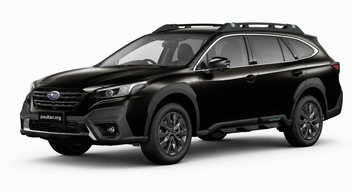
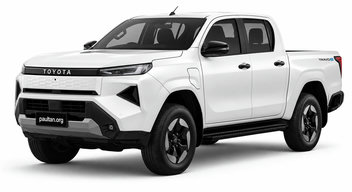
Verdict
For RM52,700 less, the Toyota Hilux brings a 59.2-kWh battery, twin motors rated at 193 hp and 473 Nm, plus a quoted 257-km EV range. That makes its RM160 annual road tax markedly easier to swallow than the Subaru Outback’s RM878, while both use all-wheel drive and have five seats. The Outback answers with a 522-litre boot, 185-hp 2.5-litre boxer petrol engine and a 9.6-second 0-100 km/h time, alongside a sunroof and 11-speaker Harman Kardon audio. Choose by use: wagon practicality and cabin kit, or electric pickup format and lower entry cost.
Pick the Subaru Outback if you want a five-door wagon with a 522-litre boot, sunroof and powered front passenger seat.
Pick the Toyota Hilux if you want the RM226,300 electric option with 473 Nm from two motors, 257 km of quoted range and RM160 annual road tax.
Key differences
- Price: Subaru Outback RM279,000; Toyota Hilux RM226,300.
- Powertrain: Outback 2.5-litre, 185-hp petrol boxer; Hilux two electric motors, 193 hp and 473 Nm.
- Energy storage: Outback 63-litre fuel tank; Hilux 59.2-kWh battery with 257-km EV range.
- Dimensions: Outback is 4,870 mm long with a 2,745-mm wheelbase; Hilux is 5,320 mm long with a 3,085-mm wheelbase.
- Weight: Outback 1,756 kg; Hilux 2,455 kg.
- Audio: Outback 11.6-inch screen and 11 speakers; Hilux 12.3-inch screen and eight speakers.
Outback
- 522-litre boot and five doors
- Sunroof plus powered front seats
- 11-speaker Harman Kardon audio
- Costs RM52,700 more
- RM878 annual road tax versus RM160
- No front parking sensors, where the Hilux has four
Hilux
- 473 Nm from two electric motors
- 59.2-kWh battery and 257-km EV range
- 150,000-km vehicle warranty and eight-year unlimited-mileage battery warranty
- No sunroof
- Manual front passenger-seat adjustment
- Eight-speaker audio versus the Outback’s 11-speaker Harman Kardon system
| Price & overview | ||
|---|---|---|
| Price | RM279,000 | RM226,300✓ |
| Body type | Wagon | Pickup |
| Segment | D-Segment | Truck/4X4 |
| Assembly | CBU | CBU |
| Ownership | ||
| Road tax / year | RM878 | RM160✓ |
| Powertrain | ||
| Engine Tech | Direct Fuel Injection, Horizontally Opposed, 4-Cylinder, DOHC 16-Valve, Boxer Engine | 400V architecture |
| Capacity | 2,498 cc | — |
| Horsepower | 185 hp | — |
| Torque | 245 Nm | — |
| Fuel | Petrol | Electric |
| Bore | 94 mm | — |
| Compression Ratio | 12 | — |
| Number of Motors | — | 2 |
| Motor Horsepower | — | 193 hp |
| Motor Torque | — | 473 Nm |
| Battery Capacity | — | 59.2 kWh |
| EV Range | — | 257 km |
| Charging Rate (AC) | — | 10 kW |
| Charging Rate (DC) | — | 125 kW |
| Drivetrain | ||
| Transmission | CVT Automatic | Single Ratio Automatic |
| Transmission Name | Lineartronic CVT | — |
| Transmission Manufacturer | Subaru | — |
| Driveline | All Wheel Drive | All Wheel Drive |
| Performance & Efficiency | ||
| 0-100 km/h | 9.6 seconds | — |
| Top Speed | 206 km/h | — |
| Dimensions | ||
| Length | 4,870 mm | 5,320 mm |
| Width | 1,875 mm | 1,855 mm |
| Height | 1,682 mm | 1,845 mm |
| Wheelbase | 2,745 mm | 3,085 mm |
| Weight | 1,756 kg | 2,455 kg |
| Fuel Tank | 63 litres | — |
| Doors | 5 | 4 |
| Seats | 5 | 5 |
| Boot Space | 522 litres | — |
| Front Tyre | 225/60R18 | 265/65R17 |
| Rear Tyre | 225.60R18 | 265/65R17 |
| Spare Tyre | Space Saver | Full-size 17" Alloy |
| Factory Tyres | Bridgestone Alenza H/L33 | Bridgestone Dueler A/T |
| Chassis | ||
| Assembly | Japan (CBU) | Thailand (CBU) |
| Front Suspension | MacPherson Strut | MacPherson Strut |
| Rear Suspension | Double Wishbones | De Dion Rear Axle |
| Front Wheels | 18" Alloy | 17" Aero Alloy |
| Rear Wheels | 18" Alloy | 17" Aero Alloy |
| Steering | Rack and Pinion (Electric Power Assist) | Rack and Pinion (Electric Power Steering) |
| Safety | ||
| Airbags | Driver and Passenger, Driver Knee, Front Side, Front and Rear Curtain | Driver and Passenger, Front Side, Driver's Knee, Front and Rear Curtain |
| ABS/EBD | ✓ | ✓ |
| Stability Control | ✓ | ✓ |
| Alarm | ✓ | ✓ |
| Immobilizer | ✓ | ✓ |
| Airbag Disable Function | — | ✓ |
| Child Safety Lock | Manual for rear doors | Manual for Rear Doors |
| Seat Belts | 5 three-point | 5 Three-point |
| Blind Spot Info System | ✓ | ✓ |
| ISOFIX | Available for Two Rear Passenger Seats | Available for two outer rear passenger seats |
| Autonomous Braking System | Yes | Yes, Pre-collision Braking |
| Lane-keeping Assist | Steering Correction | Steering Correction |
| Collision Warning | ✓ | ✓ |
| Seatbelt Reminder | All Seats | All Seats |
| Lighting | ||
| Headlamps | LED Projector | LED Projector |
| Taillamps | LED Combination | LED Combination |
| LED Daytime Running Lights | ✓ | ✓ |
| Front Foglamps | ✓ | ✓ |
| Rear Foglamps | ✓ | ✓ |
| Wing Mirror Turn Indicators | ✓ | ✓ |
| Cabin | ||
| Front Seats | 10-way power adjustable driver with memory, 8-way powered adjustment front passenger | 8-way Power Adjustable Driver's Seat, Manual Adjustable Passenger Seat |
| Rear Seats | 60:40 Split-folding | 60:40 Tip-up base |
| Front Air-con | Dual-zone Automatic Climate Control | Dual-zone Automatic Climate Control |
| Rear Air-con | Rear AC vents | Rear AC Vents |
| Sunroof | Front, Tilt and Slide | — |
| Power Sockets | — | 1 Front, 1 USB Front, 2 USB Rear |
| Interior Lighting | Map Lights | Map Lights |
| Cup Holders | 2 Front, 2 Rear | 2 Front, 2 Rear |
| Sun Shade | Sunroof Shade | — |
| Audio | 11.6" HD Touchscreen with Apple CarPlay and Android Auto, 11-speaker Harman Kardon Sound System | 12.3" Touchscreen with Wireless Android Auto and Apple CarPlay, 8-speaker Sound System |
| Convenience | ||
| Power Windows | Four Windows, Auto Up and Down with Anti-Pinch | Four Windows, Auto Up and Down with Anti Pinch |
| Engine Start | Keyless Push Button | Keyless Push Button |
| Locks | Keyless Operation and PIN Code Access | Keyless Operation |
| Auto Start/Stop | ✓ | — |
| Auto Headlamps | ✓ | ✓ |
| Auto Wipers | ✓ | ✓ |
| Cruise Control | Adaptive Cruise Control | Adaptive Cruise Control |
| Tiptronic | ✓ | — |
| Paddle Shift | ✓ | — |
| Steering Audio Control | ✓ | ✓ |
| Steering Tilt | ✓ | ✓ |
| Steering Telescopic | ✓ | ✓ |
| Boot Operation | Powered Boot | — |
| Parking Sensor Front | — | 4 Sensors |
| Parking Sensor Rear | 4 Sensors | 4 Sensors |
| Reverse Camera | Yes, 360-degree View Monitor | Yes, With 360 Degree Camera |
| Folding Wing Mirrors | ✓ | ✓ |
| Bluetooth | ✓ | ✓ |
| Hill Start Assist | ✓ | ✓ |
| Instrument Cluster | Backlit Analogue | Full LCD Monitor |
| Parking Brake | Electronic | Electronic |
| Warranty | ||
| Warranty Mileage Manufacturer | 100,000 km | 150,000 km✓ |
| Warranty Manufacturer | 5 years | 5 years |
| Warranty Notes | — | 8-Year/Unlimited Mileage Warranty for Battery |
Specs shown for the selected variant of each car. ✓ marks the better figure where lower/higher is objectively better. Road tax: West Malaysia, private registration.
Used Outback & Hilux for sale
Outback vs Hilux FAQ
Is the Subaru Outback or Toyota Hilux better?
The Hilux is the stronger financial and EV choice at RM226,300, with 473 Nm, 257 km of quoted range and RM160 road tax. The Outback suits buyers needing a 522-litre enclosed boot, sunroof and more front-seat adjustment.
What is the price difference?
The Subaru Outback costs RM279,000 and the Toyota Hilux costs RM226,300, so the Outback is RM52,700 more expensive.
Which has the better warranty?
Both have a five-year manufacturer warranty, but the Hilux extends vehicle mileage cover to 150,000 km versus 100,000 km for the Outback. Its battery also has an eight-year, unlimited-mileage warranty.