
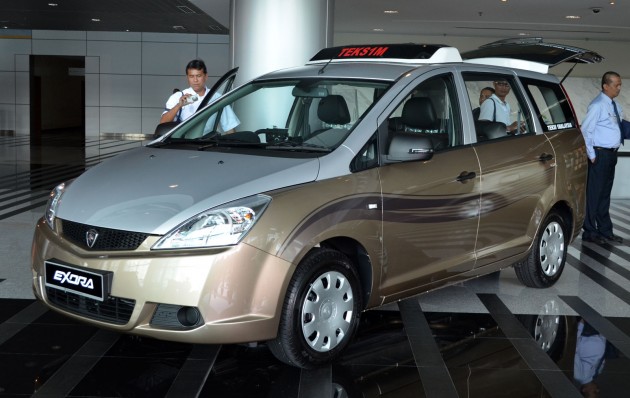
All budget and executive taxi operators with permits expiring October 31 this year must change their cars to a brown Proton Exora, according to a report by The Star.
The move, part of a taxi migration scheme by the Land Public Transport Commission (SPAD), will see 2,604 drivers in Malaysia using the brown Exora by the end of the year, and is expected to affect over 42,000 taxi drivers across Peninsular Malaysia.
However, those with permits expiring between May 1 and October 31 would be allowed to carry on with whatever car they had until November, The Star quoted SPAD chairman Tan Sri Syed Hamid Albar as saying.
“As of May 1, those who have to change are given six months to migrate to the new taxi… we’ll give an extension. We hope they will (change their taxis),” he said.
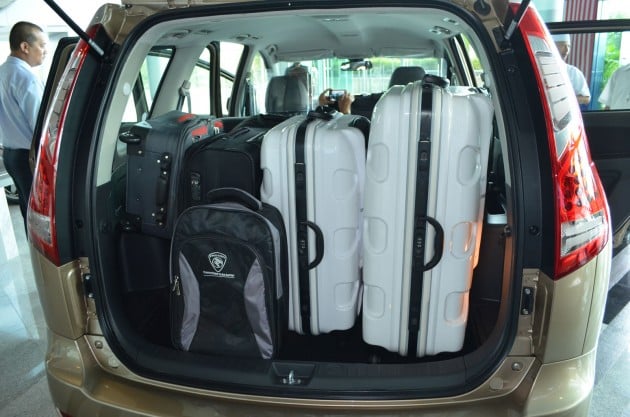
The Proton Exora Teksi 1Malaysia was launched in April 2013. The price of the taxi was revealed at the time to be in the region of RM64,000, before a RM5,000 government grant disbursed by the 1Malaysia Development Board.
The Star reports that as of mid-April, there were 539 drivers of the brown Exora taxi. Given that taxi permits last 10 years, the last taxi that isn’t an Exora is expected to disappear from the roads by end-2024.
Drivers, particularly in the Klang Valley, have been known to use nearly a dozen taxi colours and half as many car models, which SPAD said was confusing to passengers.
Syed Hamid told the English-language daily that in five years, nearly half of all those driving a budget or executive taxi today would change their cars to the brown Exora.
AD: Drive the Proton model of your dreams. Submit your details and Proton PJ will get in touch with you.
Looking to sell your car? Sell it with Carro.

 salambangi
on
salambangi
on 

 travis
on
travis
on  ping
on
ping
on  SafetyFirstMalaysian
on
SafetyFirstMalaysian
on  FarizY (Member)
on
FarizY (Member)
on  sehn
on
sehn
on  pingTheLier
on
pingTheLier
on  ah zhou
on
ah zhou
on  focusing22
on
focusing22
on  Ping Jio
on
Ping Jio
on  qiup
on
qiup
on  kero
on
kero
on  annoy_namous
on
annoy_namous
on  Edd
on
Edd
on  IniSalahItuSalah
on
IniSalahItuSalah
on  ghj
on
ghj
on  Thong Aik
on
Thong Aik
on  Vader
on
Vader
on  darth
on
darth
on  KettaVreakdoWn
on
KettaVreakdoWn
on  sony
on
sony
on  fast5
on
fast5
on  Same Loor
on
Same Loor
on  bisakeris (Member)
on
bisakeris (Member)
on  wil
on
wil
on  Black Dog
on
Black Dog
on  Roger Tan
on
Roger Tan
on  kangkong
on
kangkong
on  Cost+
on
Cost+
on  besi buruk
on
besi buruk
on  Joey
on
Joey
on  nano
on
nano
on  DK
on
DK
on  JC
on
JC
on  squall_shinoda
on
squall_shinoda
on  ioma
on
ioma
on  kkm
on
kkm
on  lambo
on
lambo
on  ioma
on
ioma
on  nkb
on
nkb
on  ajo haterzs
on
ajo haterzs
on  heybadigol
on
heybadigol
on  randomdude
on
randomdude
on  Sunny
on
Sunny
on  aaa
on
aaa
on  Cab driver
on
Cab driver
on  Low Budget
on
Low Budget
on  AVH (Member)
on
AVH (Member)
on  youngmen
on
youngmen
on  HaIrI
on
HaIrI
on  david
on
david
on  tendo
on
tendo
on  bootupjoe
on
bootupjoe
on  pearjai
on
pearjai
on  BoTaK
on
BoTaK
on  sasa
on
sasa
on  ecka
on
ecka
on  kcng
on
kcng
on  bomoh kelapa
on
bomoh kelapa
on  Anthony
on
Anthony
on  cendol (Member)
on
cendol (Member)
on  mel8488
on
mel8488
on  Flat Black
on
Flat Black
on  mmaker
on
mmaker
on  P2
on
P2
on  men
on
men
on  za
on
za
on  A
on
A
on  Azhari H
on
Azhari H
on  harian metroll
on
harian metroll
on  Bun
on
Bun
on  4G63T DSM
on
4G63T DSM
on  inderaloka
on
inderaloka
on  shawal
on
shawal
on  exoraaa
on
exoraaa
on  jwrx (Member)
on
jwrx (Member)
on  katana
on
katana
on  blackbox
on
blackbox
on  Sammy Valley
on
Sammy Valley
on  anon
on
anon
on  Ryan
on
Ryan
on  victor tan
on
victor tan
on  Koko Lee
on
Koko Lee
on  AngryDriver
on
AngryDriver
on  Syameer (Member)
on
Syameer (Member)
on  thebugbud
on
thebugbud
on  just like that
on
just like that
on  matsoul
on
matsoul
on  hjt
on
hjt
on  Jonny Tan
on
Jonny Tan
on  guan eng jr.
on
guan eng jr.
on  Edmund
on
Edmund
on  paparadzi
on
paparadzi
on  retard
on
retard
on  Teck Sim
on
Teck Sim
on  lee
on
lee
on  firdaus
on
firdaus
on  Albert Lee
on
Albert Lee
on  Lolol
on
Lolol
on  old dog
on
old dog
on  James
on
James
on  Motorola_RAZR
on
Motorola_RAZR
on  youlauyah
on
youlauyah
on  joanna
on
joanna
on  loki
on
loki
on  Semi-Value (Member)
on
Semi-Value (Member)
on  NormanTheGreat (Member)
on
NormanTheGreat (Member)
on  Patr
on
Patr
on  Question
on
Question
on  Allen toyota subang
on
Allen toyota subang
on  xcty
on
xcty
on  Daily Exora User
on
Daily Exora User
on  taxi driver
on
taxi driver
on  Anonymous
on
Anonymous
on  bn4life
on
bn4life
on  boardingpass
on
boardingpass
on  Lee Jin Song
on
Lee Jin Song
on  MUHAMMAD FAIRUZ BIN. ABDULLAH SANI
on
MUHAMMAD FAIRUZ BIN. ABDULLAH SANI
on 


AI-generated Summary ✨
Comments express concern over the brown color and higher costs associated with the new Proton Exora taxis, arguing that it may burden taxi drivers and reduce passenger recognition. Some see it as a protective move for Proton, with mixed opinions on the vehicle's size, quality, and suitability as a taxi, suggesting alternatives like NV200 and other models. There is skepticism about the transparency and fairness of the selection process, with worries about increased fares and government protection of local brands. Overall, mixed feelings about the move’s practicality and implications.