
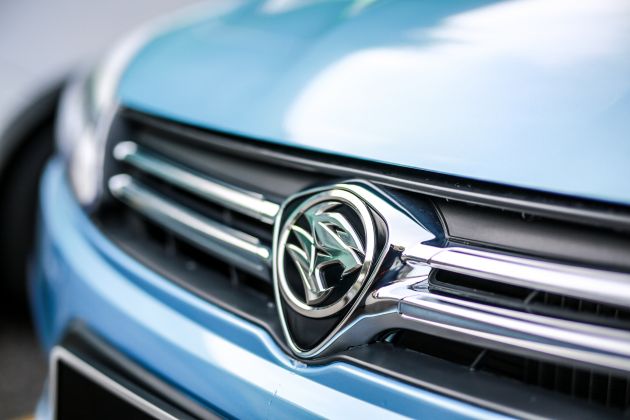
Car buyers are currently enjoying a “tax holiday” with the goods and services tax (GST) rate currently set at 0%, which has resulted in prices being lower than before. However, many are wondering what will happen to car prices when the sales and services tax (SST) makes its return on September 1, and if they should make their purchase now.
According to Proton, now is the best time for consumers to purchase a new car, before the implementation of the SST. Citing Malaysian Automotive Association (MAA) president Datuk Aishah Ahmad (and other sources), Proton believes car prices could go up with the return of the SST.
In May this year, finance minister Lim Guan Eng announced that the SST rate would be set at 10%, the same rate it was when it was replaced by the goods and services tax (GST) in April 2015. Later on, the MAA said it expected the government to set the SST to be lower than GST (6%) in order to lower vehicles prices further to promote buying. The MAA president also noted that the introduction of the GST a few years ago did have an impact at reducing car prices.
On the topic of the used car market, Proton stated that sellers generally absorbed the GST amount, and that prices won’t be affected by zero-rated GST. While consumers might view the used car market as more appealing, the processes of buying a used car could be more cumbersome due to the potential difficulty in getting loan approvals and high interest rates.
What do you think will happen to car prices following the implementation of the SST? Share your thoughts in the comments section below.
 Proton X90
from RM106,800
Proton X90
from RM106,800  Proton S70
from RM73,800
Proton S70
from RM73,800  Proton eMas 7 PHEV
from RM109,800
Proton eMas 7 PHEV
from RM109,800  Proton X70
from RM106,800
Proton X70
from RM106,800  Proton Saga
from RM38,990
Proton Saga
from RM38,990  Proton eMas 5
from RM59,800
Proton eMas 5
from RM59,800  Proton X50
from RM89,800
Proton X50
from RM89,800  Proton eMas 7
from RM103,800
Proton eMas 7
from RM103,800 
 anonymous
on
anonymous
on 

 theanswer
on
theanswer
on  C.P. MOHAN
on
C.P. MOHAN
on  Udon’tsaybro
on
Udon’tsaybro
on  Not Toyota Fan
on
Not Toyota Fan
on  john
on
john
on  Shem
on
Shem
on  john
on
john
on  Dong gor
on
Dong gor
on  Ruslan Bahari
on
Ruslan Bahari
on  7yrsold
on
7yrsold
on  Vic
on
Vic
on  ioma
on
ioma
on  Same L0rr
on
Same L0rr
on  creep
on
creep
on  notakata
on
notakata
on  kzm (Member)
on
kzm (Member)
on  Camtakpro
on
Camtakpro
on  Mikey
on
Mikey
on  Diamler
on
Diamler
on  stastasta
on
stastasta
on  born
on
born
on  Royston
on
Royston
on  Denny
on
Denny
on  fuad
on
fuad
on  One Cent Point
on
One Cent Point
on  Olala
on
Olala
on  Shaheen
on
Shaheen
on  QWHZ
on
QWHZ
on  toyota no fan
on
toyota no fan
on  M.khairun
on
M.khairun
on  Mohd Izwan Dato Zakaria
on
Mohd Izwan Dato Zakaria
on  Ross Lee
on
Ross Lee
on  Ace
on
Ace
on  West Wing
on
West Wing
on  Anonymous111
on
Anonymous111
on  Ollie
on
Ollie
on
AI-generated Summary ✨
Comments express concern that car prices will rise after SST's return, with some believing Proton's prices will increase while others think Proton may absorb the taxes to keep prices stable. Several comments criticize Proton's quality issues, safety features, and management, highlighting poor experiences and questioning their competitiveness. There is also a common sentiment that tax-heavy policies and import restrictions hurt Malaysian consumers, and some suggest boycotting or delaying purchases if prices rise. Overall, the tone is skeptical about price stability and Proton's future competitiveness.