

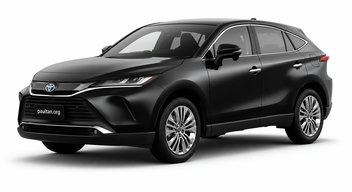
Verdict
At RM243,000 versus RM289,000, this is less simple than new beating old. The Toyota Harrier XU60 Facelift has the stronger numbers: 227 hp, 350 Nm, a 440-litre boot and a 60-litre tank. The Toyota Harrier XU80 answers with the newer TNGA-K base, a longer 2,690 mm wheelbase, wider body and petrol-hybrid/REV drivetrain, but its rated 175 hp, 221 Nm, 396-litre boot and RM830 road tax ask for a buyer who values generation change over outright muscle.
Pick the Toyota Harrier XU60 Facelift if you want the lower buy-in, stronger 227 hp/350 Nm outputs and the bigger 440-litre boot.
Pick the Toyota Harrier XU80 if you want the newer-generation Harrier with TNGA-K underpinnings, a longer 2,690 mm wheelbase and petrol-hybrid/REV drive.
Key differences
- Price: XU60 Facelift RM243,000; XU80 RM289,000.
- Power and torque: XU60 Facelift 227 hp/350 Nm; XU80 175 hp/221 Nm.
- Powertrain: XU60 Facelift petrol 1,998 cc with conventional automatic; XU80 petrol hybrid/REV 2,487 cc with eCVT automatic.
- Size: XU60 Facelift 4,725/1,835/1,690 mm with 2,660 mm wheelbase; XU80 4,740/1,855/1,660 mm with 2,690 mm wheelbase.
- Boot and tank: XU60 Facelift 440 litres/60 litres; XU80 396 litres/55 litres.
- Road tax and top speed: XU60 Facelift RM439/year and 180 km/h; XU80 RM830/year and 180 km/h.
XU60 Facelift
- Much stronger rated output at 227 hp and 350 Nm.
- Bigger 440-litre boot.
- Lower RM439 annual road tax.
- Outgoing generation next to the XU80.
- Shorter 2,660 mm wheelbase.
- Petrol-only, with 177 g/km CO₂ listed.
XU80
- Newer-generation Harrier on the TNGA-K platform.
- Longer 2,690 mm wheelbase and wider 1,855 mm body.
- Petrol-hybrid/REV drivetrain with eCVT.
- Lower rated output at 175 hp and 221 Nm.
- Smaller 396-litre boot and 55-litre fuel tank.
- Higher RM830 annual road tax.
| Price & overview | ||
|---|---|---|
| Price | RM243,000✓ | RM289,000 |
| Body type | SUV | SUV |
| Segment | D-Segment | D-Segment |
| Assembly | CBU | CBU |
| Ownership | ||
| Road tax / year | RM439✓ | RM830 |
| Powertrain | ||
| Engine Tech | 16-valve DOHC with Twin-scroll Turbocharger, Direct Injection and Variable Valve Timing | 16-valve DOHC, naturally-aspirated with dual variable valve timing and hybrid assistance (VVT-iE on intake, VVT-i on exhaust) |
| Capacity | 1,998 cc | 2,487 cc |
| Horsepower | 227 hp✓ | 175 hp |
| Torque | 350 Nm✓ | 221 Nm |
| Fuel | Petrol | Petrol Hybrid/REV |
| Bore | 86 mm | 87.5 mm |
| Compression Ratio | 10 | 14 |
| Number of Motors | — | 1 |
| Motor Horsepower | — | 118 hp✓ |
| Motor Torque | — | 202 Nm✓ |
| Drivetrain | ||
| Transmission | Conventional Automatic | eCVT Automatic |
| Transmission Name | 6-Speed Automatic with Super ECT | — |
| Gears | 6 | — |
| Transmission Manufacturer | Aisin | — |
| Driveline | Front Wheel Drive | Front Wheel Drive |
| Performance & Efficiency | ||
| Rated Economy | 7.6 L/100 km | — |
| Top Speed | 180 km/h | 180 km/h |
| Co2 | 177 g/km | — |
| Dimensions | ||
| Length | 4,725 mm | 4,740 mm |
| Width | 1,835 mm | 1,855 mm |
| Height | 1,690 mm | 1,660 mm |
| Wheelbase | 2,660 mm | 2,690 mm |
| Weight | 1,705 kg | 1,695 kg |
| Fuel Tank | 60 litres | 55 litres |
| Doors | 5 | 5 |
| Seats | 5 | 5 |
| Boot Space | 440 litres✓ | 396 litres |
| Front Tyre | 235/55R18 | 225/60R18 |
| Rear Tyre | 235/55R18 | 225/60R18 |
| Spare Tyre | Space Saver | Space Saver |
| Factory Tyres | Bridgestone Ecopia H/L 422 Plus | Bridgestone Alenza H/L 33 |
| Chassis | ||
| Assembly | Japan (CBU) | Japan (CBU) |
| Front Suspension | MacPherson Strut | MacPherson Strut |
| Rear Suspension | Double Wishbones | Double Wishbone |
| Front Wheels | 18" Alloy | 18" Alloy |
| Rear Wheels | 18" Alloy | 18" Alloy |
| Steering | Rack and Pinion (Electric Power Steering) | Rack and Pinion (Electric Power Steering) |
| Safety | ||
| Airbags | Driver and Passenger, Driver Knee, Front Side, Front and Rear Curtain | Driver and Passenger, Front Side, Driver's Knee, Front and Rear Curtain |
| ABS/EBD | ✓ | ✓ |
| Stability Control | ✓ | ✓ |
| Alarm | ✓ | — |
| Immobilizer | ✓ | — |
| Airbag Disable Function | ✓ | — |
| Child Safety Lock | Manual for Rear Doors | Manual for Rear Doors |
| Seat Belts | 5 Three-point | 5 Three-point |
| Blind Spot Info System | — | ✓ |
| ISOFIX | Available on 2 Outer Rear Seats | Available on two outer rear passenger seats |
| Autonomous Braking System | Yes, with Pedestrian Detection (10 km/h to 80 km/h) | Yes, Pre-collision Braking |
| Lane-keeping Assist | Steering Correction | Steering Correction |
| Collision Warning | ✓ | ✓ |
| Seatbelt Reminder | All Seats | All Seats |
| Safety Notes | — | Tyre Pressure Monitoring System, Rear Cross-Traffic Alert with Braking |
| Lighting | ||
| Headlamps | LED Projectors with Auto High Beam | Bi-LED Projector |
| Taillamps | LED Combination | LED Combination |
| LED Daytime Running Lights | ✓ | ✓ |
| Front Foglamps | ✓ | ✓ |
| Rear Foglamps | — | ✓ |
| Wing Mirror Turn Indicators | ✓ | ✓ |
| Cabin | ||
| Front Seats | Power Adjustable Driver's Seat | 12-way Power Adjustable Driver's Seat with Memory Function, Power Adjustable 4-way Passenger Seat |
| Rear Seats | 60:40 Split-folding, Manual Recline | 60:40 Split-folding with Centre Armrest, Manual Recline |
| Front Air-con | Dual-Zone Automatic Climate Control | Dual-zone Automatic Climate Control |
| Rear Air-con | Rear Vents | Rear Vents |
| Sunroof | — | Full-sized Moonroof with Electrochromic Function |
| Power Sockets | 1 Front | 1 Front, 2 Front USB, 2 Rear USB |
| Interior Lighting | Map Lights and Ambient Lights | Map Lights, Cupholder Lights and Footwell Lights |
| Cup Holders | 2 Front, 2 Rear | 2 Front, 2 Rear |
| Audio | 7" DVD-AVX Touchscreen with 6 Speakers | 8" Display Audio with Bluetooth, Apple CarPlay and Android Auto, Six speakers |
| Convenience | ||
| Power Windows | Four Windows, Auto Up and Down with Anti-Pinch | Four Windows, Driver's Side Auto Up and Down with Anti Pinch |
| Engine Start | Keyless Push Button | Keyless Push Button |
| Locks | Keyless Operation | Keyless Operation |
| Auto Headlamps | ✓ | ✓ |
| Auto Wipers | — | ✓ |
| Cruise Control | Active Cruise Control | Adaptive Cruise Control |
| Tiptronic | ✓ | ✓ |
| Paddle Shift | ✓ | — |
| Steering Audio Control | ✓ | ✓ |
| Steering Tilt | ✓ | ✓ |
| Steering Telescopic | ✓ | ✓ |
| Electric Steering Adjustment | ✓ | ✓ |
| Boot Operation | Manual Operation | Powered with Kick Sensor |
| Parking Sensor Front | 4 Sensors | 4 Sensors |
| Parking Sensor Rear | 4 Sensors | 4 Sensors |
| Reverse Camera | Yes | Yes, with 360 Degree Camera |
| Folding Wing Mirrors | ✓ | ✓ |
| Bluetooth | ✓ | ✓ |
| Navigation | — | ✓ |
| Hill Start Assist | ✓ | ✓ |
| Instrument Cluster | Electroluminescent Analogue | Full LCD Monitor |
| Parking Brake | Electronic | Electronic |
| Convenience Notes | — | Front and Rear Digital Video Recorder |
| Warranty | ||
| Warranty Mileage Manufacturer | Unlimited | Unlimited |
| Warranty Manufacturer | 5 years | 5 years |
| Warranty Notes | — | 8-Year/Unlimited Mileage Warranty for Hybrid Battery, Inverter and PCU |
Specs shown for the selected variant of each car. ✓ marks the better figure where lower/higher is objectively better. Road tax: West Malaysia, private registration.
Used cars for sale
XU60 Facelift vs XU80 FAQ
Is the Toyota Harrier XU60 Facelift or Toyota Harrier XU80 better?
For performance and luggage space, the XU60 Facelift is the better buy on paper. For the newer generation, TNGA-K base and petrol-hybrid/REV drivetrain, pick the XU80.
What is the price difference?
The Toyota Harrier XU80 costs RM46,000 more than the Toyota Harrier XU60 Facelift.
Which Toyota Harrier has the bigger boot?
The Toyota Harrier XU60 Facelift has the bigger boot at 440 litres, compared with 396 litres in the Toyota Harrier XU80.