Used Isuzu D-Max for sale in Malaysia
No Isuzu D-Max in stock right now — stock changes daily, so check back soon.
Rugged, reliable, and cost-effective with parts and service available nationwide.
Recently sold Isuzu D-Max — new stock arrives regularly:
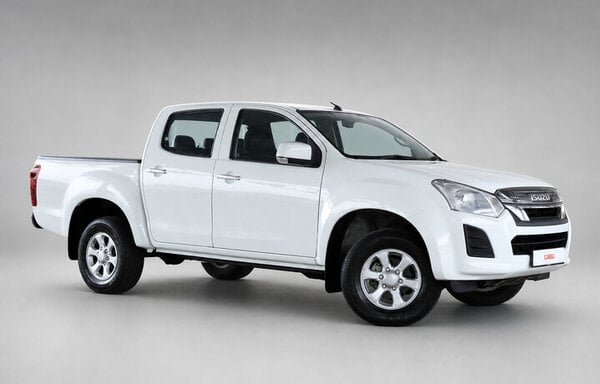
Meanwhile, see all used Isuzu in stock.
Buying guide
Isuzu D-Max: what to know before you buy
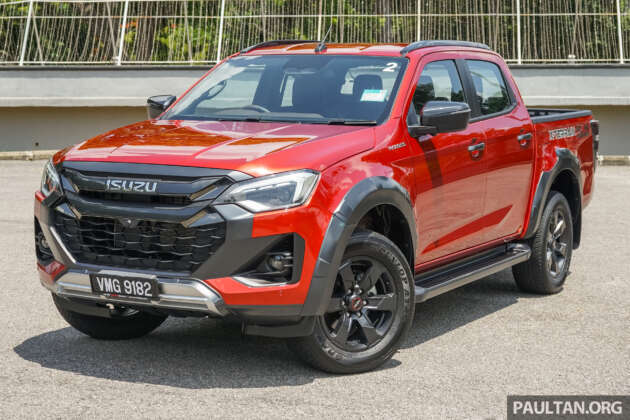
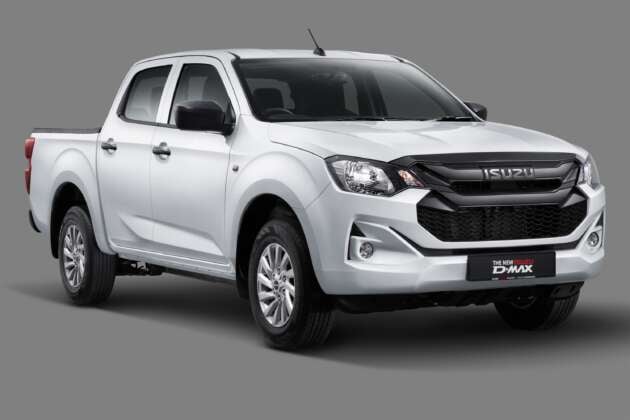
The Isuzu D-Max is a pick-up in the Truck/4x4 segment, aimed at buyers who need a workhorse rather than a regular family SUV. In Malaysia, the nameplate has been around in several forms, from the RT launched in 2013, through two facelifts, to the RG in 2021 and the current RG facelift introduced in 2024.
Used availability is fairly tight here, with current examples sitting in the 2020 to 2021 range, priced from RM65,800 to RM78,800 and showing around 61,000 km to 90,000 km. The D-Max also holds value strongly, with three-year value retention at 84.8%. Registrations have been substantial too, with over 101,000 units recorded since 2000 and stronger recent volumes from 2022 onwards.
When shopping, pay attention to the exact generation and body/drive layout, as the D-Max line-up spans 4x2 and 4x4 versions, single cab choices, and both manual and automatic gearboxes. New variants currently range from RM92,199 to RM157,938, giving used buyers a useful benchmark.
Price guide
Used Isuzu D-Max prices by year
Asking prices for the Isuzu D-Max by model year, from recent listings here and across the wider Malaysian used-car market. Condition, mileage and variant move individual cars within these ranges.
| Year | Generation | Asking price range | Typical |
|---|---|---|---|
| 2026 | RG Facelift 2 | RM8,000 – RM142,000 | RM114,000 |
| 2025 | RG Facelift | RM89,800 – RM92,199 | RM89,900 |
| 2024 | RG Facelift | RM76,800 – RM130,000 | RM84,400 |
| 2023 | RG | RM58,800 – RM129,000 | RM83,400 |
| 2022 | RG | RM55,000 – RM105,000 | RM77,800 |
| 2021 | RG | RM55,000 – RM103,000 | RM79,800 |
| 2020 | RT Facelift 2 | RM55,800 – RM95,000 | RM67,800 |
| 2019 | RT Facelift 2 | RM40,000 – RM69,800 | RM59,900 |
| 2018 | RT Facelift | RM36,800 – RM79,900 | RM52,800 |
| 2017 | RT Facelift | RM38,000 – RM57,000 | RM45,800 |
| 2016 | RT Facelift | RM28,800 – RM59,800 | RM41,800 |
| 2015 | RT | RM26,999 – RM58,000 | RM41,800 |
Based on 366 recent asking prices. Across Malaysia, 416 Isuzu D-Max are listed for sale right now, median asking RM65,000. See recently sold Isuzu D-Max prices.
Variants & generations
Which used Isuzu D-Max should you buy
Used D-Max choices in Malaysia split between the RT line from 2013, its 2016 and 2019 facelifts, and the RG from 2021, with current stock represented by a 2020 DDI BluePower Type-B dual cab and a 2021 V-Cross X-Terrain dual cab.
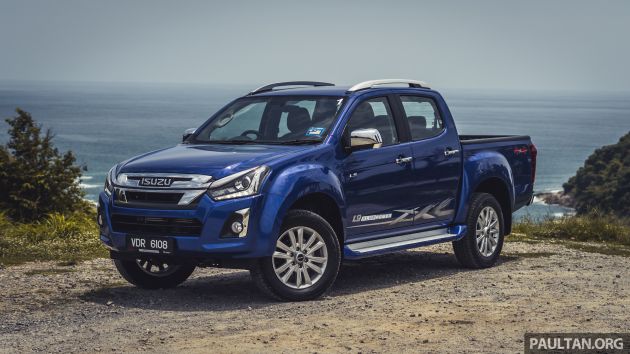
- RT and RT facelifts: the 2013 RT, 2016 RT Facelift and 2019 RT Facelift 2 suit buyers who want a tougher budget pick-up, with the 2019 update bringing the DDI BluePower-era line-up that includes Type-B dual cab models.
- DDI BluePower Type-B dual cab: the sensible lower-trim used buy if you want a double-cab D-Max for work and family use, and it keeps the focus on durability, 4x4 ability and lower purchase cost rather than cabin kit.
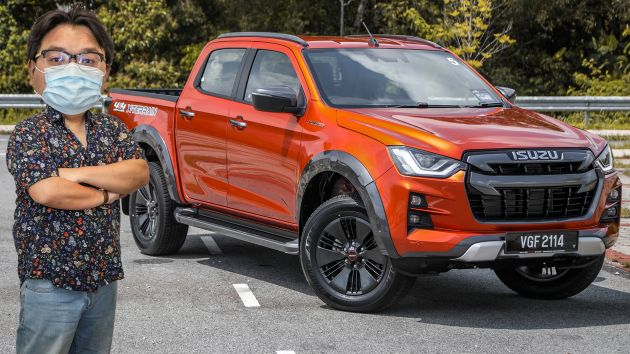
- RG and X-Terrain: the 2021 RG is the newer-generation choice, and the V-Cross X-Terrain dual cab sits at the top of the range with the 3.0-litre 4x4 automatic powertrain also used by the current X-Terrain.
- Current range context: the 2024 RG Facelift line-up runs from 1.9-litre Low-Ride and Single Cab workhorses to 1.9-litre Standard and Premium double-cabs, with 3.0-litre Premium and X-Terrain variants for buyers who want more torque and higher equipment.
- Bottom-line pick: choose the 2021 RG V-Cross X-Terrain if your budget allows, but pick the 2020 DDI BluePower Type-B dual cab if you want the cheaper, more work-focused D-Max.
Before you commit
What to check when buying a used Isuzu D-Max
A used Isuzu D-Max needs checks around diesel maintenance, 4x4 hardware and hard-use damage, especially because 2020-2021 Malaysian units can be from the RT Facelift 2 or RG generation.
- Service history Check for full workshop records covering engine oil, diesel fuel filter, gearbox oil, transfer case oil and differential oil, as missed servicing can shorten the life of injectors, the turbocharger and 4x4 driveline parts.
- Diesel hardware Inspect for hard starting, uneven idle, black smoke, loss of boost and oil mist around intercooler hoses, as some high-mileage diesel pickups develop injector, EGR, turbo hose or intake soot issues.
- 4x4 system Test 2H, 4H and 4L engagement on a suitable loose surface, then listen for clunks from the transfer case, propshafts and CV joints, as D-Max 4x4 models often see plantation, site or towing use.
- Chassis and body Check the ladder frame, rear leaf spring mounts, underbody, load bed, tailgate and cabin floor for mud stains, corrosion, bent metal, fresh underseal or weld marks, as these signs can point to flood, accident or heavy off-road use.
- Mileage and trim Match the odometer reading with service stickers, tyre dates, brake wear, seat wear and the registration details, then verify the variant because X-Terrain and Type-B equipment can be copied with aftermarket wheels, decals and accessories.
Owning one
Service & ownership costs
The Isuzu D-Max uses a diesel service schedule of 10,000 km or six months, with routine maintenance centred on engine oil, oil filter, fuel filter and air filter changes. Servicing sits at a moderate level for a pick-up, with the 1.9 litre variants generally cheaper to maintain than the 3.0 litre models due to lower oil and consumable requirements.
Fuel consumption is a strong point for the D-Max, especially the 1.9 litre BluePower models, while the 3.0 litre versions trade higher diesel use for stronger load and towing performance. Insurance is moderate for workhorse and mid-spec variants, higher for X-Terrain versions, and parts availability is strong because the D-Max has been sold in Malaysia across several generations with wide commercial use.
Estimate repayments with the paultan.org car loan calculator.
FAQ
Used Isuzu D-Max: your questions answered
Is the Isuzu D-Max reliable as a used pick-up in Malaysia?
The Isuzu D-Max is widely regarded in Malaysia as a durable diesel pick-up, and JPJ registrations exceed 101,000 units since 2000. A used unit still needs a complete service record, clean engine start-up, smooth automatic or manual gearbox operation and proof that the 4x4 system engages correctly.
Which Isuzu D-Max generation should I buy used?
The RT generation arrived in 2013, with facelifts in 2016 and 2019, while the newer RG generation arrived in 2021. A 2020 unit is from the RT Facelift 2 range, while a 2021 unit can overlap with the RG introduction, so confirm the generation through the chassis details and cabin design before paying a deposit.
Which D-Max trim makes the most sense for daily use?
A double-cab automatic variant suits most Malaysian family and work use because it carries rear passengers and is easier to drive in traffic than a manual workhorse grade. The X-Terrain sits at the lifestyle end of the range, while Standard and Premium grades give more straightforward equipment for buyers who prioritise running costs and payload use.
Is the D-Max expensive to service?
The D-Max uses diesel engines and a body-on-frame 4x4 layout, so servicing should include engine oil, fuel filter, transmission fluid, differential oil and transfer-case checks at the correct intervals. A neglected unit can cost more to put right if the turbo, injectors, cooling system, suspension bushes or 4x4 driveline have been abused.
What should I inspect before buying a used D-Max?
Check the underbody, chassis rails, rear leaf springs, load bed, tow points and bumpers for signs of heavy work, flood exposure or off-road damage. During the test drive, check for black smoke, rough idle, gearbox hesitation, steering vibration, brake pull and warning lights after the engine reaches operating temperature.
Does the Isuzu D-Max hold its value well?
The D-Max has a three-year value retention figure of 84.8%, which is strong for a pick-up in Malaysia. For current market pricing by registration year, refer to the asking-prices-by-year table shown on this page.
JPJ registrations
How popular is the Isuzu D-Max?
102,546 Isuzu D-Max have been registered in Malaysia since 2000, according to open JPJ registration data — recent years below.
Source: JPJ vehicle registrations · full data at car-sales-data
Before you decide
Isuzu D-Max reviews & buyer's guides
More: Isuzu D-Max specs & prices · all used Isuzu · all used cars
From paultan.org