

The current Toyota Vios has not even received its mid-life facelift yet, and already purported initial details of the next-generation model have been revealed through a report by Indian news publication Mint.
Slated for a January 2018 launch in India, the new B-segment sedan is slated to be a global model. The last time the Vios was designed as such was with the previous-generation model, sold as the Belta in Japan and the Yaris Sedan in North America – the latter has since been replaced in Canada with a new version based on the Mazda 2 Sedan.
“It is a full model change of Vios that will be sold across the globe,” said a source close to Toyota in India. “India is doing much more work than just localising the model.”
Tweaked slightly for the Indian market, the new model will reportedly be sold with 1.6 litre petrol and diesel mills there – the former, likely the Dual VVT-i ZR engine used in the facelifted previous-generation Corolla Altis, probably won’t make it to certain tax-sensitive countries like China and Thailand.
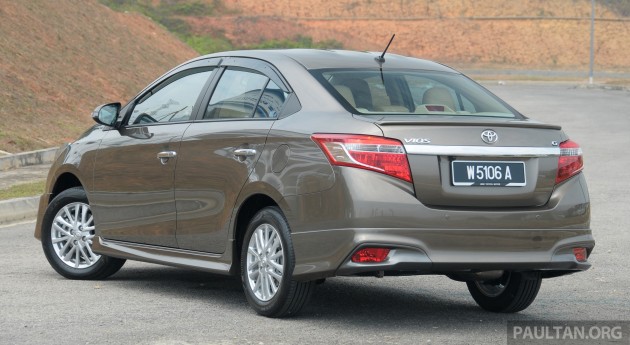
There, tax relief benefits are offered for cars with engine displacements under 1.5 litres. In those markets (ours too), a 1.5 litre mill should soldier on, perhaps outfitted with Dual VVT-i like the facelifted Avanza.
It’s the oil burner that is quite intriguing. Toyota does not have an in-house 1.6 litre diesel engine, so the Vios could very well inherit the Verso’s BMW-sourced turbodiesel engine – which in turn is derived from the DLD engine developed by PSA Peugeot Citroën. Small world, this is.
Toyota is said to be positioning the Vios in India as a more aspirational model much like the Honda City, slotting in above the budget-minded Etios but below the Corolla Altis. The world’s largest carmaker was initially only aiming to sell 25,000 units there, but has raised its target to 65,000 units as it expects the passenger car market to post strong growth in two years’ time, another source told Mint.
Looking to sell your car? Sell it with Carro.


 Fahmi
on
Fahmi
on 

 viospower
on
viospower
on  Axxx
on
Axxx
on  john
on
john
on  Same L0rrrr
on
Same L0rrrr
on  karam singh
on
karam singh
on  Bukapintubayartol
on
Bukapintubayartol
on  Idealist
on
Idealist
on  john
on
john
on  ioma
on
ioma
on  nosushi
on
nosushi
on  youdream
on
youdream
on  Jay
on
Jay
on  Albert
on
Albert
on  nomoney
on
nomoney
on  Really
on
Really
on  Ibnu bakrin
on
Ibnu bakrin
on  Sam Loo ( ori1 )
on
Sam Loo ( ori1 )
on  sam loo rv
on
sam loo rv
on  ong chin aun
on
ong chin aun
on  Sam VHL Loo
on
Sam VHL Loo
on  DPCraft
on
DPCraft
on  mat yun
on
mat yun
on  KT
on
KT
on  Aero (Member)
on
Aero (Member)
on  alldisc
on
alldisc
on  azrai
on
azrai
on  ah beng will be happy
on
ah beng will be happy
on  Ramlee
on
Ramlee
on  samtowtruck
on
samtowtruck
on  WKulit Man
on
WKulit Man
on  dog
on
dog
on  horrayooi
on
horrayooi
on  abam
on
abam
on  winwin
on
winwin
on 


AI-generated Summary ✨
Comments express frustration with the current Vios's underpowered 1.5L engine and outdated design, advocating for a 1.6L upgrade to improve performance and competitiveness. There's skepticism about safety features and concerns about reliability, especially with engine collaborations like Euro or BMW engines. Many highlight the potential for a global Vios with better specs, but doubt UMW Toyota's commitment to safety and advanced features. Enthusiasts also discuss engine choices and regional variations, with some advocating for more powerful, efficient engines to boost sales and safety.