
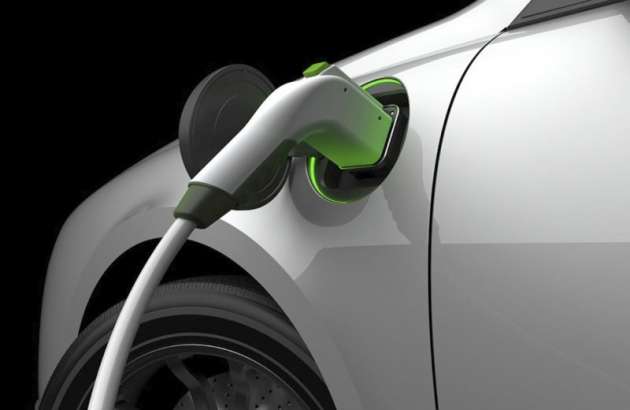
In Budget 2023, it was announced that the current import duty and excise duty exemption for fully-imported (CBU) battery electric vehicles (BEVs) had been extended to December 31, 2025. It was originally set to end in December 31, 2023, before being extended in the first tabling of Budget 2023 to December 31, 2024.
While the import and excise duty exemption for CBU BEVs is beneficial to buyers, it is only so to those in the upper spectrum of the scale, because no imported BEV with a floor price under RM100,000 can be sold in Malaysia until the end of the exemption period.
This condition is specifically listed for imported EVs under the ministry of investment, trade and industry’s (MITI) guidelines on franchise approved permit (AP) requirements for 2023. As such, you can forget about the likes of budget EVs such as the Wuling Air coming into our market for around RM50-60k anytime soon. Likewise, the BYD Dolphin, earlier rumoured to be arriving for under RM100k.


While this seems counter-productive in light of the government’s efforts to ramp up electrification in the country, the move has logical intent, very much aimed at protection of trade in the short term. However, MITI minister Tengku Datuk Seri Zafrul Abdul Aziz said that this timeframe is very much defined.
“Right now, electric cars priced below RM100k, and electric motorcycles under RM12k cannot be sold in Malaysia. We can’t do this forever, so it’s only up to 2025. Then, we have to open up,” he said on the sidelines of the Tesla Supercharger station launch at Pavilion KL last Wednesday, a day before the brand made its debut in the country.
He said that the condition was put in place to allow local players to get themselves ready for electrification. While it was not specifically mentioned in the document, the move essentially prevents imports from affecting the locally-assembled vehicle market in the under-RM100k price segment.
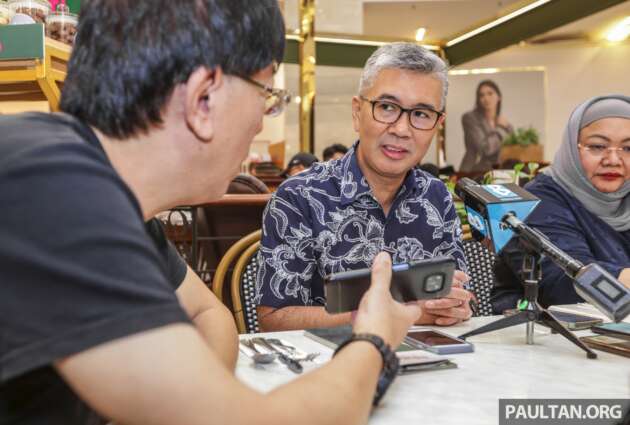
“We are giving them (local carmakers) time to prepare for EVs. There have been questions as to why we are not liberalising quicker, but we have to look at the big picture to protect our local automotive industry for a while so that there is a just transition, because it does relate to a lot of employment, from jobs to suppliers,” he told paultan.org.
“I hope by 2025 our local companies have already transitioned, because Tesla’s and Chinese carmakers’ technologies have already shown that they are ready,” he said. He added that mass electrification would help the country possibly meet its net-zero target earlier.
Looking to sell your car? Sell it with Carro.



Probably extend due to local players not ready, and again and again…
Most probable case
No problem EV battery tech will be matured by 2028
It’s not probably. It is. He literally mentioned it.
By 2025 finally we rakyat are liberated from the automotive bully forever.
Still waiting for PH promise of cheaper cars. As usual Pakatan Hotair is just that.
33months of PN Perikatan Nonsense, *jawdrop
“local carmakers” you mean Daihatsu Malaysia and Geely Malaysia?
Dont forget CKD Plant for UMW, Sime Darby, Hicom, Berjaya, Tan Chong, etc.
They could lead Malaysia export industry.
Just like iPhone you buy are exported from China, not USA.
Tongkat Ali. Policy
Local players now too busy redesign front grille and keeping up with parts inventory. Basically local players went through decades of protection and they’re super comfortable doing rebadging instead of inventing something new. Jaguh kampong will always be jaguh kampong.
Look at Hyundai and Kia… then look at Proton and Perodua… how lah…
One word.. protection
So in 2025, sub 100k electric cars will be offered to public, and the vast majority of people will be paying their 7-9 year loan to the bank for an obsolete fossil fuel car bought from 2021-2024.
Meanwhile in Thailand….
Just get rid of all duties and excise once and for all
Yeah right.
Then, where do they get the money to subsidize B40?
No more tongkat for local vendor.. either they buckle up or tutup kedai and let other that is competent to do it. Malulah, Proton also need to seek Thailand vendor to supply. Why becoz of all this tongkat policies that make our local vendor not competitive. Only incentive to help local is by asking for joint venture with company bringing ther car in Malaysia…. Thailand and Indonesia all miles ahead of us already.
Our local car makers are always not ready. I don’t know why la always like this. Did they not knowing what will come? Did they not doing research? Koreans can do it, why we can’t?
I understand your point @kckfen. You must understand a crucial point, Koreans are made up of East asians, siame like China, Japan and Singapore. That is not the case in Malaysia. If you google up Global IQ rank, then you will know my point. All top spot are east asians. Highest IQ people will do things differently. The gap is too big for others to understand
No need to protect. 99 out of 100 comments always bashing EV’s so there’s nothing to protect.
and those pro p1 p2 people say wHeREe gOt pROtecTiOniSm
AP permit lagi. this stupid thing again.
I’m still think it is non sense when min price cap the EV but give free road tax, if it’s like EV is flying and not running on the road. Mind that EV is heavier that ICE if compare it with same segment.
So what have the local car makers done about building EVs since the condition was imposed.
Any news about local EVs?
“local carmakers” = cronies
Shouldn’t we look at the rakyat readiness instead of the couple of local car makers?
Where have I heard something similar before..
So only after 2025 we can buy wuling mini EV?
By 2025, they will release new statement again.
To them, if you’re poor, just use marhaen car. Don’t bark. We don’t care and STFU.
Protect, protect, protect. When can our local car industry compete in an open market? I am sure Perodua is ever ready to roll out it’s hybrid cars anytime with Toyota’s backing.Proton too now that Geely is major stake holder. It’s more like protecting the interests of AP holders.
Don’t be fooled by these “local” players.
They are incompetent kronnies that are protected when do not represent us from enjoying better quality products that a proper local company or open market can offer.
Local car manufacturers!? Proton owned by Geely & Perodua owned by Daihatsu. What is he talking about! Both the principal owners already have EV’s in their lineup! Why must we the people always make sacrifices!?
Malaysian Consumer continue to pray for cheaper and affordable car which had never come by.
OKU minister mana berani open market? OKU punya orang selalu takut competition punya
Also give enough time to achieve the 10000 ev charging station by end of 2025. If below 100k ev is sold now, we can see a surge of new owners with insufficient charging station to cater for the demand
Actually, foreign manufacturer like U.S, China, etc can import or local assembly 4 x 4 Electric Pick-up Truck or Electric commercial lorry which do not affect national car company. Both our national car company do not have electric pick-up truck or commercial electric vehicle. This Electric 4×4 pick-up truck can carry people and goods, can register as private name and very popular nowadays. Foreign manufacturer can sell whatever price affordable to local people as like what others auto player have done at Thailand.
Its not just about local automaker only. Petronas also shiuld prepare. Impact of ev adoption is bigger, all honda toyota service centre dealer all say goodbye. They should see this as warning.
the BYD Dolphin is indeed sold under 100k, so what the F are you talking about??? MABUK MUCH????