
Verdict
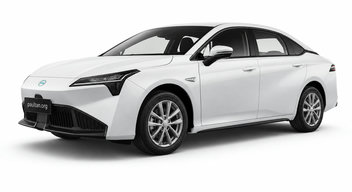
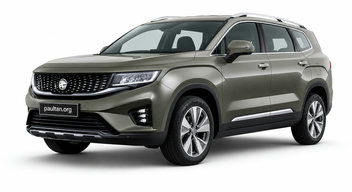
At the same RM106,800, these two solve different problems. The Aion ES is the lower-running-cost, five-seat electric sedan play, with a 55.2 kWh LFP battery, 442 km range and RM70 road tax. The Proton X90 is the family-hauling D-segment SUV, giving you seven seats, a 1.5 litre turbo petrol engine with 178 hp and 290 Nm, plus a taller, wider body. The Aion has the bigger boot on paper at 450 litres versus 257 litres, but the Proton buys you the extra two seats.
Pick the Aion ES if you want an electric sedan with 442 km range, a 450-litre boot and lower RM70 road tax.
Pick the Proton X90 if you need seven seats, SUV height and the stronger 178 hp/290 Nm petrol drivetrain.
Key differences
- Price: Aion ES RM106,800; Proton X90 RM106,800
- Powertrain: Aion ES electric motor with 136 hp/225 Nm; Proton X90 1.5 litre turbo petrol with 178 hp/290 Nm
- Seating: Aion ES 5 seats; Proton X90 7 seats
- Boot space: Aion ES 450 litres; Proton X90 257 litres
- Size: Aion ES 4,810 mm long/1,880 mm wide/1,545 mm tall; Proton X90 4,830 mm/1,900 mm/1,764 mm
- Road tax: Aion ES RM70 per year; Proton X90 RM120 per year
ES
- 442 km EV range from a 55.2 kWh LFP battery
- Larger 450-litre boot than the Proton X90’s 257 litres
- Lower RM70 annual road tax
- Only 5 seats versus the Proton X90’s 7
- Lower output at 136 hp and 225 Nm versus 178 hp and 290 Nm
X90
- Seven-seat cabin suits larger families
- Stronger 178 hp and 290 Nm petrol drivetrain
- Longer wheelbase at 2,805 mm versus 2,750 mm
- Smaller 257-litre boot versus the Aion ES’s 450 litres
- Higher RM120 annual road tax
- Shorter time-based warranty at 5 years versus 8 years
| Price & overview | ||
|---|---|---|
| Price | RM 106,800 | RM 106,800 |
| Body type | Sedan | SUV |
| Segment | C-Segment | D-Segment |
| Assembly | CBU | CKD |
| Powertrain | ||
| Engine Tech | — | 12-valve DOHC, Turbocharged with Direct Fuel Injection and Variable Valve Timing |
| Capacity | — | 1,499 cc |
| Horsepower | — | 178 hp |
| Torque | — | 290 Nm |
| Cylinder Arrangement | — | Inline |
| Timing Type | — | Chain |
| Fuel | Electric | Petrol |
| Number of Motors | 1 | — |
| Motor Horsepower | 136 hp | — |
| Motor Torque | 225 Nm | — |
| Battery Type | LFP | — |
| Battery Capacity | 55.2 kWh | — |
| EV Range | 442 km | — |
| Charger Type (AC) | Type 2 | — |
| Charging Rate (AC) | 6.6 kW | — |
| Charger Type (DC) | CCS2 | — |
| Charging Rate (DC) | 60 kW | — |
| Drivetrain | ||
| Transmission | Automated Manual | Dual-clutch Automatic (Wet) |
| Gears | — | 7 |
| Driveline | Front Wheel Drive | Front Wheel Drive |
| Dimensions | ||
| Length | 4,810 mm | 4,830 mm |
| Width | 1,880 mm | 1,900 mm |
| Height | 1,545 mm | 1,764 mm |
| Wheelbase | 2,750 mm | 2,805 mm |
| Weight | — | 1,695 kg |
| Fuel Tank | — | 60 litres |
| Doors | 4 | 5 |
| Seats | 5 | 7 |
| Boot Space | 450 litres✓ | 257 litres |
| Front Tyre | 215/55 R17 | 225/55R18 |
| Rear Tyre | 215/55 R17 | 225/55R18 |
| Spare Tyre | — | Space Saver |
| Factory Tyres | — | Giti Control P10 |
| Chassis | ||
| Assembly | Afghanistan (CBU) | Malaysia (CKD) |
| Chassis | — | Unibody |
| Front Suspension | — | MacPherson Struts |
| Rear Suspension | — | Multi-Link |
| Front Wheels | 17 | 18" Alloy |
| Rear Wheels | 17 | 18" Alloy |
| Front Brakes | — | Ventilated Discs |
| Rear Brakes | — | Solid Discs |
| Steering | — | Rack and Pinion (Electric Power Steering) |
| Safety | ||
| Airbags | — | Driver and Passenger, Front Side, Front and Rear Curtain |
| ABS/EBD | — | ✓ |
| Stability Control | — | ✓ |
| Alarm | — | ✓ |
| Immobilizer | — | ✓ |
| Airbag Disable Function | — | ✓ |
| Child Safety Lock | — | Manual for Rear Doors |
| Seat Belts | — | 7 Three-point |
| ISOFIX | — | Available on two middle row passenger seats |
| Lane-keeping Assist | — | No |
| Seatbelt Reminder | — | For All Seats |
| Lighting | ||
| Headlamps | — | LED Reflector |
| Taillamps | — | Full LED |
| LED Daytime Running Lights | — | ✓ |
| Front Foglamps | — | ✓ |
| Rear Foglamps | — | ✓ |
| Wing Mirror Turn Indicators | — | ✓ |
| Cabin | ||
| Front Seats | — | Manual Adjustable |
| Rear Seats | — | 60:40 Split-folding Middle Row, 50:50 Split-folding Last Row |
| Front Air-con | — | Dual-zone Automatic Climate Control |
| Rear Air-con | — | Rear Vents with Blower control |
| Power Sockets | — | 1 Front, 3 USB Front, 2 USB Second Row, 2 USB Third Row |
| Interior Lighting | — | Map Lights |
| Cup Holders | — | 2 Front, 2 Middle Row, 2 Back Row |
| Audio | — | 12.3" Touchscreen Atlas OS Infotainment System with wireless Apple CarPlay & Android Auto and 6 Speakers |
| Convenience | ||
| Power Windows | — | Four Windows, Auto Up and Down with Anti-Pinch |
| Engine Start | — | Keyless Push Button |
| Locks | — | Keyless Operation |
| Cruise Control | — | Passive Cruise Control |
| Tiptronic | — | ✓ |
| Steering Audio Control | — | ✓ |
| Steering Tilt | — | ✓ |
| Steering Telescopic | — | ✓ |
| Boot Operation | — | Remote Control Activation |
| Parking Sensor Rear | — | 4 Sensors |
| Reverse Camera | — | Yes |
| Folding Wing Mirrors | — | ✓ |
| Bluetooth | — | ✓ |
| Hill Start Assist | — | ✓ |
| Instrument Cluster | — | Digital/Analogue |
| Parking Brake | — | Electronic |
| Warranty | ||
| Warranty Mileage Manufacturer | 160,000 km | Unlimited✓ |
| Warranty Manufacturer | 8 years✓ | 5 years |
| Ownership | ||
| Road tax / year | RM 70✓ | RM 120 |
Specs shown for the selected variant of each car. ✓ marks the better figure where lower/higher is objectively better. Road tax: West Malaysia, private registration.
ES vs X90 FAQ
Is the Aion ES or Proton X90 better?
The Aion ES is better for EV running costs, boot space and road tax. The Proton X90 is better if you need seven seats, SUV packaging and stronger quoted output.
What is the price difference?
There is no price difference here. Both the Aion ES and Proton X90 are priced at RM106,800.
Which has more boot space?
The Aion ES has more boot space on paper, with 450 litres versus the Proton X90’s 257 litres.