

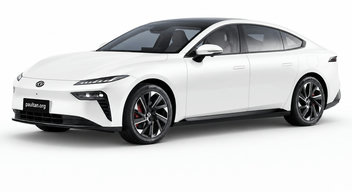
Verdict
The BMW 3 Series costs RM97,912 more at RM267,800, and that gap buys a 480-litre boot, 40:20:40 rear backrest, head-up display, navigation and automated parallel or perpendicular parking with reversing assist. But the Dongfeng 007 is not merely the cheaper option: its 268-hp, 310-Nm motor reaches 100 km/h in 5.8 seconds, against 7.4 seconds for the BMW’s 184-hp, 300-Nm turbo petrol four. For Malaysians able to charge regularly, the Dongfeng’s 73.48-kWh battery, 650-km claimed range and seven-year vehicle warranty make the stronger case; the BMW suits buyers who prioritise its extra parking and cabin-use features.
The 3 Series 330Li M Sport (RM323,800) sits above every 007 variant here, so the verdict compares the closest-priced pairing — use the selectors above to match any two trims.
Pick the BMW 3 Series if you want the larger 480-litre boot, split-folding rear seat, head-up display and automated parking assistance.
Pick the Dongfeng 007 if you can charge an EV regularly and want quicker 5.8-second acceleration, a 650-km claimed range and a far lower purchase price.
Key differences
- Price: BMW 3 Series RM267,800; Dongfeng 007 RM169,888.
- Acceleration: BMW 3 Series 0-100 km/h in 7.4 seconds; Dongfeng 007 in 5.8 seconds.
- Powertrain output: BMW 3 Series 184 hp and 300 Nm; Dongfeng 007 268 hp and 310 Nm.
- Dimensions: BMW 3 Series 4,709 mm long with a 2,851 mm wheelbase; Dongfeng 007 4,880 mm long with a 2,915 mm wheelbase.
- Boot space: BMW 3 Series 480 litres; Dongfeng 007 452 litres.
- Warranty: BMW 3 Series two years, plus three-year extended warranty; Dongfeng 007 seven years, plus an eight-year unlimited-mileage drive-battery warranty.
3 Series
- 480-litre boot and 40:20:40 split-folding rear seat.
- Head-up display, navigation and automated parking with reversing assist.
- Dual-zone front and single-zone rear automatic climate control.
- Costs RM97,912 more.
- Slower 0-100 km/h time of 7.4 seconds versus 5.8 seconds.
- Two-year manufacturer warranty is shorter than the Dongfeng’s seven years.
007
- 268 hp, 310 Nm and a 5.8-second 0-100 km/h time.
- 73.48-kWh battery, 650-km claimed range and 200-kW DC charging.
- Adaptive cruise control, panoramic glass roof and 19-speaker audio.
- 452-litre boot is 28 litres smaller than the BMW’s.
- No front parking sensors, versus six on the BMW.
- Rear occupants get air-con vents rather than the BMW’s rear single-zone climate control.
What the 3 Series has over the 007
What the 007 has over the 3 Series
Based on the published spec sheets of the selected variants — a blank field on one side can also mean unlisted data.
The 007's wheelbase is 64 mm longer, which usually translates to more rear legroom. The 007 is 68 mm wider — more shoulder room, but a tighter fit in parking bays.
Representative body-type outlines, drawn to scale from each car's length and height.
| Price & overview | ||
|---|---|---|
| Price | RM267,800 | RM169,888✓ |
| Body type | Sedan | Sedan |
| Segment | Compact Executive | Compact Executive |
| Assembly | CKD | CBU |
| Ownership | ||
| Road tax / year | RM379 | RM260✓ |
| Monthly instalment (est.) | RM2,735/mo | RM1,735/mo✓ |
| Insurance / year (est.) | RM7,276 | RM4,665✓ |
| Fuel or electricity / year (est.) | — | RM1,005 |
| Energy cost / 100 km (est.) | — | RM5.02 |
| 5-year running costs (est.) | — | RM29,647 |
| Charging (estimated) | ||
| AC charge 0–100% (est.) | — | 11.1 hours |
| DC charge 10–80% (est.) | — | 25 min |
| Powertrain | ||
| Engine Tech | 16-valve DOHC direct injection with twin-scroll turbocharger, variable valve timing | 400V architecture |
| Capacity | 1,998 cc | — |
| Horsepower | 184 hp at 5,000 rpm | — |
| Torque | 300 Nm at 1,350 rpm | — |
| Cylinder Arrangement | Inline 4 | — |
| Fuel | Petrol | Electric |
| Bore × Stroke | 82 mm × 94.6 mm | — |
| Compression Ratio | 11 | — |
| Number of Motors | — | 1 |
| Motor Horsepower | — | 268 hp |
| Motor Torque | — | 310 Nm |
| Battery Capacity | — | 73.48 kWh |
| EV Range | — | 650 km |
| Charging Rate (AC) | — | 6.6 kW |
| Charging Rate (DC) | — | 200 kW |
| V2L | — | 3.3 kW |
| Drivetrain | ||
| Transmission | Conventional Automatic | Single Ratio Automatic |
| Transmission Name | Steptronic Sport | — |
| Gears | 8 | — |
| Transmission Manufacturer | ZF | — |
| Driveline | Rear Wheel Drive | Rear Wheel Drive |
| Performance & Efficiency | ||
| 0-100 km/h | 7.4 seconds | 5.8 seconds✓ |
| Top Speed | 235 km/h | — |
| Dimensions | ||
| Length | 4,709 mm | 4,880 mm |
| Width | 1,827 mm | 1,895 mm |
| Height | 1,435 mm | 1,465 mm |
| Wheelbase | 2,851 mm | 2,915 mm |
| Weight | 1,590 kg | 1,852 kg |
| Fuel Tank | 59 litres | — |
| Doors | 4 | 4 |
| Seats | 5 | 5 |
| Boot Space | 480 litres✓ | 452 litres |
| Front Tyre | 225/45R18 | 235/45TR19 |
| Rear Tyre | 225/45R18 | 235/45TR19 |
| Spare Tyre | — | Tyre Repair Kit |
| Factory Tyres | Hankook Ventus s1 Evo 3 | — |
| Wiper Blade (Driver) | 24 inch | — |
| Wiper Blade (Passenger) | 19 inch | — |
| Chassis | ||
| Assembly | Malaysia (CKD) | China (CBU) |
| Front Suspension | Double Wishbones | MacPherson Struts |
| Rear Suspension | Multi-link | Multi-link |
| Front Wheels | 18" V-spoke Style 780 Bicolour Alloys | 19" Alloys |
| Rear Wheels | 18" V-spoke Style 780 Bicolour Alloys | 19" Alloys |
| Steering | Rack and Pinion (Electric Power Steering) | Rack and Pinion (Electric Power Steering) |
| Safety | ||
| Airbags | 6 (Driver and Passenger, Front Side, Front and Rear Curtain) | 6 (Driver and Front Passenger, Front Side, Curtain Airbags) |
| ABS/EBD | ✓ | ✓ |
| Stability Control | ✓ | ✓ |
| Alarm | ✓ | — |
| Immobilizer | ✓ | ✓ |
| Child Safety Lock | Manual for Rear Doors | Manual + Screen Control For Rear Doors |
| Seat Belts | 5 Three-point | 5 Three-point |
| Blind Spot Info System | ✓ | ✓ |
| ISOFIX | Available on 2 Outer Rear Seats | Available On Outer Two Rear Seats |
| Autonomous Braking System | Yes, with Pedestrian Detection (5 km/h to 80 km/h) | Yes |
| Lane-keeping Assist | Steering Correction | Steering Correction |
| Collision Warning | ✓ | ✓ |
| Seatbelt Reminder | All Seats | All Seats |
| Lighting | ||
| Headlamps | LED Projectors with High beam Assistant | LED Projectors |
| Taillamps | Full LED | LED Combination |
| LED Daytime Running Lights | ✓ | ✓ |
| Rear Foglamps | ✓ | ✓ |
| Wing Mirror Turn Indicators | ✓ | ✓ |
| Cabin | ||
| Front Seats | Power Adjustable Front Seats with Driver's Memory Function | Powered Front Seats with Ventilation Function |
| Rear Seats | 40:20:40 Split-Folding | One-piece Folding |
| Front Air-con | Dual-zone Automatic Climate Control | Single-zone Automatic Climate Control |
| Rear Air-con | Single-zone Automatic Climate Control | Rear AC Vents |
| Sunroof | — | Panoramic Glass Roof |
| Power Sockets | 1 Front, 1 Centre Armrest, 1 Rear, 1 Boot | 1 Front, 1 Wireless Charger, 1 USB Front, 2 USB Rear |
| Interior Lighting | Map Lights & Ambient Lighting | Map Lights and Ambient Lighting |
| Cup Holders | 2 Front, 2 Rear | 2 Front, 2 Rear |
| Audio | 14.9" BMW Curved Display Live Cockpit Professional, 18-speaker Bowers & Wilkins Sound System | 15.6" Touchscreen with Wireless Apple CarPlay & Android Auto, Wanos Sound System with 19-speakers |
| Convenience | ||
| Power Windows | Four Windows, Auto Up and Down with Anti Pinch | Four Windows, Auto Up & Down |
| Engine Start | Keyless Push Button | Keyless Start (Depress Brake Pedal) |
| Locks | Keyless Operation with Proximity Lock/Unlock | Keyless Operation |
| Auto Start/Stop | ✓ | — |
| Auto Headlamps | ✓ | ✓ |
| Auto Wipers | ✓ | ✓ |
| Cruise Control | Passive Cruise Control | Adaptive Cruise Control |
| Paddle Shift | ✓ | — |
| Steering Audio Control | ✓ | ✓ |
| Steering Tilt | ✓ | ✓ |
| Steering Telescopic | ✓ | — |
| Boot Operation | Remote Control Activation | Powered Boot |
| Parking Sensor Front | 6 Sensors | — |
| Parking Sensor Rear | 6 Sensors | 4 Sensors |
| Reverse Camera | Yes | Yes, 360-degree Surround View |
| Auto Parking | Yes, for Parallel and Perpendicular Parking, with Reversing Assist | — |
| Folding Wing Mirrors | ✓ | ✓ |
| Bluetooth | ✓ | ✓ |
| Navigation | ✓ | — |
| Head-up Display | ✓ | — |
| Hill Start Assist | ✓ | ✓ |
| Instrument Cluster | Full LCD Monitor | Full LCD Monitor |
| Parking Brake | Electronic | Electronic |
| Warranty | ||
| Warranty Mileage Manufacturer | Unlimited | Unlimited |
| Warranty Mileage Extended | Unlimited | — |
| Warranty Manufacturer | 2 years | 7 years✓ |
| Warranty Extended | 3 years | — |
| Warranty Notes | — | 8-year, Unlimited Mileage Warranty for Drive Battery |
Specs shown for the selected variant of each car. ✓ marks the better figure where lower/higher is objectively better. Road tax: West Malaysia, private registration. Running-cost estimates assume 20,000 km/year. Fuel at RM1.99/litre (RON95, subsidised). Electricity at RM0.44/kWh (TNB domestic, home charging); public DC charging costs around RM1.30/kWh. Charging times estimated from battery capacity and peak charging rates. Insurance: comprehensive motor tariff, no NCD. Instalment: 10% down, 2.5% flat rate, 9 years. Prices checked November 2026.
Used 3 Series & 007 for sale
Our reviews & guides
BMW 3 Series


3 Series vs 007 FAQ
Is the BMW 3 Series or Dongfeng 007 better?
The Dongfeng 007 is the stronger choice for EV buyers who can charge regularly, with 650 km of claimed range, quicker acceleration and a seven-year warranty. Choose the BMW 3 Series for its larger boot, split rear seat, navigation, head-up display and automated parking.
What is the price difference?
The BMW 3 Series is RM97,912 dearer: RM267,800 versus RM169,888 for the Dongfeng 007.
Which is quicker, the BMW 3 Series or Dongfeng 007?
The Dongfeng 007 is quicker, reaching 100 km/h in 5.8 seconds. The BMW 3 Series takes 7.4 seconds, despite its 184-hp turbocharged 2.0-litre petrol engine.
How long does charging take?
The 007's 73.5 kWh battery takes about 11.1 hours for a full AC charge, and an estimated 25 minutes from 10% to 80% on a DC fast charger at its 200 kW peak.
Which one is locally assembled?
The 3 Series is assembled in Malaysia (CKD), while the 007 is fully imported (CBU) from China. Local assembly generally helps pricing and spare-parts supply, and CKD programmes usually signal a longer-term commitment to the model here.