
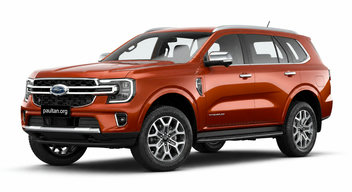
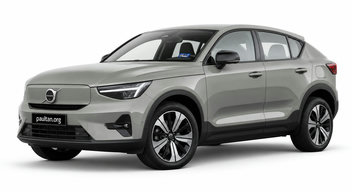
Verdict
At RM281,888, the seven-seat Ford Everest costs RM33,000 more than the five-seat Volvo EC40, and its RM438 annual road tax is RM218 higher. The Everest’s 2.0-litre bi-turbo diesel supplies 500 Nm, an 80-litre tank and a steel spare, so it is the practical choice when the third row matters. The EC40 counters with a 70 kWh battery, 488 km stated range, 200 kW DC charging, 413-litre boot and adaptive cruise with steering assist. Its five-year unlimited-mileage warranty and RM220 road tax make it the sharper urban EV proposition.
Pick the Ford Everest if you need seven seats, 500 Nm of diesel torque and a proper 17-inch steel spare wheel.
Pick the Volvo EC40 if five seats are enough and you want a 488 km EV range, 200 kW DC charging and stronger driver-assistance equipment.
Key differences
- Price: Ford Everest RM281,888; Volvo EC40 RM248,888.
- Annual road tax: Ford Everest RM438; Volvo EC40 RM220.
- Seating: Ford Everest 7 seats; Volvo EC40 5 seats.
- Boot space: Ford Everest 259 litres; Volvo EC40 413 litres.
- Length: Ford Everest 4,914 mm; Volvo EC40 4,440 mm.
- Warranty: Ford Everest 3 years/100,000 km; Volvo EC40 5 years/unlimited mileage.
Everest
- Seven seats and a 2,900 mm wheelbase.
- 500 Nm 2.0-litre bi-turbo diesel with AWD.
- 17-inch steel spare wheel.
- RM33,000 dearer, with RM218 more annual road tax.
- No autonomous braking or lane-keeping assist; the EC40 gets both.
- 4,914 mm long versus the EC40’s 4,440 mm.
EC40
- 70 kWh battery, 488 km stated range and 200 kW DC charging.
- Adaptive cruise with steering assist, 360-degree camera and auto parking.
- Five-year unlimited-mileage warranty.
- Five seats versus the Everest’s seven.
- Tyre repair kit instead of a 17-inch steel spare wheel.
- 420 Nm motor torque versus the Everest’s 500 Nm.
| Price & overview | ||
|---|---|---|
| Price | RM281,888 | RM248,888✓ |
| Body type | SUV | SUV |
| Segment | Truck/4X4 | Compact Executive |
| Assembly | CBU | CKD |
| Ownership | ||
| Road tax / year | RM438 | RM220✓ |
| Powertrain | ||
| Engine Tech | Inline-four with Bi-turbo | 400V architecture |
| Capacity | 1,996 cc | — |
| Horsepower | 207 hp | — |
| Torque | 500 Nm | — |
| Fuel | Diesel | Electric |
| Bore | 84.01 mm | — |
| Compression Ratio | 15.8 | — |
| Number of Motors | — | 1 |
| Motor Horsepower | — | 235 hp |
| Motor Torque | — | 420 Nm |
| Battery Capacity | — | 70 kWh |
| EV Range | — | 488 km |
| Charging Rate (AC) | — | 11 kW |
| Charging Rate (DC) | — | 200 kW |
| Drivetrain | ||
| Transmission | Conventional Automatic | Single Ratio Automatic |
| Transmission Name | 10R80 SelectShift Automatic | — |
| Gears | 10 | — |
| Transmission Manufacturer | Ford | Volvo |
| Driveline | All Wheel Drive | All Wheel Drive |
| Performance & Efficiency | ||
| 0-100 km/h | — | 7.3 seconds |
| Top Speed | — | 180 km/h |
| Dimensions | ||
| Length | 4,914 mm | 4,440 mm |
| Width | 1,923 mm | 1,873 mm |
| Height | 1,841 mm | 1,582 mm |
| Wheelbase | 2,900 mm | 2,702 mm |
| Weight | 2,201 kg | 2,185 kg |
| Fuel Tank | 80 litres | — |
| Doors | 5 | 5 |
| Seats | 7 | 5 |
| Boot Space | 259 litres | 413 litres✓ |
| Front Tyre | 255/55R20 | 235/50R19 |
| Rear Tyre | 255/55R20 | 255/45R19 |
| Spare Tyre | 17" Steel Wheel | N/A, Tyre Repair Kit |
| Factory Tyres | Goodyear Wrangler | Continental EcoContact 6 VOL |
| Chassis | ||
| Assembly | Thailand (CBU) | Malaysia (CKD) |
| Front Suspension | Double Wishbone | MacPherson Strut |
| Rear Suspension | Coil Spring | Multi-Link |
| Front Wheels | 18" Alloy | 19" Alloy |
| Rear Wheels | 18" Alloy | 19" Alloy |
| Steering | Rack and Pinion (Electric Power Steering) | Rack and Pinion (Electric Power Steering) |
| Chassis Notes | — | Sports Chassis |
| Crash Safety Ratings | ||
| ANCAP | 5 stars | — |
| EuroNCAP | — | 5 stars |
| Safety | ||
| Airbags | 7 Airbags (2 Front, 2 Side, 2 Curtain, 1 Driver's Knee) | Driver and Passenger, Front Side, Driver's Knee, Front and Rear Curtain |
| ABS/EBD | ✓ | ✓ |
| Stability Control | ✓ | ✓ |
| Alarm | ✓ | ✓ |
| Immobilizer | ✓ | ✓ |
| Airbag Disable Function | ✓ | — |
| Child Safety Lock | Manual for Rear Doors | Electronic for Rear Doors |
| Seat Belts | 7 | 5 Three-point |
| Blind Spot Info System | ✓ | ✓ |
| ISOFIX | Available for two outer middle row passenger seats | Available for 2 Outer Rear Seats |
| Autonomous Braking System | — | Yes |
| Lane-keeping Assist | No | Steering Correction |
| Collision Warning | ✓ | ✓ |
| Seatbelt Reminder | All seats | For All Seats |
| Lighting | ||
| Headlamps | LED Reflectors with Manual Levelling | LED Projector with Auto High Beam |
| Taillamps | LED Combination | LED Combination |
| LED Daytime Running Lights | ✓ | ✓ |
| Front Foglamps | ✓ | ✓ |
| Rear Foglamps | ✓ | ✓ |
| Wing Mirror Turn Indicators | ✓ | ✓ |
| Cabin | ||
| Front Seats | Power Adjustable Front Seats | Power Adjustable Front Seats |
| Rear Seats | 60:40 Split-folding Middle Row with One-touch Tumble, Manual Recline, 50:50 Split-folding Last Row | 60:40 Split Fold |
| Front Air-con | Dual-zone Automatic Climate Control System | Dual-zone Automatic Climate Control |
| Rear Air-con | Roof-mounted AC Vents | Rear Vents |
| Sunroof | — | Fixed Glass Roof |
| Power Sockets | 1 Front | 1x 12V in front, 2x USB-C front, 2x USB-C rear |
| Interior Lighting | Map Lights & Ambient Lighting | Map Lights & Ambient Lighting |
| Cup Holders | 2x Front, 2x Rear | 2 Front, 2 Rear |
| Audio | 10.1" Ford SYNC4A with eight speakers | 9" Portrait Android Automotive OS Touchscreen with Apple CarPlay, Android Auto |
| Convenience | ||
| Power Windows | Four Windows, Auto Up and Down with Anti Pinch | Four Windows, Auto Up and Down with Anti-Pinch |
| Engine Start | Keyless Push Button | Keyless (Depress Brake to Start) |
| Locks | Keyless Operation | Keyless Entry |
| Auto Headlamps | ✓ | ✓ |
| Auto Wipers | ✓ | ✓ |
| Cruise Control | Passive Cruise Control | Adaptive Cruise Control with Steering Assist and Stop and Go |
| Steering Audio Control | ✓ | ✓ |
| Steering Tilt | ✓ | ✓ |
| Steering Telescopic | ✓ | ✓ |
| Boot Operation | Remote Control Activated | Remote Control Activation |
| Parking Sensor Front | 2 Sensors | 6 Sensors |
| Parking Sensor Rear | 4 Sensors | 6 Sensors |
| Reverse Camera | Yes | Yes, with 360-degree Camera |
| Auto Parking | No | Yes |
| Folding Wing Mirrors | ✓ | ✓ |
| Bluetooth | ✓ | ✓ |
| Navigation | — | ✓ |
| Power Door | No | No |
| Hill Start Assist | ✓ | ✓ |
| Instrument Cluster | Full LCD Monitor | Full LCD Monitor |
| Parking Brake | Electronic | Electronic |
| Warranty | ||
| Warranty Mileage Manufacturer | 100,000 km | Unlimited✓ |
| Warranty Mileage Extended | 60,000 km | — |
| Warranty Manufacturer | 3 years | 5 years✓ |
| Warranty Extended | 2 years | — |
| Warranty Notes | — | 8-year/160,000 km Battery Warranty |
Specs shown for the selected variant of each car. ✓ marks the better figure where lower/higher is objectively better. Road tax: West Malaysia, private registration.
Used Everest & EC40 for sale
Everest vs EC40 FAQ
Is the Ford Everest or Volvo EC40 better?
The Ford Everest is better for seven-seat carrying capacity and diesel torque. The Volvo EC40 is better for lower road tax, EV range, faster DC charging capability and its adaptive cruise, lane support and auto-parking systems.
What is the price difference?
The Ford Everest costs RM33,000 more than the Volvo EC40. Its annual road tax is also RM218 higher, at RM438 versus RM220.
Which is easier to park?
The Volvo EC40 is easier to place in tight spaces: it is 474 mm shorter, has six front and six rear parking sensors, a 360-degree camera and auto parking. The Everest has two front and four rear sensors.