
Verdict
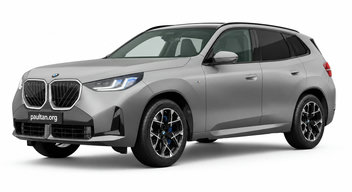
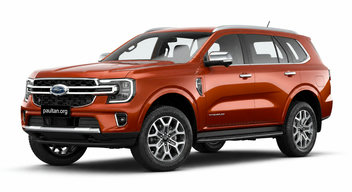
The X3 has a 55% bigger boot, the Everest is about 13% cheaper, while the Everest is 9% more powerful. Weigh that against the equipment each side gives you in the table below.
| Price & overview | ||
|---|---|---|
| Price | RM325,800 | RM281,888✓ |
| Body type | SUV | SUV |
| Segment | Compact Executive | Truck/4X4 |
| Assembly | CKD | CBU |
| Ownership | ||
| Road tax / year | RM439 | RM438✓ |
| Powertrain | ||
| Engine Tech | 16-valve DOHC direct injection with twin-scroll turbocharger, variable valve timing and mild hybrid assistance | Inline-four with Bi-turbo |
| Capacity | 1,998 cc | 1,996 cc |
| Horsepower | 188 hp | 207 hp✓ |
| Torque | 310 Nm | 500 Nm✓ |
| Fuel | Petrol Hybrid/REV | Diesel |
| Bore | — | 84.01 mm |
| Compression Ratio | — | 15.8 |
| Drivetrain | ||
| Transmission | Conventional Automatic | Conventional Automatic |
| Transmission Name | 8-speed Steptronic | 10R80 SelectShift Automatic |
| Gears | 8 | 10 |
| Transmission Manufacturer | ZF | Ford |
| Driveline | All Wheel Drive | All Wheel Drive |
| Performance & Efficiency | ||
| 0-100 km/h | 8.5 seconds | — |
| Top Speed | 215 km/h | — |
| Dimensions | ||
| Length | 4,755 mm | 4,914 mm |
| Width | 1,920 mm | 1,923 mm |
| Height | 1,660 mm | 1,841 mm |
| Wheelbase | 2,865 mm | 2,900 mm |
| Weight | — | 2,201 kg |
| Fuel Tank | — | 80 litres |
| Doors | 5 | 5 |
| Seats | 5 | 7 |
| Boot Space | 570 litres✓ | 259 litres |
| Front Tyre | 245/50R19 | 255/55R20 |
| Rear Tyre | 245/50R19 | 255/55R20 |
| Spare Tyre | N/A, Tyre Repair Kit | 17" Steel Wheel |
| Factory Tyres | Continental EcoContact 6 Q | Goodyear Wrangler |
| Chassis | ||
| Assembly | Malaysia (CKD) | Thailand (CBU) |
| Front Suspension | MacPherson Strut | Double Wishbone |
| Rear Suspension | Multi-link | Coil Spring |
| Front Wheels | 19" Y-spoke M Alloys | 18" Alloy |
| Rear Wheels | 19" Y-spoke M Alloys | 18" Alloy |
| Steering | Rack & Pinion (Electric Power Steering) | Rack and Pinion (Electric Power Steering) |
| Crash Safety Ratings | ||
| ANCAP | — | 5 stars |
| Safety | ||
| Airbags | Driver and Front Passenger, Front Side, Curtain Airbags | 7 Airbags (2 Front, 2 Side, 2 Curtain, 1 Driver's Knee) |
| ABS/EBD | ✓ | ✓ |
| Stability Control | ✓ | ✓ |
| Alarm | ✓ | ✓ |
| Immobilizer | ✓ | ✓ |
| Airbag Disable Function | ✓ | ✓ |
| Child Safety Lock | Manual for Rear Doors | Manual for Rear Doors |
| Seat Belts | 5 Three-point | 7 |
| Blind Spot Info System | ✓ | ✓ |
| ISOFIX | Available for 2 Outer Rear Seats | Available for two outer middle row passenger seats |
| Autonomous Braking System | Yes | — |
| Lane-keeping Assist | Steering Correction | No |
| Collision Warning | ✓ | ✓ |
| Seatbelt Reminder | All Seats | All seats |
| Lighting | ||
| Headlamps | LED Projector | LED Reflectors with Manual Levelling |
| Taillamps | Full LED | LED Combination |
| LED Daytime Running Lights | ✓ | ✓ |
| Front Foglamps | — | ✓ |
| Rear Foglamps | ✓ | ✓ |
| Wing Mirror Turn Indicators | ✓ | ✓ |
| Cabin | ||
| Front Seats | Powered Front Seats | Power Adjustable Front Seats |
| Rear Seats | 40:20:40 Split-folding | 60:40 Split-folding Middle Row with One-touch Tumble, Manual Recline, 50:50 Split-folding Last Row |
| Front Air-con | Dual-zone Automatic Climate Control | Dual-zone Automatic Climate Control System |
| Rear Air-con | Single-zone Automatic Climate Control | Roof-mounted AC Vents |
| Power Sockets | 1 Front, 1 Wireless Charger, 2 USB-C Front, 2 USB-C Rear | 1 Front |
| Interior Lighting | Map Lights & Ambient Lighting | Map Lights & Ambient Lighting |
| Cup Holders | 2 Front, 2 Rear | 2x Front, 2x Rear |
| Audio | 14.9" BMW Curved Display Live Cockpit Professional, 6 Speaker | 10.1" Ford SYNC4A with eight speakers |
| Convenience | ||
| Power Windows | Four Windows, Auto Up and Down with Anti-pinch | Four Windows, Auto Up and Down with Anti Pinch |
| Engine Start | Keyless Push Button | Keyless Push Button |
| Locks | Keyless Operation | Keyless Operation |
| Auto Start/Stop | ✓ | — |
| Auto Headlamps | ✓ | ✓ |
| Auto Wipers | ✓ | ✓ |
| Cruise Control | Adaptive Cruise Control | Passive Cruise Control |
| Paddle Shift | ✓ | — |
| Steering Audio Control | ✓ | ✓ |
| Steering Tilt | ✓ | ✓ |
| Steering Telescopic | ✓ | ✓ |
| Boot Operation | Powered Boot with Contactless Opening | Remote Control Activated |
| Parking Sensor Front | 6 Sensors | 2 Sensors |
| Parking Sensor Rear | 6 Sensors | 4 Sensors |
| Reverse Camera | Yes, 360-degree View Monitor | Yes |
| Auto Parking | Yes | No |
| Folding Wing Mirrors | ✓ | ✓ |
| Bluetooth | ✓ | ✓ |
| Navigation | ✓ | — |
| Head-up Display | ✓ | — |
| Power Door | — | No |
| Hill Start Assist | ✓ | ✓ |
| Instrument Cluster | Full LCD Monitor | Full LCD Monitor |
| Parking Brake | Electronic | Electronic |
| Warranty | ||
| Warranty Mileage Manufacturer | Unlimited✓ | 100,000 km |
| Warranty Mileage Extended | Unlimited✓ | 60,000 km |
| Warranty Manufacturer | 2 years | 3 years✓ |
| Warranty Extended | 3 years✓ | 2 years |
Specs shown for the selected variant of each car. ✓ marks the better figure where lower/higher is objectively better. Road tax: West Malaysia, private registration.