
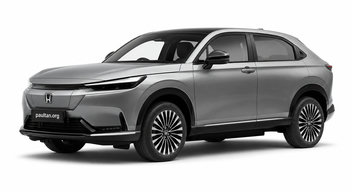
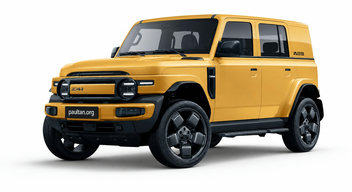
Verdict
At RM149,900, the Honda e:N1 asks RM17,120 more than the RM132,780 iCaur V23, yet the Honda’s case is practicality: five seats and a 344-litre boot against four seats and 234 litres. The V23 counters with dual-motor AWD, 208 hp, a 430-km range and 104-kW DC charging, versus 201 hp, 410 km and 78 kW. Honda restores ground with 11-kW AC charging, rear air-con vents and an eight-year/160,000-km manufacturer warranty; annual road tax is RM160 rather than RM180.
Pick the Honda e:N1 if you need five seats, a 344-litre boot and faster 11-kW AC charging for family use.
Pick the iCaur V23 if you want lower entry cost, dual-motor AWD, 430 km of range and 104-kW DC charging.
Key differences
- Motor and driveline: Honda e:N1 has 1 motor and front-wheel drive; iCaur V23 has 2 motors and all-wheel drive.
- Output and acceleration: Honda e:N1 makes 201 hp and reaches 100 km/h in 7.7 seconds; iCaur V23 makes 208 hp and does it in 7.5 seconds.
- Range and DC charging: Honda e:N1 is rated at 410 km and 78 kW; iCaur V23 manages 430 km and 104 kW.
- AC charging: Honda e:N1 accepts 11 kW; iCaur V23 accepts 6.6 kW.
- Seating and boot space: Honda e:N1 has 5 seats and 344 litres; iCaur V23 has 4 seats and 234 litres.
- Dimensions: Honda e:N1 is 4,380 mm long with a 2,607-mm wheelbase; iCaur V23 is 4,220 mm long with a 2,735-mm wheelbase.
e:N1
- Five seats and a 344-litre boot
- 11-kW AC charging
- Eight-year/160,000-km manufacturer warranty
- RM17,120 higher purchase price
- 78-kW DC charging trails the V23’s 104 kW
- Single-motor front-wheel drive rather than dual-motor AWD
V23
- Dual-motor all-wheel drive
- 430-km range and 104-kW DC charging
- 3.3-kW V2L and ventilated powered front seats
- Four seats instead of five
- 234-litre boot is 110 litres smaller
- 6.6-kW AC charging is slower than 11 kW
What the e:N1 has over the V23
What the V23 has over the e:N1
Based on the published spec sheets of the selected variants — a blank field on one side can also mean unlisted data.
The V23's wheelbase is 128 mm longer, which usually translates to more rear legroom. The V23 is 125 mm wider — more shoulder room, but a tighter fit in parking bays. Boot space favours the e:N1: 344 litres against 234.
Representative body-type outlines, drawn to scale from each car's length and height.
| Price & overview | ||
|---|---|---|
| Price | RM149,900 | RM132,780✓ |
| Body type | SUV | SUV |
| Segment | B-Segment | B-Segment |
| Assembly | CBU | CBU |
| Ownership | ||
| Road tax / year | RM160✓ | RM180 |
| Monthly instalment (est.) | RM1,530/mo | RM1,355/mo✓ |
| Insurance / year (est.) | RM4,145 | RM3,700✓ |
| Electricity / year (est.) | — | RM1,690 |
| Energy cost / 100 km (est.) | — | RM8.45 |
| 5-year running costs (est.) | — | RM27,848 |
| Charging (estimated) | ||
| AC charge 0–100% (est.) | — | 12.4 hours |
| DC charge 10–80% (est.) | — | 55 min |
| Powertrain | ||
| Engine Tech | 400V architecture | 400V architecture |
| Fuel | Electric | Electric |
| Number of Motors | 1 | 2 |
| Motor Horsepower | 201 hp | 208 hp✓ |
| Motor Torque | 310 Nm✓ | 292 Nm |
| Battery Capacity | — | 81.76 kWh |
| EV Range | 410 km | 430 km✓ |
| Charging Rate (AC) | 11 kW✓ | 6.6 kW |
| Charging Rate (DC) | 78 kW | 104 kW✓ |
| V2L | — | 3.3 kW |
| Drivetrain | ||
| Transmission | Single Ratio Automatic | Single Ratio Automatic |
| Driveline | Front Wheel Drive | All Wheel Drive |
| Performance & Efficiency | ||
| 0-100 km/h | 7.7 seconds | 7.5 seconds✓ |
| Top Speed | 160 km/h✓ | 140 km/h |
| Dimensions | ||
| Length | 4,380 mm | 4,220 mm |
| Width | 1,790 mm | 1,915 mm |
| Height | 1,590 mm | 1,845 mm |
| Wheelbase | 2,607 mm | 2,735 mm |
| Weight | 1,662 kg | 1,820 kg |
| Doors | 5 | 5 |
| Seats | 5 | 4 |
| Boot Space | 344 litres✓ | 234 litres |
| Front Tyre | 225/50R18 | 265/45R21 |
| Rear Tyre | 225/50R18 | 265/45R21 |
| Factory Tyres | Continental UltraContact UC6 | Chao Yang Radial RP76+ |
| Chassis | ||
| Assembly | China (CBU) | China (CBU) |
| Front Suspension | MacPherson Strut | MacPherson Struts |
| Rear Suspension | Torsion Beam | Multi-link |
| Front Wheels | 18" Multi-spoke Alloys | 21" Alloys |
| Rear Wheels | 18" Multi-spoke Alloys | 21" Alloys |
| Steering | Rack and Pinion (Electric Power Steering) | Rack & Pinion (Electric Power Steering) |
| Safety | ||
| Airbags | 6 (Driver and Passenger, Front Side, Front and Rear Curtain) | 6 (Driver & Front Passenger, Front Side, Curtain Airbags) |
| ABS/EBD | ✓ | ✓ |
| Stability Control | ✓ | ✓ |
| Alarm | — | ✓ |
| Immobilizer | ✓ | ✓ |
| Child Safety Lock | Manual for Rear Doors | Manual for Rear Doors |
| Seat Belts | 5 Three-point | 4 Three-point |
| Blind Spot Info System | ✓ | ✓ |
| ISOFIX | Available on 2 Outer Rear Seats | Available on rear seats |
| Autonomous Braking System | Yes, Honda Sensing | Yes |
| Lane-keeping Assist | Warning Only | Steering Correction |
| Collision Warning | ✓ | ✓ |
| Seatbelt Reminder | All Seats | All Seats |
| Lighting | ||
| Headlamps | LED Reflector with Auto High Beam | LED Projectors |
| Taillamps | Full LED | Full LED |
| LED Daytime Running Lights | ✓ | ✓ |
| Front Foglamps | ✓ | — |
| Rear Foglamps | — | ✓ |
| Wing Mirror Turn Indicators | ✓ | — |
| Cabin | ||
| Front Seats | 8-way Power Adjustable Driver's Seat, Manual Adjustable Front Passenger Seat | Powered Front Seats with Ventilation |
| Rear Seats | 60:40 Split-folding with Centre Armrest | 50:50 Split-folding |
| Front Air-con | Dual-zone Automatic Climate Control | Single-zone Automatic Climate Control |
| Rear Air-con | Rear Vents | — |
| Power Sockets | 1 Front, 1 Wireless Charger, 2 Front USB, 2 Rear USB | 1 Wireless Charger, 2 USB Front |
| Interior Lighting | Map Lights and Ambient Lights | Map Lights & Ambient Lighting |
| Cup Holders | 2 Front, 2 Rear | 2 Front |
| Audio | 15.1" Portrait Touchscreen with Apple CarPlay & Android Auto | 15.4" Touchscreen with Wireless Apple CarPlay & Android Auto, 6-speaker Sound System |
| Convenience | ||
| Power Windows | Four Windows, Auto Up and Down with Anti-pinch | Four Windows, Auto Up & Down with Anti-pinch |
| Engine Start | Keyless Entry (Push Button Start) | Keyless Start (Depress Brake Pedal) |
| Locks | Keyless Operation | Keyless Operation |
| Auto Headlamps | ✓ | ✓ |
| Auto Wipers | ✓ | ✓ |
| Cruise Control | Adaptive Cruise Control | Adaptive Cruise Control |
| Steering Audio Control | ✓ | ✓ |
| Steering Tilt | ✓ | ✓ |
| Steering Telescopic | ✓ | ✓ |
| Boot Operation | Remote Control Activation | Remote Control Operation |
| Parking Sensor Front | 4 Sensors | 4 Sensors |
| Parking Sensor Rear | 4 Sensors | 4 Sensors |
| Reverse Camera | Yes | Yes |
| Folding Wing Mirrors | ✓ | ✓ |
| Bluetooth | ✓ | ✓ |
| Navigation | ✓ | ✓ |
| Head-up Display | ✓ | — |
| Hill Start Assist | ✓ | ✓ |
| Instrument Cluster | Full LCD Monitor | Full LCD Monitor |
| Parking Brake | Electronic | Electronic |
| Warranty | ||
| Warranty Mileage Manufacturer | 160,000 km✓ | 150,000 km |
| Warranty Manufacturer | 8 years✓ | 7 years |
| Warranty Notes | 8-year/160,000 km Battery Warranty | 8 Years/160000 km Battery Warranty, Drive Unit & High Voltage Components |
Specs shown for the selected variant of each car. ✓ marks the better figure where lower/higher is objectively better. Road tax: West Malaysia, private registration. Running-cost estimates assume 20,000 km/year. Electricity at RM0.44/kWh (TNB domestic, home charging); public DC charging costs around RM1.30/kWh. Charging times estimated from battery capacity and peak charging rates. Insurance: comprehensive motor tariff, no NCD. Instalment: 10% down, 2.5% flat rate, 9 years. Prices checked October 2026.
Used e:N1 & V23 for sale
Our reviews & guides


e:N1 vs V23 FAQ
Is the Honda e:N1 or iCaur V23 better?
The iCaur V23 is the stronger specification buy with AWD, 208 hp, 430 km range and 104-kW DC charging. Choose the Honda e:N1 instead if five seats, a larger 344-litre boot and 11-kW AC charging matter more.
What is the price difference?
The iCaur V23 costs RM17,120 less than the Honda e:N1.
Which is more practical for a family?
The Honda e:N1 is the clear family choice. It has five seats, a 344-litre boot, 60:40 split-folding rear seats, rear air-con vents and two rear USB ports; the iCaur V23 has four seats and a 234-litre boot.
How long does charging take?
The V23's 81.8 kWh battery takes about 12.4 hours for a full AC charge, and an estimated 55 minutes from 10% to 80% on a DC fast charger at its 104 kW peak.
Which has the better warranty?
The e:N1 carries a 8-year manufacturer warranty against 7 years for the V23. e:N1: 8-year/160,000 km Battery Warranty. V23: 8 Years/160000 km Battery Warranty, Drive Unit & High Voltage Components.