
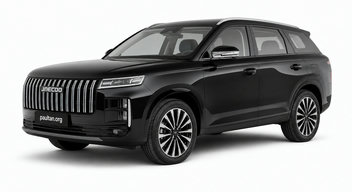

Verdict
The Omoda Jaecoo J5 costs RM108,000, an RM8,200 step above the Wuling Porta EV, but it is the sensible private-car choice: five seats, six airbags, a 480-litre boot and a 145 hp/210 Nm petrol four-cylinder. The Porta EV is a working vehicle first, with only two seats but 6.5 m3 of cargo room and a 1,165 kg payload. Its 41.9 kWh battery has a claimed 300 km range, making it the cheaper low-road-tax option for urban delivery use.
Pick the Omoda Jaecoo J5 if you need a five-seat SUV with substantially broader safety equipment, passenger comfort and a 7-year/150,000 km warranty.
Pick the Wuling Porta EV if your priority is electric urban cargo work, a 1,165 kg payload and 6.5 m3 of load space.
Key differences
- Price: Omoda Jaecoo J5 RM108,000; Wuling Porta EV RM99,800.
- Powertrain: J5 145 hp and 210 Nm 1.5-litre turbo petrol; Porta EV 101 hp and 180 Nm electric motor.
- Passenger capacity: J5 five seats; Porta EV two seats.
- Cargo capability: J5 480-litre boot; Porta EV 6.5 m3 cargo bay and 1,165 kg payload.
- Safety: J5 six airbags with autonomous braking and lane-keeping assist; Porta EV two airbags and no autonomous braking or lane-keeping assist.
- Road tax and warranty: J5 RM120 yearly and 7 years/150,000 km; Porta EV RM50 yearly and 5 years/120,000 km.
J5
- Five seats and a 480-litre boot.
- Six airbags, autonomous braking and lane-keeping assist.
- Longer 7-year/150,000 km manufacturer warranty.
- RM8,200 dearer and RM70 more in annual road tax.
- Cannot match the Porta EV's 6.5 m3 cargo bay or 1,165 kg payload.
Porta EV
- 41.9 kWh battery with 300 km claimed range.
- 6.5 m3 cargo bay, 1,165 kg payload and dual sliding doors.
- Lower RM50 annual road tax.
- Only two seats, against the J5's five.
- Two airbags and no autonomous braking or lane-keeping assist.
- Shorter 5-year/120,000 km manufacturer warranty.
What the J5 has over the Porta EV
What the Porta EV has over the J5
Based on the published spec sheets of the selected variants — a blank field on one side can also mean unlisted data.
The Porta EV's wheelbase is 430 mm longer, which usually translates to more rear legroom. The J5 is 60 mm wider — more shoulder room, but a tighter fit in parking bays.
Representative body-type outlines, drawn to scale from each car's length and height.
| Price & overview | ||
|---|---|---|
| Price | RM108,000 | RM99,800✓ |
| Body type | SUV | Commercial |
| Segment | B-Segment | Commercial |
| Assembly | CKD | CKD |
| Ownership | ||
| Road tax / year | RM120 | RM50✓ |
| Monthly instalment (est.) | RM1,105/mo | RM1,020/mo✓ |
| Insurance / year (est.) | RM3,088 | RM2,843✓ |
| Fuel or electricity / year (est.) | — | RM1,241 |
| Energy cost / 100 km (est.) | — | RM6.21 |
| 5-year running costs (est.) | — | RM20,668 |
| Powertrain | ||
| Engine Tech | 16-valve DOHC with direct fuel injection, turbocharger and variable valve timing | 400V architecture |
| Capacity | 1,498 cc | — |
| Horsepower | 145 hp at 5,500 rpm | — |
| Torque | 210 Nm at 1,750 rpm | — |
| Cylinder Arrangement | Inline 4 | — |
| Fuel | Petrol | Electric |
| Number of Motors | — | 1 |
| Motor Horsepower | — | 101 hp |
| Motor Torque | — | 180 Nm |
| Battery Capacity | — | 41.9 kWh |
| EV Range | — | 300 km |
| Drivetrain | ||
| Transmission | CVT Automatic | Single Ratio Automatic |
| Transmission Name | — | Single-speed Automatic |
| Driveline | Front Wheel Drive | Rear Wheel Drive |
| Performance & Efficiency | ||
| 0-100 km/h | 10.2 seconds | — |
| Top Speed | 175 km/h✓ | 115 km/h |
| Dimensions | ||
| Length | 4,380 mm | 5,010 mm |
| Width | 1,860 mm | 1,800 mm |
| Height | 1,650 mm | 1,960 mm |
| Wheelbase | 2,620 mm | 3,050 mm |
| Weight | — | 1,565 kg |
| Doors | 5 | 5 |
| Seats | 5 | 2 |
| Boot Space | 480 litres | — |
| Front Tyre | 235/55R18 | 195/70R15C |
| Rear Tyre | 235/55R18 | 195/70R15C |
| Spare Tyre | Space Saver | Full Size |
| Factory Tyres | Chao Yang Aggressor ZS03+ M+S | — |
| Chassis | ||
| Assembly | Malaysia (CKD) | Malaysia (CKD) |
| Front Suspension | MacPherson Struts | MacPherson Strut |
| Rear Suspension | Multi-link | Leaf Springs (5-leaf) |
| Front Wheels | 18" Alloys | 15" Steel with Wheel Cap |
| Rear Wheels | 18" Alloys | 15" Steel with Wheel Cap |
| Steering | Rack & Pinion (Electric Power Steering) | Electric Power Steering |
| Chassis Notes | — | Cargo 6.5 m3 (2,830 x 1,680 x 1,365 mm); payload 1,165 kg; GVW 2,730 kg; front disc / rear drum brakes |
| Safety | ||
| Airbags | 6 (Driver & Front Passenger, Front Side and Rear Curtain Airbags) | 2 (Driver and Passenger) |
| ABS/EBD | ✓ | ✓ |
| Stability Control | ✓ | ✓ |
| Alarm | ✓ | — |
| Immobilizer | ✓ | ✓ |
| Airbag Disable Function | ✓ | — |
| Child Safety Lock | Manual for rear doors | — |
| Seat Belts | 5 Three-point | — |
| Blind Spot Info System | ✓ | — |
| ISOFIX | Available on outer two rear seats | — |
| Autonomous Braking System | Yes | — |
| Lane-keeping Assist | Steering Correction | No |
| Collision Warning | ✓ | — |
| Seatbelt Reminder | All Seats | — |
| Safety Notes | — | Brake assist, traction control, VDC/VSC, low-speed pedestrian alarm; 83% ultra-high-strength steel cage-type body |
| Lighting | ||
| Headlamps | LED Projectors | LED |
| Taillamps | Full LED | Halogen |
| LED Daytime Running Lights | ✓ | — |
| Front Foglamps | — | ✓ |
| Rear Foglamps | ✓ | ✓ |
| Wing Mirror Turn Indicators | ✓ | — |
| Cabin | ||
| Front Seats | Driver & Front Passenger Powered Seats | 2 Fabric Seats, 4-way Manual Adjustment |
| Rear Seats | 60:40 Split-folding | — |
| Front Air-con | Dual-zone Automatic Climate Control | Electronic Air Conditioning |
| Rear Air-con | Rear AC Vents | — |
| Sunroof | Panoramic Sunroof | — |
| Power Sockets | 1 Front, 1 Wireless Charger, 2 USB Front, 1 USB Rear | USB Port |
| Interior Lighting | Map Lights, Ambient Lighting | — |
| Cup Holders | 2 Front, 2 Rear | Yes |
| Sun Shade | Panoramic Glass Shade | — |
| Audio | 13.2-inch Portrait Touchscreen with Apple CarPlay & Android Auto Connectivity, Karaoke Functionality | 8" Head Unit with Bluetooth and USB, 3.5" TFT Cluster |
| Convenience | ||
| Power Windows | Four Windows, Auto Up and Down with Anti-pinch | Dual Power Windows, Driver Auto with Anti-pinch |
| Engine Start | Keyless Push Button | Keyed Ignition |
| Locks | Keyless Operation | Remote Central Locking (Integrated Key) |
| Auto Headlamps | ✓ | — |
| Auto Wipers | ✓ | — |
| Cruise Control | Adaptive Cruise Control | — |
| Steering Audio Control | ✓ | ✓ |
| Steering Tilt | ✓ | ✓ |
| Steering Telescopic | ✓ | — |
| Boot Operation | Powered Boot | Manual Barn Doors, 270-degree Opening |
| Parking Sensor Front | 2 Sensors | — |
| Parking Sensor Rear | 4 Sensors | Yes |
| Reverse Camera | Yes, 360-degree Camera | Yes |
| Folding Wing Mirrors | ✓ | — |
| Bluetooth | ✓ | ✓ |
| Navigation | ✓ | — |
| Power Door | — | Dual Sliding Side Doors (777 mm) |
| Hill Start Assist | ✓ | ✓ |
| Instrument Cluster | Digital/Analogue | Digital/Analogue |
| Parking Brake | Electronic | Handbrake |
| Convenience Notes | — | Rotary gear selector; dual sliding side doors (777 mm); 8-inch head unit in English, Chinese and Malay; 7 kW wallbox (RM3,500) free with early-bird bookings, along with a three-pin charger and 3-year/60,000 km scheduled maintenance |
| Warranty | ||
| Warranty Mileage Manufacturer | 150,000 km✓ | 120,000 km |
| Warranty Manufacturer | 7 years✓ | 5 years |
| Warranty Notes | — | EV battery cell 6-yr/300,000 km; drive motor, EV battery and BMS 5-yr/200,000 km |
Specs shown for the selected variant of each car. ✓ marks the better figure where lower/higher is objectively better. Road tax: West Malaysia, private registration. Running-cost estimates assume 20,000 km/year. Fuel at RM1.99/litre (RON95, subsidised). Electricity at RM0.44/kWh (TNB domestic, home charging); public DC charging costs around RM1.30/kWh. Charging times estimated from battery capacity and peak charging rates. Insurance: comprehensive motor tariff, no NCD. Instalment: 10% down, 2.5% flat rate, 9 years. Prices checked November 2026.
Used J5 & Porta EV for sale
Our reviews & guides
Omoda Jaecoo J5


J5 vs Porta EV FAQ
Is the Omoda Jaecoo J5 or Wuling Porta EV better?
The J5 is better for private use because it has five seats, six airbags, a 480-litre boot and driver-assistance features. The Porta EV is better only when commercial load carrying is central, thanks to its 6.5 m3 cargo area and 1,165 kg payload.
What is the price difference?
The Omoda Jaecoo J5 costs RM8,200 more than the Wuling Porta EV. The J5's extra outlay brings five-seat SUV accommodation, more safety equipment and a longer manufacturer warranty; the Porta focuses its lower entry cost on electric commercial capability.
Can the Wuling Porta EV carry more than the Omoda Jaecoo J5?
Yes. The Porta EV has a 6.5 m3 cargo bay measuring 2,830 x 1,680 x 1,365 mm and a 1,165 kg payload. The J5 has a 480-litre boot and five passenger seats, so it is configured for people rather than freight.