
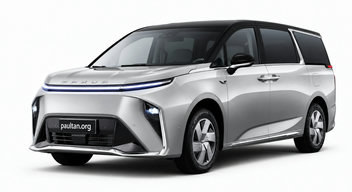
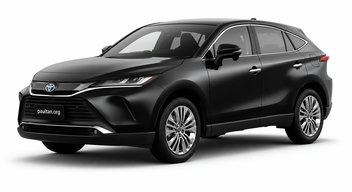
Verdict
The Maxus MIFA 9 makes the stronger family case: seven seats, a 1,010-litre boot and a 3,200-mm wheelbase give it far more people and luggage capacity than the Harrier’s five seats, 396 litres and 2,690 mm. Its 435-km EV range, 120-kW DC charging and RM220 annual road tax suit drivers able to charge regularly. The Toyota Harrier is 1,400 kg lighter, 530 mm shorter and carries a 55-litre petrol tank, so it is the easier fit for buyers who do not want charging to dictate their routine.
Pick the Maxus MIFA 9 if you need seven seats, a 1,010-litre boot and can make use of its 435-km electric range.
Pick the Toyota Harrier if you want a much shorter, 1,695-kg hybrid SUV with a 55-litre petrol tank and extra parking aids.
Key differences
- Price: Maxus MIFA 9 RM269,888; Toyota Harrier RM289,000.
- Seats: Maxus MIFA 9 seven; Toyota Harrier five.
- Boot space: Maxus MIFA 9 1,010 litres; Toyota Harrier 396 litres.
- Length: Maxus MIFA 9 5,270 mm; Toyota Harrier 4,740 mm.
- Weight: Maxus MIFA 9 3,095 kg; Toyota Harrier 1,695 kg.
- Annual road tax: Maxus MIFA 9 RM220; Toyota Harrier RM830.
MIFA 9
- Seven seats and a 1,010-litre boot.
- 435-km EV range with 11-kW AC and 120-kW DC charging.
- RM610 lower annual road tax.
- 3,095 kg versus the Harrier’s 1,695 kg.
- No front or rear parking sensors, where the Harrier has four at each end.
- 5,270 mm long, 530 mm longer than the Harrier.
Harrier
- 1,400 kg lighter and 530 mm shorter.
- 55-litre petrol tank avoids reliance on charging.
- Front and rear parking sensors, navigation and a front digital video recorder.
- Five seats versus the MIFA 9’s seven.
- 396-litre boot versus the MIFA 9’s 1,010 litres.
- RM610 higher annual road tax.
| Price & overview | ||
|---|---|---|
| Price | RM269,888✓ | RM289,000 |
| Body type | MPV | SUV |
| Segment | D-Segment | D-Segment |
| Assembly | CBU | CBU |
| Ownership | ||
| Road tax / year | RM220✓ | RM830 |
| Powertrain | ||
| Engine Tech | 400V architecture | 16-valve DOHC, naturally-aspirated with dual variable valve timing and hybrid assistance (VVT-iE on intake, VVT-i on exhaust) |
| Capacity | — | 2,487 cc |
| Horsepower | — | 175 hp |
| Torque | — | 221 Nm |
| Fuel | Electric | Petrol Hybrid/REV |
| Bore | — | 87.5 mm |
| Compression Ratio | — | 14 |
| Number of Motors | 1 | 1 |
| Motor Horsepower | 241 hp✓ | 118 hp |
| Motor Torque | 350 Nm✓ | 202 Nm |
| EV Range | 435 km | — |
| Charging Rate (AC) | 11 kW | — |
| Charging Rate (DC) | 120 kW | — |
| Drivetrain | ||
| Transmission | Single Ratio Automatic | eCVT Automatic |
| Driveline | Front Wheel Drive | Front Wheel Drive |
| Performance & Efficiency | ||
| 0-100 km/h | 9.2 seconds | — |
| Top Speed | — | 180 km/h |
| Dimensions | ||
| Length | 5,270 mm | 4,740 mm |
| Width | 2,000 mm | 1,855 mm |
| Height | 1,840 mm | 1,660 mm |
| Wheelbase | 3,200 mm | 2,690 mm |
| Weight | 3,095 kg | 1,695 kg |
| Fuel Tank | — | 55 litres |
| Doors | 5 | 5 |
| Seats | 7 | 5 |
| Boot Space | 1,010 litres✓ | 396 litres |
| Front Tyre | 235/55R19 | 225/60R18 |
| Rear Tyre | 235/55R19 | 225/60R18 |
| Spare Tyre | Tyre Repair Kit | Space Saver |
| Factory Tyres | Continental EcoContact 6 | Bridgestone Alenza H/L 33 |
| Chassis | ||
| Assembly | China (CBU) | Japan (CBU) |
| Front Suspension | MacPherson Strut | MacPherson Strut |
| Rear Suspension | Multi-link | Double Wishbone |
| Front Wheels | 19" Alloy | 18" Alloy |
| Rear Wheels | 19" Alloy | 18" Alloy |
| Steering | Rack and Pinion (Hydraulic Power Steering) | Rack and Pinion (Electric Power Steering) |
| Crash Safety Ratings | ||
| EuroNCAP | 5 stars | — |
| Safety | ||
| Airbags | Driver and Front Passenger, Side and Curtain Airbags | Driver and Passenger, Front Side, Driver's Knee, Front and Rear Curtain |
| ABS/EBD | ✓ | ✓ |
| Stability Control | ✓ | ✓ |
| Alarm | ✓ | — |
| Immobilizer | ✓ | — |
| Child Safety Lock | — | Manual for Rear Doors |
| Seat Belts | 7 Three Point | 5 Three-point |
| Blind Spot Info System | ✓ | ✓ |
| ISOFIX | Available on front passenger and outer two second row seats | Available on two outer rear passenger seats |
| Autonomous Braking System | Yes | Yes, Pre-collision Braking |
| Lane-keeping Assist | Steering Correction | Steering Correction |
| Collision Warning | ✓ | ✓ |
| Seatbelt Reminder | All Seats | All Seats |
| Safety Notes | — | Tyre Pressure Monitoring System, Rear Cross-Traffic Alert with Braking |
| Lighting | ||
| Headlamps | LED Headlights | Bi-LED Projector |
| Taillamps | Full LED Tail Lights | LED Combination |
| LED Daytime Running Lights | ✓ | ✓ |
| Front Foglamps | — | ✓ |
| Rear Foglamps | ✓ | ✓ |
| Wing Mirror Turn Indicators | ✓ | ✓ |
| Cabin | ||
| Front Seats | Powered Front Seats with Power Lumbar | 12-way Power Adjustable Driver's Seat with Memory Function, Power Adjustable 4-way Passenger Seat |
| Rear Seats | Sliding and Folding Second Row | 60:40 Split-folding with Centre Armrest, Manual Recline |
| Front Air-con | Dual-zone Automatic Climate Control | Dual-zone Automatic Climate Control |
| Rear Air-con | Rear Vents with Blower Control | Rear Vents |
| Sunroof | Yes | Full-sized Moonroof with Electrochromic Function |
| Power Sockets | 1 Front | 1 Front, 2 Front USB, 2 Rear USB |
| Interior Lighting | Map Lights and Ambient Lighting | Map Lights, Cupholder Lights and Footwell Lights |
| Cup Holders | 2 Front, 2 Rear | 2 Front, 2 Rear |
| Audio | 12.3" Touchscreen with Apple CarPlay, Android Auto and a 8-speaker sound system | 8" Display Audio with Bluetooth, Apple CarPlay and Android Auto, Six speakers |
| Convenience | ||
| Power Windows | Four Windows, Auto Up & Down with Anti-pinch | Four Windows, Driver's Side Auto Up and Down with Anti Pinch |
| Engine Start | Keyless Entry (Push Button Start) | Keyless Push Button |
| Locks | Keyless Operation | Keyless Operation |
| Auto Headlamps | ✓ | ✓ |
| Auto Wipers | ✓ | ✓ |
| Cruise Control | Adaptive Cruise Control | Adaptive Cruise Control |
| Tiptronic | — | ✓ |
| Steering Audio Control | ✓ | ✓ |
| Steering Tilt | ✓ | ✓ |
| Steering Telescopic | ✓ | ✓ |
| Electric Steering Adjustment | — | ✓ |
| Boot Operation | Contactless Opening, Powered Boot | Powered with Kick Sensor |
| Parking Sensor Front | — | 4 Sensors |
| Parking Sensor Rear | — | 4 Sensors |
| Reverse Camera | Yes, with 360-degree Camera | Yes, with 360 Degree Camera |
| Folding Wing Mirrors | ✓ | ✓ |
| Bluetooth | ✓ | ✓ |
| Navigation | — | ✓ |
| Power Door | Powered Sliding Doors | — |
| Hill Start Assist | ✓ | ✓ |
| Instrument Cluster | Full LCD Monitor | Full LCD Monitor |
| Parking Brake | Electronic | Electronic |
| Convenience Notes | — | Front and Rear Digital Video Recorder |
| Warranty | ||
| Warranty Mileage Manufacturer | 100,000 km | Unlimited✓ |
| Warranty Manufacturer | 5 years | 5 years |
| Warranty Notes | 8-year/200,000 km battery warranty | 8-Year/Unlimited Mileage Warranty for Hybrid Battery, Inverter and PCU |
Specs shown for the selected variant of each car. ✓ marks the better figure where lower/higher is objectively better. Road tax: West Malaysia, private registration.
Used MIFA 9 & Harrier for sale
MIFA 9 vs Harrier FAQ
Is the Maxus MIFA 9 or Toyota Harrier better?
The MIFA 9 is better for large families because it has seven seats, a 1,010-litre boot and 435 km of EV range. The Harrier is better for buyers wanting a lighter 1,695-kg SUV with a petrol-hybrid powertrain and a 55-litre tank.
What is the price difference?
The Toyota Harrier costs RM19,112 more than the Maxus MIFA 9. The gap buys a smaller five-seat hybrid SUV with navigation, front and rear parking sensors, and a front-and-rear digital video recorder.
Which has lower running tax and more luggage space?
The MIFA 9 has lower annual road tax at RM220 against the Harrier’s RM830, and its 1,010-litre boot is 614 litres larger than the Harrier’s 396 litres.