
Verdict
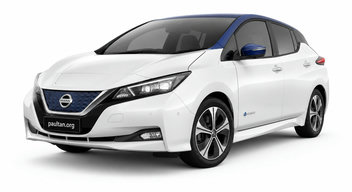
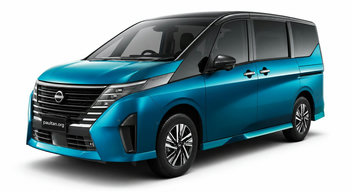
These two answer very different Malaysian needs. The Leaf’s 40.0-kWh battery, quoted 270-km EV range and 6.6-kW AC/50-kW DC charging suit a buyer who can charge regularly and needs a five-seat hatchback with a useful 435-litre boot. The Serena e-Power costs RM14,088 less, carries seven and has a 2,870-mm wheelbase, 180 mm longer than the Leaf’s. Its 1.433-litre petrol hybrid/REV setup and 52-litre tank remove dependence on charging, while the Leaf’s 320 Nm beats the Serena’s 315 Nm by little.
Pick the Nissan Leaf if you can charge at home or work and want 270 km of quoted EV range with a 435-litre boot.
Pick the Nissan Serena e-Power if seven seats, a 52-litre petrol tank and a more family-focused cabin matter more than plug-in EV driving.
Key differences
- Price: Nissan Leaf RM168,888; Nissan Serena e-Power RM154,800.
- Seats: Nissan Leaf 5; Nissan Serena e-Power 7.
- Battery and range: Nissan Leaf 40.0 kWh and 270 km; Nissan Serena e-Power 1.77 kWh and no EV range quoted.
- Dimensions: Nissan Leaf 4,480 mm long with a 2,690-mm wheelbase; Nissan Serena e-Power 4,690 mm long with a 2,870-mm wheelbase.
- Boot space: Nissan Leaf 435 litres; Nissan Serena e-Power 280 litres.
- Road tax: Nissan Leaf RM100 per year; Nissan Serena e-Power RM120 per year.
Leaf
- 40.0-kWh battery with 270-km quoted EV range
- 6.6-kW AC and 50-kW DC charging capability
- 435-litre boot and Around View Monitor
- RM14,088 dearer
- Five seats instead of seven
- Three-year manufacturer warranty versus five years
Serena e-Power
- Seven seats with sliding, reclining second-row seats
- Dual-zone front air-con, rear vents and blower control
- 9-inch touchscreen with Apple CarPlay and Android Auto
- 280-litre boot versus the Leaf’s 435 litres
- RM120 annual road tax versus RM100
| Price & overview | ||
|---|---|---|
| Price | RM168,888 | RM154,800✓ |
| Body type | Hatchback | MPV |
| Segment | C-Segment | C-Segment |
| Assembly | CBU | CKD |
| Ownership | ||
| Road tax / year | RM100✓ | RM120 |
| Powertrain | ||
| Engine Tech | 400V architecture | 16-valve DOHC naturally-aspirated, variable valve timing |
| Capacity | — | 1,433 cc |
| Horsepower | — | 97 hp |
| Torque | — | 123 Nm |
| Fuel | Electric | Petrol Hybrid/REV |
| Number of Motors | 1 | 1 |
| Motor Horsepower | 148 hp | 160 hp✓ |
| Motor Torque | 320 Nm✓ | 315 Nm |
| Battery Capacity | 40.0 kWh✓ | 1.77 kWh |
| EV Range | 270 km | — |
| Charging Rate (AC) | 6.6 kW | — |
| Charging Rate (DC) | 50.0 kW | — |
| Drivetrain | ||
| Transmission | Single Ratio Automatic | Single Ratio Automatic |
| Transmission Name | Constant Ratio Gearbox for EV | — |
| Transmission Manufacturer | Nissan | — |
| Driveline | Front Wheel Drive | Front Wheel Drive |
| Performance & Efficiency | ||
| 0-100 km/h | 7.9 seconds | — |
| Top Speed | 155 km/h | — |
| Dimensions | ||
| Length | 4,480 mm | 4,690 mm |
| Width | 1,790 mm | 1,695 mm |
| Height | 1,540 mm | 1,885 mm |
| Wheelbase | 2,690 mm | 2,870 mm |
| Weight | 1,544 kg | 1,784 kg |
| Fuel Tank | — | 52 litres |
| Doors | 5 | 5 |
| Seats | 5 | 7 |
| Boot Space | 435 litres✓ | 280 litres |
| Front Tyre | 215/50R17 | 205/65R16 |
| Rear Tyre | 215/50R17 | 205/65R16 |
| Spare Tyre | Space Saver | N/A, Tyre Repair Kit |
| Factory Tyres | Dunlop Enasave EC300 | Goodyear Assurance MaxGuard |
| Chassis | ||
| Assembly | Japan (CBU) | Malaysia (CKD) |
| Front Suspension | MacPherson Strut | MacPherson Struts |
| Rear Suspension | Torsion Beam | Torsion Beam |
| Front Wheels | 17" Alloy | 16" Alloys |
| Rear Wheels | 17" Alloy | 16" Alloys |
| Steering | Rack and Pinion (Electric Power Steering) | Rack and Pinion (Electric Power Steering) |
| Chassis Notes | e-Pedal, Intelligent Ride Control, Intelligent Trace Control | — |
| Crash Safety Ratings | ||
| EuroNCAP | 5 stars — With 6 Airbags and Autonomous Emergency Braking | — |
| Safety | ||
| Airbags | Driver and Passenger, Front Side, Front and Rear Curtain | Driver and Passenger, Front Side, Front and Rear Curtain |
| ABS/EBD | ✓ | ✓ |
| Stability Control | ✓ | ✓ |
| Alarm | ✓ | ✓ |
| Immobilizer | ✓ | ✓ |
| Airbag Disable Function | — | ✓ |
| Child Safety Lock | Manual for Rear Doors | Manual for Rear Doors |
| Seat Belts | 5 Three-point | 7 Three-point |
| Blind Spot Info System | — | ✓ |
| ISOFIX | Available on Two Outer Rear Passenger Seats | Available on Middle Row Passenger Seats |
| Autonomous Braking System | Yes | Yes |
| Lane-keeping Assist | No | No |
| Collision Warning | ✓ | ✓ |
| Seatbelt Reminder | Front Seats Only | All Seats |
| Lighting | ||
| Headlamps | LED Projector | LED Projector |
| Taillamps | LED Combination | Full LED |
| LED Daytime Running Lights | ✓ | ✓ |
| Front Foglamps | ✓ | — |
| Rear Foglamps | ✓ | ✓ |
| Wing Mirror Turn Indicators | ✓ | ✓ |
| Cabin | ||
| Front Seats | Manual Adjustment | Manual Adjustable |
| Rear Seats | 60:40 Split-folding | 50:50 Split-folding, Sliding and Reclining 2nd Row, 50:50 Split-folding 3rd Row |
| Front Air-con | Single-zone Automatic Climate Control | Dual-zone Automatic Climate Control |
| Rear Air-con | — | Rear Vents with Blower Control |
| Power Sockets | 1 Front | 1 Front, 2 USB Ports Front |
| Interior Lighting | Map Lights | Map Lights |
| Cup Holders | 2 Front | 2 Front, 2 Middle Row, 2 Last Row |
| Audio | 5" Display Radio/CD Player with USB, Bluetooth, AUX-in and 4 Speakers | 9" Infotainment Touchscreen with Apple CarPlay, Android Auto, 4 Speakers |
| Convenience | ||
| Power Windows | Four Windows, Driver's Side Auto Up and Down with Anti-Pinch | Four Windows, Driver's Side Auto Up and Down with Anti Pinch |
| Engine Start | Keyless Push Button | Keyless Push Button |
| Locks | Keyless Operation | Keyless Operation |
| Auto Start/Stop | — | ✓ |
| Auto Headlamps | ✓ | ✓ |
| Cruise Control | Passive Cruise Control | Passive Cruise Control |
| Steering Audio Control | ✓ | ✓ |
| Steering Tilt | ✓ | ✓ |
| Steering Telescopic | — | ✓ |
| Boot Operation | Manual Operation | Manual Operation with Split Opening |
| Parking Sensor Front | — | 4 Sensors |
| Parking Sensor Rear | — | 4 Sensors |
| Reverse Camera | Yes, with Around View Monitor (AVM) | Yes |
| Folding Wing Mirrors | ✓ | ✓ |
| Bluetooth | ✓ | ✓ |
| Navigation | ✓ | — |
| Power Door | — | Powered Left Sliding Door, Manual Right Sliding Door |
| Hill Start Assist | ✓ | ✓ |
| Instrument Cluster | Digital/Analogue | Full LCD Monitor |
| Parking Brake | Electronic | Electronic |
| Convenience Notes | 6.6 kW Wallbox, 7" Information Display, Climate Control Timer | — |
| Warranty | ||
| Warranty Mileage Manufacturer | 100,000 km | 100,000 km |
| Warranty Manufacturer | 3 years | 5 years✓ |
| Warranty Notes | 3-year/60,000 km Free Service, 8-year/160,000 km Battery Warranty, Complimentary Usage of Nissan SUV, MPV or Pick-up for 23 Days per Year | 8-year/160,000 km ePower Components Warranty |
Specs shown for the selected variant of each car. ✓ marks the better figure where lower/higher is objectively better. Road tax: West Malaysia, private registration.
Used Leaf & Serena e-Power for sale
Leaf vs Serena e-Power FAQ
Is the Nissan Leaf or Nissan Serena e-Power better?
The Leaf is better for regular charging and a five-seat EV commute, thanks to its 40.0-kWh battery and 270-km quoted range. The Serena e-Power is better for larger families, with seven seats, a 52-litre tank and a longer 2,870-mm wheelbase.
What is the price difference?
The Nissan Leaf costs RM168,888 and the Nissan Serena e-Power costs RM154,800, so the Leaf is RM14,088 more expensive.
Which has the more practical cabin?
The Serena e-Power has the more flexible passenger cabin: it seats seven and its second row slides and reclines. The Leaf carries five but has the larger boot, at 435 litres against the Serena’s 280 litres.