
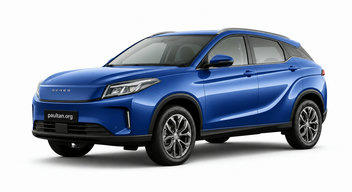

Verdict
At RM95,000, the Seres 3 costs RM2,000 more than the RM93,000 Toyota Rush, but its 161 hp/300 Nm motor is far stronger than the Rush’s 104 hp/136 Nm 1.5-litre petrol engine. Its 53.6 kWh battery claims 340 km of range, with 11 kW AC and 60 kW DC charging. The Rush fights back with seven seats, a 45-litre fuel tank and locally CKD assembly. For five occupants, the Seres has a much larger 525-litre boot against 213 litres.
Pick the Seres 3 if five seats suit your household and you want 161 hp, 300 Nm, a 340 km EV range claim and 525 litres of boot space.
Pick the Toyota Rush if you need seven seats, prefer petrol refuelling and want unlimited-mileage coverage for five years.
Key differences
- Price: Seres 3 RM95,000; Toyota Rush RM93,000.
- Power and torque: Seres 3 161 hp and 300 Nm; Toyota Rush 104 hp and 136 Nm.
- Seating and boot space: Seres 3 5 seats and 525 litres; Toyota Rush 7 seats and 213 litres.
- Energy storage: Seres 3 53.6 kWh battery with 340 km claimed range; Toyota Rush 45-litre fuel tank.
- Dimensions: Seres 3 is 4,385 mm long and 1,850 mm wide; Toyota Rush is 4,435 mm long and 1,695 mm wide.
- Warranty mileage: Seres 3 5 years/160,000 km; Toyota Rush 5 years/unlimited mileage.
3
- 161 hp and 300 Nm electric motor
- 525-litre boot
- 11 kW AC and 60 kW DC charging
- Five seats versus the Rush’s seven
- No blind spot information system
- 160,000 km warranty limit versus unlimited mileage
Rush
- Seven-seat layout
- Blind spot information system and 360-degree reverse camera
- Full-size 17-inch alloy spare wheel
- 104 hp and 136 Nm versus 161 hp and 300 Nm
- 213-litre boot versus 525 litres
- No cruise control, while the Seres 3 has passive cruise control
| Price & overview | ||
|---|---|---|
| Price | RM95,000 | RM93,000✓ |
| Body type | SUV | SUV |
| Segment | B-Segment | B-Segment |
| Assembly | CBU | CKD |
| Ownership | ||
| Road tax / year | RM120 | RM120 |
| Powertrain | ||
| Engine Tech | 400V architecture | 16-valve DOHC, Naturally Aspirated with Dual Variable Valve Timing |
| Capacity | — | 1,496 cc |
| Horsepower | — | 104 hp |
| Torque | — | 136 Nm |
| Fuel | Electric | Petrol |
| Bore | — | 72 mm |
| Compression Ratio | — | 10 |
| Number of Motors | 1 | — |
| Motor Horsepower | 161 hp | — |
| Motor Torque | 300 Nm | — |
| Battery Capacity | 53.6 kWh | — |
| EV Range | 340 km | — |
| Charging Rate (AC) | 11 kW | — |
| Charging Rate (DC) | 60 kW | — |
| Drivetrain | ||
| Transmission | Single Ratio Automatic | Conventional Automatic |
| Transmission Name | — | 4 Speed Automatic |
| Gears | — | 4 |
| Transmission Manufacturer | — | Aisin |
| Driveline | Front Wheel Drive | Rear Wheel Drive |
| Dimensions | ||
| Length | 4,385 mm | 4,435 mm |
| Width | 1,850 mm | 1,695 mm |
| Height | 1,650 mm | 1,705 mm |
| Wheelbase | 2,655 mm | 2,685 mm |
| Weight | 1,650 kg | 1,305 kg |
| Fuel Tank | — | 45 litres |
| Doors | 5 | 5 |
| Seats | 5 | 7 |
| Boot Space | 525 litres✓ | 213 litres |
| Front Tyre | 225/55R18 | 215/60R17 |
| Rear Tyre | 225/55R18 | 215/60R17 |
| Spare Tyre | Space Saver | Full-size 17" Alloy |
| Factory Tyres | Chao Yang SU318a H/T | Bridgestone Alenza 001A |
| Chassis | ||
| Assembly | China (CBU) | Malaysia (CKD) |
| Front Suspension | MacPherson Struts | MacPherson Strut |
| Rear Suspension | Torsion Beam | Live Axle with Coil Springs |
| Front Wheels | 18" Alloys | 17" Alloy |
| Rear Wheels | 18" Alloys | 17" Alloy |
| Steering | Rack and Pinion (Electric Power Steering) | Rack and Pinion (Electric Power Steering) |
| Crash Safety Ratings | ||
| ASEAN NCAP | — | 5 stars |
| Safety | ||
| Airbags | Driver and Front Passenger, Front Side, Curtain Airbags | Driver and Passenger, Front Side, Front and Rear Curtain |
| ABS/EBD | ✓ | ✓ |
| Stability Control | ✓ | ✓ |
| Alarm | — | ✓ |
| Immobilizer | ✓ | ✓ |
| Airbag Disable Function | ✓ | — |
| Child Safety Lock | Manual for Rear Doors | Manual for Rear Doors |
| Seat Belts | 5 Three-point | 7 Three-point |
| Blind Spot Info System | — | ✓ |
| ISOFIX | Available on Outer Two Rear Seats | Available on 2 Outer Middle Row Seats |
| Lane-keeping Assist | No | No |
| Seatbelt Reminder | Front Seats | Front Seats Only |
| Lighting | ||
| Headlamps | LED Projectors | LED Reflectors |
| Taillamps | LED Combination | LED Combination |
| LED Daytime Running Lights | ✓ | — |
| Rear Foglamps | ✓ | — |
| Wing Mirror Turn Indicators | ✓ | ✓ |
| Cabin | ||
| Front Seats | Powered Front Seats | Manual Adjustable |
| Rear Seats | 60:40 Split-fold | 60:40 Split-folding Middle Row with One-touch Tumble, Manual Recline, 50:50 Split-folding Last Row |
| Front Air-con | Single-zone Automatic Climate Control | Single-zone Automatic Climate Control System |
| Rear Air-con | Rear AC Vents | Rear Vents with Blower |
| Power Sockets | 1 Front, 2 USB Front, 2 USB Rear | 1 Front, 1 Last Row |
| Interior Lighting | Map Lights | Map Lights |
| Cup Holders | 2 Front, 2 Rear | 3 Front, 2 Last Row |
| Audio | 10.25" Touchscreen with Android Auto, Apple CarPlay, Bluetooth and 6 Speakers | 6.8" DVD-AVX touchscreen with 6 speakers |
| Convenience | ||
| Power Windows | Four Windows, Auto Up and Down with Anti-pinch | Four Windows, Driver's Side Auto Up and Down with Anti Pinch |
| Engine Start | Keyless Push Button | Keyless Push Button |
| Locks | Remote Control Activation | Keyless Operation |
| Auto Start/Stop | — | ✓ |
| Auto Headlamps | ✓ | — |
| Auto Wipers | ✓ | — |
| Cruise Control | Passive Cruise Control | — |
| Steering Audio Control | ✓ | ✓ |
| Steering Tilt | — | ✓ |
| Electric Steering Adjustment | ✓ | — |
| Boot Operation | Manual Boot | Remote Control Activation |
| Parking Sensor Front | — | 2 Sensors |
| Parking Sensor Rear | 4 Sensors | 2 Sensors |
| Reverse Camera | Yes | Yes, With 360 Degree Camera |
| Folding Wing Mirrors | — | ✓ |
| Bluetooth | ✓ | ✓ |
| Hill Start Assist | ✓ | ✓ |
| Instrument Cluster | Full LCD Monitor | Electroluminescent Analogue |
| Parking Brake | Electronic | Handbrake |
| Warranty | ||
| Warranty Mileage Manufacturer | 160,000 km | Unlimited✓ |
| Warranty Manufacturer | 5 years | 5 years |
Specs shown for the selected variant of each car. ✓ marks the better figure where lower/higher is objectively better. Road tax: West Malaysia, private registration.
Used 3 & Rush for sale
3 vs Rush FAQ
Is the Seres 3 or Toyota Rush better?
The Seres 3 is better for five-seat buyers who can charge an EV and want far more power, 340 km claimed range and a 525-litre boot. The Toyota Rush is the better choice when seven seats and petrol refuelling matter more.
What is the price difference?
The Seres 3 costs RM95,000 and the Toyota Rush costs RM93,000, so the Seres is RM2,000 dearer.
Can the Seres 3 carry seven people?
No. The Seres 3 has five seats. The Toyota Rush has seven seats, with a 60:40 split-folding middle row and 50:50 split-folding last row.