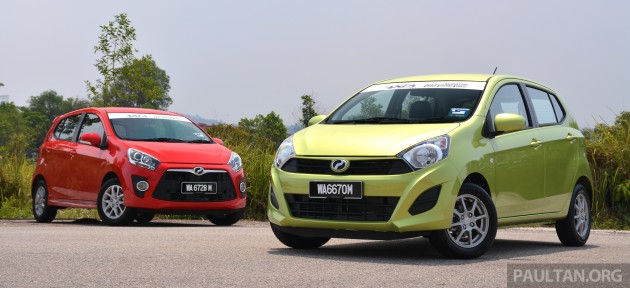
UMNO youth chief Khairy Jamaluddin has proposed a First Car scheme, where young people earning under RM4,000 a month could buy their first car without paying tax on it, according to reports by Sinar Harian and The Star.
“(Translated) Many young people run into difficulties servicing vehicle loans, which are the second-highest behind property loans. Through a First Car scheme, youth earning under RM4,000 a month could buy their first car without paying tax or excise duties.
“This will reduce car prices especially for youth buying for the first time. The cars included in such a scheme should be moderately-priced and locally-assembled,” Sinar Harian quoted him as saying.
A few years ago, Thailand launched a first-car scheme, under which the buyer had to be at least 21 years of age and own the car for at least five years. The car had to be completely built in Thailand and not be worth over one million baht (RM102k).
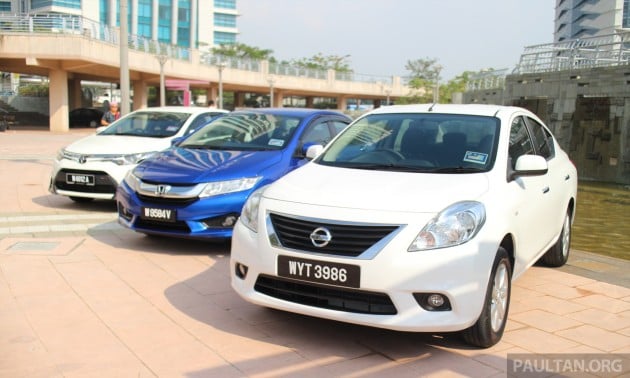
Also, its engine could not displace more than 1.5 litres, and the purchase had to take place between September 16, 2011 and December 31, 2012. Once these conditions were met, the buyer was eligible for tax refunds with a ceiling of 100,000 baht (RM10,200) per unit.
The scheme didn’t quite work as intended, leaving more than 100,000 indebted customers defaulting, Reuters reported. The tax breaks cost the government US$2.5 billion (RM8.37 billion), according to World Bank estimates.
Will a First Car scheme work for Malaysia? Let us know what you think in the comments section.
Looking to sell your car? Sell it with Carro.

 sudonano (Member)
on
sudonano (Member)
on 

 mr president
on
mr president
on  LGE
on
LGE
on  ProtonGSC
on
ProtonGSC
on  Maserati(Official)
on
Maserati(Official)
on  Lambo
on
Lambo
on  Sago
on
Sago
on  old dog
on
old dog
on  zaizaizai
on
zaizaizai
on  Beng
on
Beng
on  Soluna
on
Soluna
on  peyn0
on
peyn0
on  Rage
on
Rage
on  Low Budget
on
Low Budget
on  Prominence
on
Prominence
on  Amoi
on
Amoi
on  Rakyat
on
Rakyat
on  HHH
on
HHH
on  Same L0rrr
on
Same L0rrr
on  Atoy-Ot
on
Atoy-Ot
on  Macai
on
Macai
on  Jilbaber (Member)
on
Jilbaber (Member)
on  Bomoh Kelapa
on
Bomoh Kelapa
on  TSI
on
TSI
on  Black Dog
on
Black Dog
on  wkaka
on
wkaka
on  Fly me to the moon
on
Fly me to the moon
on  liew
on
liew
on  naChe
on
naChe
on  medic
on
medic
on  Bernard
on
Bernard
on  taklaotak
on
taklaotak
on  weeee
on
weeee
on  No one must know
on
No one must know
on  Azmi
on
Azmi
on  Anon86
on
Anon86
on  soup
on
soup
on  Chris (Member)
on
Chris (Member)
on  fvct
on
fvct
on  Jimmy
on
Jimmy
on  shamx
on
shamx
on  Eugene
on
Eugene
on  TeacW7
on
TeacW7
on  nasi sudah jadi bubur
on
nasi sudah jadi bubur
on  Name
on
Name
on  Not a good idea
on
Not a good idea
on  VWfanboi
on
VWfanboi
on  Donnie
on
Donnie
on  dodgeviper88
on
dodgeviper88
on  What about?
on
What about?
on  Hulk
on
Hulk
on  Sugar Glider
on
Sugar Glider
on  Henry
on
Henry
on  erwinkarim
on
erwinkarim
on  abc
on
abc
on  Kua
on
Kua
on  lolzdfdzsf
on
lolzdfdzsf
on  smokey
on
smokey
on  Diesel Power!!!
on
Diesel Power!!!
on  Abu Sayur
on
Abu Sayur
on  AcerMan
on
AcerMan
on  Dr Mmm
on
Dr Mmm
on  Maserati(Official)
on
Maserati(Official)
on  Please
on
Please
on  ayooo
on
ayooo
on  Michel Bay
on
Michel Bay
on  1Malaysia
on
1Malaysia
on  Baymax
on
Baymax
on  azrai
on
azrai
on  Kancil Hybrid
on
Kancil Hybrid
on  abahko
on
abahko
on  Minah
on
Minah
on  TEC
on
TEC
on  motor upgrade to car
on
motor upgrade to car
on  Semi-Value (Member)
on
Semi-Value (Member)
on  IrizX
on
IrizX
on  Axia
on
Axia
on  4G63T DSM
on
4G63T DSM
on  albag
on
albag
on  bubbaonsteroids
on
bubbaonsteroids
on  Aero (Member)
on
Aero (Member)
on  Kong
on
Kong
on  ioma
on
ioma
on  thomasNOTmyname
on
thomasNOTmyname
on  Olio benzina
on
Olio benzina
on  BlurBlur
on
BlurBlur
on  C.P.Mohan
on
C.P.Mohan
on  Henry Ford the XII
on
Henry Ford the XII
on  Pokli Seluang (Member)
on
Pokli Seluang (Member)
on  Azahari
on
Azahari
on  anon
on
anon
on  troller
on
troller
on  cck_clan
on
cck_clan
on  sgbuloh
on
sgbuloh
on  khairulattan
on
khairulattan
on  Aerodynamic bro
on
Aerodynamic bro
on  Wei
on
Wei
on 


AI-generated Summary ✨
Comments are largely supportive of Khairy's First Car scheme, praising its potential to make car ownership more affordable for youth and low-income groups. Many express hope that it will promote responsible car ownership and reduce taxes for cars under certain limits. Some concern the scheme may encourage materialism or lead to higher bankruptcy rates among youth, and others emphasize the importance of improving public transportation instead. Overall, sentiments range from optimistic to skeptical about its long-term effectiveness.