
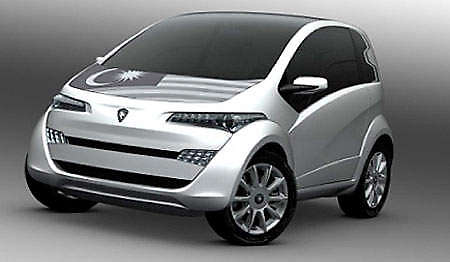
Proton EMAS3
Proton’s range of concept hybrid city cars have been officially unveiled in Geneva today and we now know that they are called the EMAS, the EMAS Country and the EMAS3. For non-Malaysians reading this site, EMAS basically means gold in Bahasa Malaysia, but in this context it also stands for ‘Eco Mobility Advance Solution’. The cars were unveiled at Italdesign Giugiaro’s booth by our ex-PM Tun Dr. Mahathir Mohamad, who so happens to also be Proton’s advisor.
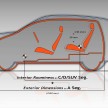
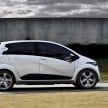
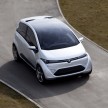
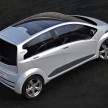
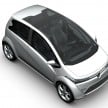
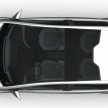
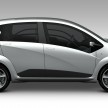
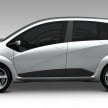
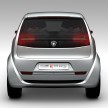
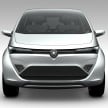
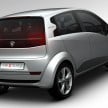
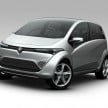
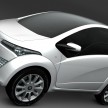
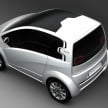
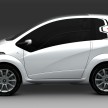
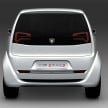
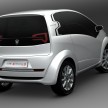
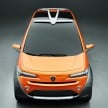
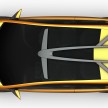
The EMAS is the 5-door 4-seater silver hatchback that we first saw. The other two models are the EMAS3, which is a three-door 3+1 seater for city driving, and the EMAS Country which is for country driving – that’s the model with the SUV styling and raised suspension. The concept cars were designed by Italdesign-Giugiaro to fit the description of a compact car with the passenger room of an SUV.
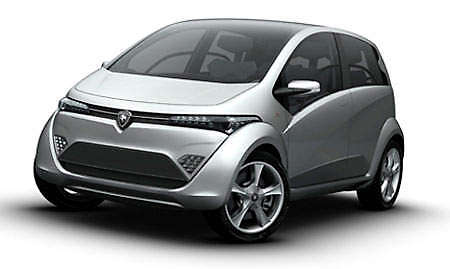
Proton EMAS
The EMAS range of vehicles all run on a common platform that can spawn some other body variants such as a small van for short commercial trips around the city. The chassis has a wheelbase of 2,590mm (the shorter EMAS3’s wheelbase is 2,035mm). Imagine a small zero emissions and silent van used by Pos Malaysia to deliver your mail and parcels! The batteries are positioned somewhere at the centre of the car. The Lotus Range Extender engine is mounted at the front.
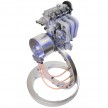
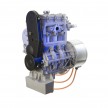
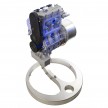
It’s basically a 1.2 litre inline-3 engine that’s designed to run only specifically as certain RPM ranges, since it does not drive the wheels directly but only generates power to recharge the batteries. This means it does not necessarily have to rev very high. Drive torque is provided by the electric motor. So it is not surprising that the 1.2 litre engine’s peak power is 51 horsepower at a very low 3,500rpm.
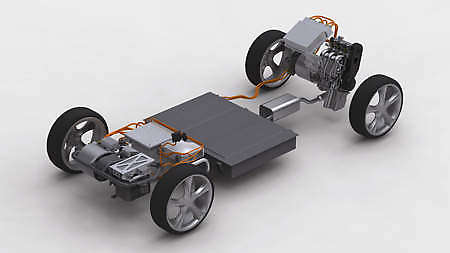
Because the engine does not have to rev high, Lotus can design it for a lower redline and certain parts such as valve springs and etc do not have to be built to tolerate higher speeds. This can save weight and cost – and the result is an engine that weighs only 56kg according to the original specs. But in any case, the specs that was unveiled here is actually slightly more powerful than what Lotus initially announced when they introduced the range extender engine. The original Lotus Range Extender press release quoted two different power generation points depending on load – 20hp at 1,500rpm and 47hp at 3,500rpm. The engine can run on gasoline, ethanol, methanol or natural gas.
The electric motor outputs a continuous power of 45kW and a peak power of 75kW. The motor’s torque output is pegged at 240Nm at peak, and does not require the use of a gearbox, so the motor drives the rear wheels through a fixed ratio. 0 to 100km/h tales 14 seconds, the car’s top speed is 170km/h, and one battery charge’s worth of range is 50km before the internal combustion engine needs to kick in to recharge it. You can also charge the battery via an electrical outlet as it has plug-in capabilities. A full charge is said to take 3 hours with 240V 13A power point.
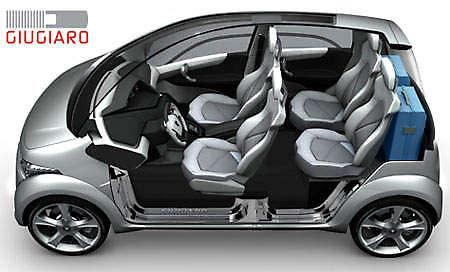
The interior (which you can see above – we’re in the midst of getting better pix) is said to feature two TFT monitors in the center mounted at a concave angle. The right hand monitor shows the speedo and various other vital statistics of the car such as the hybrid system energy flow diagrams, while the left hand monitor handles the in-car entertainment and communication settings, including a browser for internet access. A third display located beneath the center console is a touch screen display that allows you to control various car functions.
“The unveiling of the concept cars today reflects the long-term strategy we have in matching global automotive standards as we expand and reinforce our presence worldwide. We strive to listen to our customers to ensure the development of a global car that meets customer’s requirements and expectations. The aim is to produce the global car for world market in the future,” said Proton managing director Dato Syed Zainal. According to DSZ, the car is between 17 to 24 months away from production, so we’re looking at a 2012 to 2013 launch date!
We’ll be back very soon with some more info from our man Danny on the floors of Geneva with more live photos of the car (live photos now uploaded) as well as perhaps some videos. Look after the jump for a full spec sheet as well as product images.
Dimensions and weights
| Length (mm) | 3555-3000 |
|---|---|
| Height (mm) | 1576 |
| Width (mm) | 1699 |
| Wheelbase (mm) | 2590-2035 |
| Front tyres | 215/45 R18 |
| Rear tyres | 215/45 R18 |
| Front rims | 18" |
| Rear rims | 18" |
| Boot capacity | 320-390 litres |
Mechanical units and performance
| Mechanical architecture | hybrid, series, plug-in |
|---|---|
| Internal combustion engine position | front transverse |
| Technical specifications | 3 cylinders in line, 6 valves, 1.2 litres |
| Power | 51 hp / 38 kW at 3500 rpm |
| Maximum torque | 107 Nm at 2500 rpm |
| Electric engine position | Rear |
| Power | 75 kW (peak), 45 kW (continuous) |
| Maximum torque | 240 Nm |
| Batteries | 100 X 31 Ahr Cells 370 Volts 11.47 kWh |
| Time for full recharge | 3 hours with normal 240 Volt, 13A power point |
| Acceleration 0 – 100 km/h | 14 sec |
| Top speed | 170 km/h (peak), 130 km/h (continuous) |
| Range in electric mode | 50 km |
| Traction | Rear |
| One-speed gearbox | final drive ratio 4.214:1 |
| Front & Rear suspension | McPherson & Torsion beam |

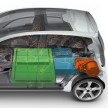
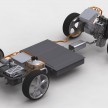
GALLERY: Proton EMAS 5-Door
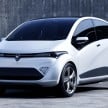
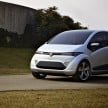

GALLERY: Proton EMAS3






GALLERY: Proton EMAS Country





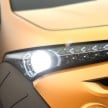






Looking to sell your car? Sell it with Carro.














Did someone say EMAS? :P haha.
btw I look forward for Danny's report.
Waitin for the live photos.
woa!!! nice! 1st!
very cool stuff.. proton finally at geneva, and unveiling a concept car even.
Syabas Proton!!!
more info pls!!!
Proton, if you wanna do this car, don't sell it here. Just sell it overseas. Only then can this car make money. Here it'll be bashed to oblivion.
e-MAS ?
electronic MALAYSIA?
WHAT A CREATIVE NAME!!
i’think u r better read it fully maaaaa11111
live photos?
TWO TUMBS UP!
excellent stuff.
cute!
its like a fatter version of a Smart ForTwo coupe.. hehe
yup…where are the life photos?…take your time anyway
50km, enough for most of us to go and back from office every day!
Anyway, since it is a concept car, we have to wait at least 1 year before it is released to the mass market.
I ll be there from March 5th .. lets see the real thing
this is as shameless as angkasawan.
cool stuff. would be nice there is video.
CayaNunAlif said,
March 2, 2010 @ 5:15 pm
e-MAS ?
electronic MALAYSIA?
WHAT A CREATIVE NAME!!
…………………
EMAS= electrical Eco Mobility Advance Solution
http://twitpic.com/166a8w ….i found this just now!!!!!!
Tiadaid said,
March 2, 2010 @ 5:13 pm
Proton, if you wanna do this car, don’t sell it here. Just sell it overseas. Only then can this car make money. Here it’ll be bashed to oblivion.
______________________________________________________________________________
I second you!!
Please make it 5 seater if it come into production.
viva and myvi killer…actually viva killer
Imagin our police patrol fleet, POS malaysia, Bomba, Plus Ronda, & others used it for daily routine… sure looks nice.. Eco friendly. Looks the interior also neat, simple but class…. I will trade my wife savvy to this when production hit in the market… Waiting more news from Danny… hope have more good review…
2 thumbs down
max said,
March 2, 2010 @ 5:22 pm
http://twitpic.com/166a8w ….i found this just now!!!!!!
——————————————–
Droll…………….
Hei guys, rumours saying the Naza is going for something big! I think paul can dig some info from Naza! Heard is related to our local car company…
Mazda 3 MPS + ANTI PROTON ULTRAS said,
March 2, 2010 @ 5:26 pm
2 thumbs down
————————————
hahahahahahahahahahahahahahahahahahahaha
nice curves…
agree with selling this away from home but let me get one first.. then send away the rest
Hope the price is within 50k, then everybody can afford one of this.
GOLD?
haha..
make sure the body as tough as Savvy..
dont make as thin as Vavi
This is the ugliest car i've ever seen. its even uglier than the renault multipla..
my god.. outrageous.. yes.. ugly yes..
quick.. no.. realiable.. no. its a proton..
as usual,
by 12.01 am..the comment might exceed 200 comments..
always happen when proton launch any models :)
18" rims, Rear wheel drive with direct motor…. Hmmmm…. good….
wonder what the coefficient of drag (Cd) number is
show me show me the real thing, enough of the concept.
wow, looking at the real pics, its actually quite big!
it does look quite weird… well maybe im those who likes sporty designs…
people who bash proton for this has real personality problems!!
it is obvious now that you guys are against the Proton brand, not the product.
the design is italian, the technology is Chevy Volt-like. if there's anything wrong here, it's your brain!
we should support Proton for heading towards the right direction.
c'mon you guys… look at the issue, not the BRAND!
another EMAS >>> http://twitpic.com/166alz
Littlefire said,
March 2, 2010 @ 5:29 pm
Hei guys, rumours saying the Naza is going for something big! I think paul can dig some info from Naza! Heard is related to our local car company…
——————
Naza taking over P2 perhaps?
Great Job. Can't wait to see the real thing BUT all these are just information on paper. If it drives badly, break down often, nothing else matters anymore.
http://twitpic.com/166a8w
If you actually look at this picture, you can notice how comfortable and high up the seating position is. The head clearance also looks outstanding!
This concept is indeed revolutionary: I like the fact that it can run on electrical mode for 50km and can be recharged on a socket. Most Malaysians might actually not even need any petrol since the average commute of a Malaysian (I imagine, is much less than 50km). As some pointed out, POS Malaysia and other businesses who are suffering from high gasoline costs have a life saver in the pipeline!
Secondly, the fact that the maximum speed (continuous) is at a 130kph is excellent news too: finally, you will see less crazy Malaysians whizzing by on highways at crazy speeds.
Proton has finally understood the future of automobile: decreased costs, increased technology and forcing the driver to adopt better driving habits. For those who still crave high-octane power, well, the cars are still out there… but I will be laughing at you while you're emptying your pockets at the petrol pump, paying increased road tax… My conscious will be tranquil at last!
Bravo Proton and keep it real on this one!
crap car
The look is not bad mar….look better than Smart…But then, how much you goign to price it? Or perhalp start thinking of G subsidy due to the eco car?
Tiadaid,
If Proton sell well in international, it will not be jaguh kampung and we, Malaysian, will be very prouf .
If P1 ready make it this round to international market without the tongkat from our G, I will take leave, drive to Tanjung Marlin and give ever Proton worker a kiss!!!
peyno’s mom said,
March 2, 2010 @ 5:41 pm
show me show me the real thing, enough of the concept.
————–
Mazda 3 MPS, u dont have an identity huh? haha..
i would opt for the car if it range within 45k… well, cant pay more, its a proton
no money no talk r bro!!!!
support our product!!!
Such kampong names for a decent contemporary looking concept. M'sia Boleh!
What about airconditioning? What powers it?
Totally agreed with c14man ! !!
ALHAMDULILLAH AND SYABAS PROTON ! !! !!!
MALAYSIA BOLEH ! !! !!! !!!!
Front View
http://twitpic.com/166a8w
Rear View
http://twitpic.com/166alz
– No tax for Hybrid Car.. lets ask government to make it become reality..
what the heaven!!!!
my whole family just love it!!!
max said,
March 2, 2010 @ 5:22 pm
http://twitpic.com/166a8w ….i found this just now!!!!!!
WOW!
God!It look even better in flesh!!!nice…
Thousands of thumbs down and boos for u Mazda PMS..
great concept from body design to engine…hope proton will make it a reality!!!
The interior (which you can see above – we’re in the midst of getting better pix) is said to feature two TFT monitors in the center mounted at a concave angle. The right hand monitor shows the speedo and various other vital statistics of the car such as the hybrid system energy flow diagrams, while the left hand monitor handles the in-car entertainment and communication settings, including a browser for internet access. A third display located beneath the center console is a touch screen display that allows you to control various car functions.
————
Can we have a basic version without all the fancy but unnecessary items? This will keep the cost low
I think i'll read it is as E-MAS. Better.
Syabas proton.
Teruskan perjuangan!
lucky at least it doesn't look like this –> http://twitpic.com/wxjke
haha…but what's with the egg-shape and hybrid cars? honda uses civic…and it looks good, not that proton shud use waja or gen2 body…but at least a new sedan body maybe…anyways, i'm just proud of proton being at Geneva!
i'm interested in the rr lamp concept…
how do they do it…
this is definitely out of the box for proton…. =)
max said,
March 2, 2010 @ 5:22 pm
http://twitpic.com/166a8w ….i found this just now!!!!!!
WOW!
————————-
Hey, as big as myvai I think..higher sitting position, commanding view and 18' sport rim..gila la..very proud
Looks really good.. Syabas !
some1 here the design is uglier than a multipla…i say he never seen 1 before ha3..
by da way, from the pix, the interioir does spacious! viva n myvi killer maybe?
Congrats to Proton and its management!! I think this is the way forward. Forget about the detractors and bashers because whatever you do is always deemed wrong. Be brave and move on…
nice…just plug in the power cord and then the next morning ready to go…bye-bye petrol fuel
wanna add some more; the 'thing' at the window remais! i wonder….wth is dat? lol~
kudos to proton for keeping the rims! ha3
Proton, can I exchange my Sutera for EMAS? I can buy your Persona for long-range travels.
not bad for small automaker. Keep it up
it's perfect for warga emas! I think if proton can really go international with this car. just imagine, it will cost you just about RM0.03 per km! (my rough estimate).
I wonder how this car would perform in real life… you know, with AIR CONDITIONING (this really sucks power) turned on during afternoon trips in humid weather on malaysian roads.
50km on the battery? What if the air cond was turned on?
Got more pics at Italdesign http://ginevra2010.italdesign.it/stand
Check out http://ginevra2010.italdesign.it/stand-en for more details. Gosh its soo nice!
Proton will strike gold with this!
What? Take 3hours to charge with electrical outlet? So this electrical outlet is available in certain parts of the places or is it the home type of electrical outlet where u charge?
i love the country version !!
c'mmon..pls dont compare with lame viva, myvi, passo etc…
this e-mas is in different league..
waiting for bumper and headlamp concept from p2..lol
guys.. dont look down on our national bumper maker perodua
last time they oso got CONCEPT car ooo
impressed??? prrrrfthhhh
http://i93.photobucket.com/albums/l61/jebat_derha… http://i93.photobucket.com/albums/l61/jebat_derha… http://i93.photobucket.com/albums/l61/jebat_derha…
Hope the battery is from a reliable manufacturer. Else, no use oso it battery kaput after few charge cycles
TL
ha! finally robocop get a matching car for his patrol.
btw, a little better than expected. way to go….
max said,
March 2, 2010 @ 5:23 pm
viva and myvi killer…actually viva killer
====
myvi oredi killed by Saga BLM
Viva??? prrrfthhh nevermind.. p2 oso got CONCEPT CAR to fight wit proton concept car..
ah beng japs wannabe sure will buy it
http://i93.photobucket.com/albums/l61/jebat_derha… http://i93.photobucket.com/albums/l61/jebat_derha… http://i93.photobucket.com/albums/l61/jebat_derha…
see the perodua design without TnD support…
prrrfthh cantik ooooo
Before u all scream Malaysia Boleh…remember this concept is done by Proton's money, not Proton own skill. The styling come straight from many of those Japanese Power Ranger's robot ha ha!! it looks good now but it won't last….
This could be a nightmare for Proton's manufacturing QC.
I bet we won't see this on our road in another 5yrs!
Another beautiful motorbike with 4 tires. Malaysia Boleh! Hope proton's package includes 4 safety helmets, safety goggles, safety shoes, safety gloves, first aid kit, leather jackets, fire extinguisher and life insurance cover.
i disagree with two_faces..
Projek ni saya sokong kerana
1) tanggungan kerajaan thdp subsidi minyak akan kurang. So kerajaan dpt jual lebih byk, so lebih income untuk negara
2) mesra alam
3) konsep yg bagus.. SUV + .. +
4) kerjasama dengan Italdesign – so Proton dpt capture market Eropah dan juga peminat2 kereta Eropah oleh kerana didesign oleh firma Eropah. Actually byk firma yg mintak khidmat firma itali seperti Pininfarina, Berton antarannya Ferrari, Alfa Romeo, Audi, Bentley, Ford, Chery, Brilliance, JAC, mITSUBISHI, Toyota, hyundai dll.. kiranya x kira negara Eropah sendiri, China, Korea, Jepun atau USA mintak khidmat firma2 Itali sbb hasil kerja mereka memang menarik. Org Itali ni org seni
apapun saya mintak
1) harga berdaya saing di peringkat global
2) jadikan kereta ni sbg benchmark baru Proton so make sure kualiti terbaik sepanjang zaman kewujudan Proton
3) after sales services memuaskan
4) kerajaan ambik langkah bina stesen caj bateri sebanyak mungkin
WTF with perodua concept car? reminds me of teletubbies…. eeeooooo…
p2 concept car is beautiful what?
beautiful like pig!
perodua concept car?macam gampang
eh..nobody interested to know the fuel consumption of this hybrid???
looks like most are still more interested to bash proton/statesman/p2 rather than interested in the Vehicle and Technology itself.
the chevy volt :
64km range per charge vs. 50km for EMAS
8 hour plug-in recharge (to as short as 3hrs on 240V) vs. 3 hour
1.4L engine vs. 1.2L engine
98km/L (230mpg) range vs. unknown
0-100 in 9 secs vs. 14 secs.
the emas is indeed quite a tech-loaded vehicle, for such a small footprint
if volt is targetting USD25k, the emas definitely need alot of incentives to make it rm80k…
Cool and Wicked
what a superb design…hope the price is reasonable and cheap
Those non educated bashers still dun know what is concept car…Concept car are rarely into production and there's a lot of concept car is just for help current mainstream to develop a technology to face the future…concept car normally not suitable for current production because of they need time to adopt the technology into real life such as, electric charging, fully electronic spare parts, and a lot of logistic concern.
Therefore u can see a lot of major company's concept care are still to make their debut.(refer KLIMS 2006)..there's 14 concept car display at that time but because their name is Toyota, Nissan, Honda, bla2…all those bashers didnt even care about it but when it comes to proton, all these nonsense bashers wanna be hero…
Think again…
these are some concept cars at KLIMS 2006 that are yet to make their debut in mainstream market n i think its not gonna happen for the time being n so do proton;
http://photos1.blogger.com/photoInclude/blogger/8… http://www.mitsubishi-motors.com.my/news.php?id=3… http://shw.mofarby.fotopages.com/10792441/Toyota-… http://shw.mofarby.fotopages.com/10792395/Mitsubi…
there's a lot more..just check it…
not-quite-the-auto-junkie said,
March 2, 2010 @ 11:26 pm
the chevy volt :
64km range per charge vs. 50km for EMAS
8 hour plug-in recharge (to as short as 3hrs on 240V) vs. 3 hour
————————-
I believe in US is 120volt compare to 240volt in UK & Malaysia. so basically, the charging time is similar if Chevy volt use 240V?
not-quite-the-auto-junkie, yes you are right.
but what we can say anymore..the bashing culture existed in our culture for along-long time.
two_faces said..
Before u all scream Malaysia Boleh…remember this concept is done by Proton’s money, not Proton own skill. The styling come straight from many of those Japanese Power Ranger’s robot ha ha!! it looks good now but it won’t last….
This could be a nightmare for Proton’s manufacturing QC.
I bet we won’t see this on our road in another 5yrs!
————————————————————–
KHAHAHAH…just sit down, relaxs…..enjoy the pic…..
no need to sell yr car now….when the time comes..relax and just drive yr car…
That's more like it.
Salam..
Peter said,
March 2, 2010 @ 7:31 pm
What? Take 3hours to charge with electrical outlet? So this electrical outlet is available in certain parts of the places or is it the home type of electrical outlet where u charge?
__________________________________________________
if not mistaken they stated that the car can be charged on 240v normal AC outlet..means your normal everyday house socket plug….
Hybrid…<RM50K? or same as viva/myvi?
KAHKAHKAHKAHKAH…
PERODUA CONCEPT???? LIKE PIG SHIT!!!!
http://i93.photobucket.com/albums/l61/jebat_derha… http://i93.photobucket.com/albums/l61/jebat_derha… http://i93.photobucket.com/albums/l61/jebat_derha…
mazda 3 WTF sure says:
"VERY VERY NICE!!!!!! THREE THUMBS UP!!!!! UP-UP AND AWAAAAAYYY!!!!!"
kahkahkahkahkah.. LOOOOOOOOO0OOOOSER
Thumbs up!
good jobs… proton, go forward… let sell over the world
mmg futuristic rrrrr….dsign terbaek dri proton
thank you 4 all automotive designer
to proton,
don't sell this in malaysia. most malaysian (especially the proton bashers) are too idiot to understand and appreciate things like these. sell them away. and if these people are really crying out loud for this car, then probably proton can give APs to certain malaysian company to import them in. then these people will feel good and said to their friends "hey, this is imported car you know? imported car good, local car bad.." ha ha..
Any detailed info for that Emas Country, what is the ground clearance height? 4wd?
It's a good idea, but too early to celebrate yet. Proton has a history of producing really bad quality cars, and it's hard to imagine them changing their nature overnight.
Good luck Proton, you'll definitely need it.
Think outside the box Malaysian! Be proud and positive of your national car.
karapovsted said,
March 3, 2010 @ 3:35 pm
Think outside the box Malaysian! Be proud and positive of your national car.
————————————-
national car? what kind of nonsense is that. does japan and germany have a national car? i don't think so. national car, communism at its very best.
its rear reminded me so much of Wall E's girlfriend.
Well, it didn't make much sense to me. They seem to want to market it as a hybrid … and the hybrid market are FC buffs. FC buffs won't take a liking to 18" wheels that'll be expensive to run.
If they are targetting the younger ones with the 18 wheels, then the performance of 0-100 in 14 sec will not do the trick!
The car looks small, yet they claim interior sized like an MPV. Probably need to see it to judge what they claim.
Seems their marketting is to build a "jack of all trades, but a master or none"!
The R&D sounds increadibly expensive too … if you notice their plans/strategy. This is inspite of already buying ridiculous companies that no one else wants till date, just to support the rushed schedule. Hence, new car owners of this modal in two years will be absolute guinea pigs to potentially buggy cars.
Which means there is absolutely no plan to cut back on the embelical chord to the government … … meaning everyone will still keep paying excise duties for new foreign-make cars.
Sometimes it is not so hard to guess what's on their mind. Lancer is a 2.0 and its marketting itself by its "garang" looks. That works.
My guess is petrol prices will be brought up very high. They will mark this car as a 1.3. They will campaign that this car will be the only way to beat the raising fuel prices. Timing has to be right to launch this car for all this to work, hence their questionable schedule.
They will want everyone to own one — hence, it has to be marketable to the family (hence the SUV tagline), the younger age group (the 18 inch rims) and the financially minded (hybrid).
There was a time in the 80s when owning a SAGA was a novelty when it first came out. Everyone felt the national pride … my siblings and I used to hit each other whenever we saw one on the road. My father was able to sell off his corola second hand (at a profit) to buy a Proton Saga Executive 1.5. It had cruise control and all the gravy!
That novelty has worn off, and Proton truly wants to create something to be proud of. If they want to do that, then perhaps they should look at quality and safety being on par with other international modals first (like how the SAGA was for its time), before they start hacking a the latest hybrid technologies.
I think the new SAGA is a good effort on their part. The new satria, and persona were also good efforts. That is good direction. How about offering these cars at lower prices? or ensure all their "lowline" modals do not sacrifice safety standards of today. That will also be good direction.
They should come up with a new WAJA that will rival the Civic and Altis (I do believe when they designed the car, they wanted it to be the BMW of asia). The Perdana is a dinasaur, pointless at its price with cars like the Forte on the road.
Instead of showing a clear direction for their products, where does this car fit into their line-up? Is it replacing the Satria or Savvy or Gen 2? Seems very confusing why they create so many car choices for the same segment. Why not just come out with a SAGA Hybrid. I think that would be more attractive.
i think what proton should have done was put in a normal petrol engine with a system that can save fuel consumption. that will also help save money instead of put a lot of batteries and adding the weight to the car. when the car runs on fuel, the fuel consumption is high because of the additional weight
proton _noprodua,
this new engine is only 56kg, much lighter than normal petrol engine. plus, it doesn't need exotic parts like gear box, vvt and many other which would translate to lower maintenance cost. fuel consumption is way better than fully electric car, let alone the fully petrol cars.
plus, it could run on ethanol & methanol too. methanol = US0.47 per gallon = RM0.43 per litre.
NUMERO UNO
UniK
Bergaya
Hebat
eeei
memang coooooolll
**Do the world have a complete flawless safety standards for EV? other brands are on extensive development. Chevy Volt is not 100% complete but are now available for the market. and for you to bash proton on safety issues…they are currently no definite regulations to follow as far as i know.
sayangproton : Proton truly wants to create something to be proud of. If they want to do that, then perhaps they should look at quality and safety being on par with other international modals first (like how the SAGA was for its time), before they start hacking a the latest hybrid technologies
**I think proton is heading the right way. Proton are far behind than other manufacturers. as to perfecting proton cars as par to other known brands meaning still using the same powertrain, it would take longer period & money and by then…the world is probably selling cars like Delorean that can go back to the future
proton need to skip few steps…main tipu la…org race walk, proton jogging skit…it is also a simultaneous benefits when perfecting the EV together with safety strandards. why? obviously the EV standards would be far complex and deep..you are playing with high voltage. any surges or shorts can blow your ass to the moon, man….there are high voltage cabels lurking around the car…gasoline engine is far safer…u cn disamble the whole junk starting from C to F not necessarily from A to F.
electric? SOP from A to F…u start diasmble from C…gila? u get my drift here/?
please make it longer distance more than 50 km..
very nice design
futuristic
good name
please make it longer battery power
i wanna get it
i think the price must be over than 80k
very nice design
futuristic
good name
please make it longer battery power
i wanna get it …
i think the price must be over than 80k
"1.2 liter inline-3 engine that’s designed to run only specifically as certain RPM ranges, since it does not drive the wheels directly but only generates power to recharge the batteries. This means it does not necessarily have to rev very high. Drive torque is provided by the electric motor. So it is not surprising that the 1.2 liter engine’s peak power is 51 horsepower at a very low 3,500rpm."
mana cukup 1.2 liter inline-3 engine. mesti kena tambah H/Power kepade 1.6 liter inline-4 engine H/power 120. baru sesuai Untuk SUV & semua Jenis Penguna mahupun Keluarga atau Sporty. Dari segi Design very good no commen boleh katakan Moden & Changeh…
the issue here about the IC engine/generator is the noise it makes. obviously electric cars must be quiet. if they put 3cylinders in line the HP rating is still below the rated input kW of the battery.
if they put a larger CC & cylinders to produce the ample kW, the cost would be higher + consume space, heavier, =less distance can cover
if they maintain with 3 or 2 cylinders, they need to make it rev higher which comes back to the main prob = noise.
diesel engines could be the solution. this configuration excell in idling smoothness that makes them healthy to be left out idling for whole month straight & it consumes less fuel than petrol engines with larger torque compared to petrol of the same capacity. Which is why back-up generators uses diesel. But again the noise prob.
can they use transformers?
—-
Paul says:
"The electric motor outputs a continuous power of 45kW and a peak power of 75kW. The motor’s torque output is pegged at 240Nm at peak, and does not require the use of a gearbox, so the motor drives the rear wheels through a fixed ratio. 0 to 100km/h tales 14 seconds, the car’s top speed is 170km/h, and one battery charge’s worth of range is 50km before the internal combustion engine needs to kick in to recharge it. You can also charge the battery via an electrical outlet as it has plug-in capabilities. A full charge is said to take 3 hours with 240V 13A power point."
—-
Since they're the next concept hybrid car for city driving, I wonder how long would the battery lasts for:
a) running engine (idle) — e.g. waiting
b) running engine (with A/C turned on) –e.g.: traffic jam
c) driving with average speed of 40-50km/h –e.g.: slow traffic
d) 50km per charge–any speed will do?
Maybe they can do some test-run eh? Anyway, nice design. Performance-wise, not bad I think..but mostly unknown. If the price is competetive, I think these Proton models can sell. Make Malaysian proud of you Proton!
More photos from Guigaro Motor Show Geneva 2010:
http://ginevra2010.italdesign.it/emas-photo
support la…bukan senang nak keluarkan sebuah kereta…lagipun proton sebuah syarikat automotif yang baru kalau nak dibandingkan dengan syarikat automotif yang lain…yang kutuk tu agaknya da hebat sangat kot…aku berada dalam bidang ni, so aku tahu proses dari mula sampai ke post-production sesebuah kereta, kalau da hebat sangat sampai nak kutuk, bukak kilang automotif sendiri la tengok sejauh mana ko boleh pergi…jangan jadi bodoh sombong…inilah pemikiran sebilangan orang di malaysia…kutuk, caci, maki…bodoh!! change your mind, please…go proton, go malaysia!!!PROUD TO BE MALAYSIAN!!
aku setuju ngn hanke! yes…mmg kita kerdil klu nak d bandingkan dengan nissan..toyota..suma2 la…kita masih baru..masih belajar…klu anda sendiri x support…nnti company malaysia ni boleh gulung tikar…masa tu lagi memalukan malaysia…..
kita sbgai rakyat malaysia..kena support…
for example…
yang ni aku nak share2 ja..
SYARIKAT NOKIA telah kluar dari pasaran JEPUN 100% sebab rakyat JEPUN lebih suka memakai hp keluaran negaranya sendiri…ini telah membuatkan jualan nokia d jepun merudum…TENGOK!..
nationality diorg sgt tggi!…sampai satu tahap boleh gulung kan tikar syarikat2 luar..owesomes right?
sekarang ni pun, dah ramai sgt org yang nak menjatuhkan malaysia…sbgai contoh..sesetengah rakyat Indonesia..saya ada found blog2 dan site yang bertungkus lumus nak jatuhkan malaysia..
tapi..klu anda berkelakuan macam ni..terus menerus mencaci kerja anak bangsa sendiri…ONE DAY…Malaysia mesti jatuh! AYUH BERSATU! SATU MALAYSIA!
how much is the price???
i think what proton should have done was put in a normal petrol engine with a system that can save fuel consumption. that will also help save money instead of put a lot of batteries and adding the weight to the car. when the car runs on fuel, the fuel consumption is high because of the additional weight
______________________________________________________________________
cetek ilmu betul la…no internal combustion engines can compete with electrical vehicles in terms of savings. the DC motor is maintenance free. The batteries would be leased by the manufacturers meaning if they go kaputt, jst change it free of charge because the batteries are damn expensive!!! .The world now is extensively making compact lightweight batteries for EV.
u think they are stacking piles of AA batteries like at Tesco? idiot!
I support 100% proton's effort to produce hybrid / fully electric vehicles. It would be tremendous. superlicious…helps my money flows confidently. I think it is okay if proton is selling their EV almost rm100K …worth every MYR…
bile pricing nak keluar ? tak sabar nak beli ni….rasenye bulan jun keluar x >
tolong bagitau ye
keep it up.. common comments for “concept cars” eventough oversea’s product. Just think practial. forget who named “Mazda 3 MPS ” that stays in his box with his other proton basher’s friend. Concept cars is concept cars, just like audi, european cars, nissan toyota (bashed is USA) and others..
after concept? = THEN they can create better products!!