
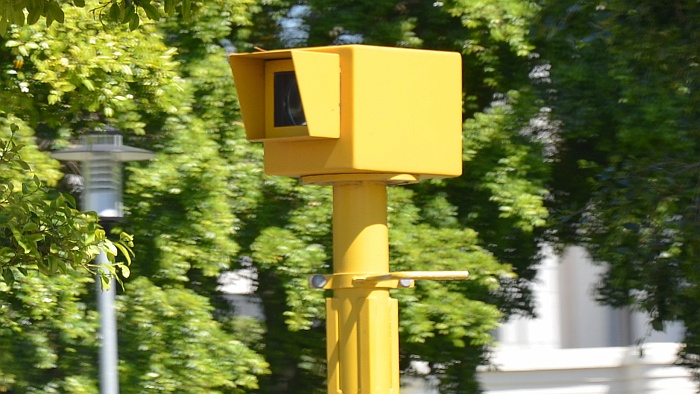
The camera never lies, so it goes, and it didn’t, in this case. Only thing is, they got the wrong car. Eh, what?
According to news reports, an AES (Automated Enforcement System) camera recently caught a speedster doing the dirty in Perak, and duly slapped him with a ticket for speeding.
Alan Leong, a manager with an electronics company, received the summons on October 18, which stated that his vehicle was captured going at 145 km/h at Km 204.6 of the North-South Expressway at 12.34 pm on October 10.
The ticket indicated that Leong, who drives a black Toyota Harrier with plate number PKR 181, has to pay the compound fine of RM300 by December 11, failing which he’d have to appear at the magistrate’s court in Taiping on January 7 next year.
All good and fine (no pun intended), except that the vehicle caught speeding as in the ticket was a white Toyota Camry, with the number plate PKR 1811.
Leong took the matter to the local JPJ office in Penang, bringing along his vehicle and pointing out the glaring error in the AES summons to JPJ officers. Apparently, none of the officers knew how to deal with the matter – they gave him the address of the RTD director-general in Putrajaya and told him to write in to explain his case, the reports go.
A rather riled Leong told a press conference in Bukit Mertajam on Sunday that apart from writing to the RTD chief, he has also lodged a police report. At the event, Padang Lalang assemblyman Tan Cheong Heng said that it the clear case of human error was committed by the AES control centre in Perak.
Tan said the centre, which obtained Leong’s particulars from the RTD’s database, should have checked and compared the colour and make of the vehicle before sending out the summons notice. After all, doing so would have ensured that it was all black and white with this ‘one’ (again, no pun intended!).

 Hello
on
Hello
on 

 boy
on
boy
on  Wisdom
on
Wisdom
on  Jimmy
on
Jimmy
on  _xXx_
on
_xXx_
on  uwa student
on
uwa student
on  malaysian citizen
on
malaysian citizen
on  Kokopai
on
Kokopai
on  KillBox1Alpha
on
KillBox1Alpha
on  Black Dog
on
Black Dog
on  Tazzy
on
Tazzy
on  car driver
on
car driver
on  kyen
on
kyen
on  Gan
on
Gan
on  Hadi75
on
Hadi75
on  henryee
on
henryee
on  tokmoh
on
tokmoh
on  Darren
on
Darren
on  dl
on
dl
on  frenzy
on
frenzy
on  flat_tire
on
flat_tire
on  awg1031
on
awg1031
on  Just a Thought
on
Just a Thought
on  paulinetan
on
paulinetan
on  azrul
on
azrul
on  Daus
on
Daus
on  kemio
on
kemio
on  achmadhendra
on
achmadhendra
on  WAN
on
WAN
on  AES
on
AES
on  Saga BeLum Masak
on
Saga BeLum Masak
on  Megane
on
Megane
on  nazgul
on
nazgul
on  woody
on
woody
on  amad
on
amad
on  MoFaz
on
MoFaz
on  Fredo
on
Fredo
on  icymint
on
icymint
on  Steve
on
Steve
on  Expatriate VN
on
Expatriate VN
on  Joe Radzif
on
Joe Radzif
on  Hahahaha
on
Hahahaha
on  1010
on
1010
on  Paulz
on
Paulz
on  KK_99
on
KK_99
on  bhloy
on
bhloy
on  apek
on
apek
on  Karim
on
Karim
on  Whynot
on
Whynot
on  Tong
on
Tong
on  funky munky
on
funky munky
on  inderaloka
on
inderaloka
on  ben
on
ben
on  Xefron
on
Xefron
on  amoi
on
amoi
on  polo saga
on
polo saga
on  totti
on
totti
on  confused
on
confused
on  Karl
on
Karl
on  aku benci motor
on
aku benci motor
on  dass G
on
dass G
on  AripSon
on
AripSon
on  vios
on
vios
on  DD
on
DD
on  DArkerMarker
on
DArkerMarker
on  bergh
on
bergh
on  matrxe
on
matrxe
on  Bob
on
Bob
on  Anand
on
Anand
on  James
on
James
on  mm
on
mm
on  matured man
on
matured man
on  lcms
on
lcms
on  Ayam
on
Ayam
on  tokmoh
on
tokmoh
on  AlvinNg
on
AlvinNg
on  sd
on
sd
on  b sensible
on
b sensible
on  Micheal
on
Micheal
on  budlee
on
budlee
on  Chubbi
on
Chubbi
on  Nick.C
on
Nick.C
on  taj
on
taj
on  elanly
on
elanly
on  momotarojaroo
on
momotarojaroo
on  wan
on
wan
on  pak ya
on
pak ya
on
AI-generated Summary ✨
Comments express skepticism about AES, claiming it is more about collecting revenue than safety, citing human errors and wrongful summons. Many criticize the system's implementation, alleging it benefits private cronies and highlights administrative inefficiencies. Concerns about misidentification, human error, and the system's effectiveness in reducing accidents are prevalent. Some feel it unfairly targets innocent drivers, and there are calls for system reform, better enforcement, and focus on driver discipline and road safety education. Overall, sentiments are predominantly negative toward AES's current form.