
The first month of 2017 hasn’t been an encouraging one for the automotive industry, with sales volume decreasing by 31% from December 2016, mirroring the previous December 2015/January 2016 pattern.
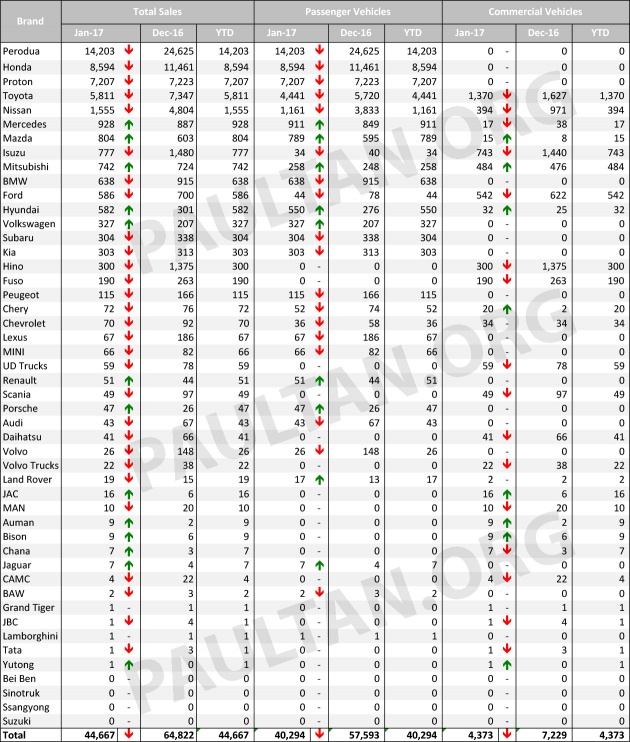
Even so, January 2017 saw a slight gain with a total of 44,667 vehicles sold, compared to 44,589 in the same month last year. For a better insight on how each brand performed compared to the month prior, here’s the latest data from the Malaysian Automotive Association.
Leading the crowd is Perodua with 14,203 units sold, representing a 42.3% decrease from from December 2016. Meanwhile, Proton only suffered a 0.2% drop in sales, shifting 7,207 units in January compared to 7,223 in December 2016.
Moving on to the non-national makes, Honda remained comfortable in second place with 8,594 units, a 25% drop from the 11,461 units it sold in the last month of 2016. Other brands that saw a decrease in sales include Toyota (-20.9%), Nissan(-67.6%), Lexus (-64%) and Volvo (-82.4%).
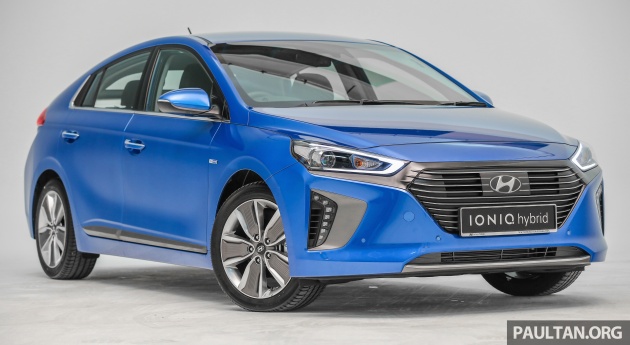
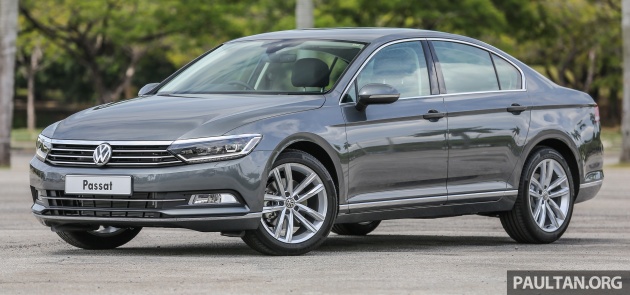
On the other hand, Mercedes-Benz saw a 4.6% increase in vehicles sold, with 928 units, joined by Mazda with 804 units (+33.3%). Other gainers include Hyundai with 582 units (+93,4%), likely due to the introduction of the new Ioniq, and Volkswagen with 327 units (+58%).
Click on the table below to view an enlarged version.

 ikuzus
on
ikuzus
on 

 John Geli
on
John Geli
on  Better Close Down Proton
on
Better Close Down Proton
on  zack
on
zack
on  AutoFrenz (the original)
on
AutoFrenz (the original)
on  Anything but P1
on
Anything but P1
on  Mikey
on
Mikey
on  no takata
on
no takata
on  Prabanathan Loo
on
Prabanathan Loo
on  john
on
john
on  tokmoh.
on
tokmoh.
on  Ng
on
Ng
on  poh
on
poh
on  alldisc
on
alldisc
on  leehoongui
on
leehoongui
on  Not Toyota Fan
on
Not Toyota Fan
on  amoi
on
amoi
on  Bob
on
Bob
on  Proton better than BMW / Mercedes / Audi?
on
Proton better than BMW / Mercedes / Audi?
on  Colin Wong
on
Colin Wong
on  JasonX
on
JasonX
on  camtakpro
on
camtakpro
on  Mohammad Hafiz Abdul Rahim
on
Mohammad Hafiz Abdul Rahim
on  C. P. MOHAN
on
C. P. MOHAN
on  GeneralHoho
on
GeneralHoho
on  eddie
on
eddie
on  dickvandyke
on
dickvandyke
on  waters
on
waters
on  Malaysian Driver
on
Malaysian Driver
on  john
on
john
on  When?
on
When?
on  Middle Age Driver (Member)
on
Middle Age Driver (Member)
on  Mr. Mao Huh Tang
on
Mr. Mao Huh Tang
on  man
on
man
on  sick&tired
on
sick&tired
on  Mr. Loba Loba
on
Mr. Loba Loba
on  thepolygonal
on
thepolygonal
on  Chan yik hang
on
Chan yik hang
on  Helix_olo
on
Helix_olo
on
AI-generated Summary ✨
Comments indicate mixed reactions to Malaysia's vehicle sales data. Some praise Proton's steady sales and suggest a facelifted Iriz could boost numbers, while others criticize Proton and Perodua for slow growth. The decline in Proton sales is seen as a sign of consumer switching to Japanese and continental brands like Honda, Hyundai, and VW, which are gaining market share. There is also concern about high car prices and credit dependency affecting overall sales. Enthusiasts discuss specific brand issues, models, and market strategies, reflecting a generally analytical and cautious sentiment.