
Verdict
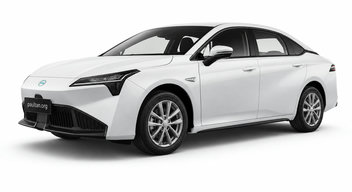
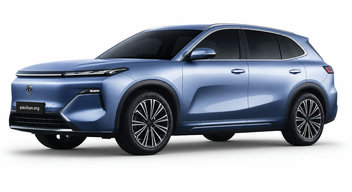
At RM106,800, the Aion ES costs RM3,000 less and makes the stronger case for drivers who can charge regularly: its 55.2 kWh battery delivers 442 km of EV range and accepts 60 kW DC charging. The RM109,800 Proton eMas 7 PHEV counters with a 215 hp, 258 Nm motor, a 51-litre petrol tank and 528-litre boot, but its 18.4 kWh battery covers only 83 km electrically. For Malaysian intercity use without dependable charging, the Proton’s hybrid layout is the safer fit; for predominantly electric commuting, choose the Aion.
Pick the Aion ES if you want 442 km of electric range, 60 kW DC charging and a RM3,000 lower price.
Pick the Proton eMas 7 PHEV if you need an SUV with a 528-litre boot, a 51-litre petrol tank and a 215 hp motor.
Key differences
- Price: Aion ES RM106,800; Proton eMas 7 PHEV RM109,800.
- Battery and EV range: Aion ES 55.2 kWh and 442 km; Proton eMas 7 PHEV 18.4 kWh and 83 km.
- DC charging: Aion ES 60 kW; Proton eMas 7 PHEV 30 kW.
- Motor output: Aion ES 136 hp and 225 Nm; Proton eMas 7 PHEV 215 hp and 258 Nm.
- Boot space: Aion ES 450 litres; Proton eMas 7 PHEV 528 litres.
- Body format: Aion ES four-door sedan; Proton eMas 7 PHEV five-door SUV.
ES
- RM3,000 cheaper at RM106,800.
- 442 km EV range from a 55.2 kWh battery.
- 60 kW DC charging, versus 30 kW.
- 136 hp and 225 Nm motor trails the Proton’s 215 hp and 258 Nm.
- 450-litre boot is 78 litres smaller than the Proton’s.
- Sedan body has four doors against the Proton SUV’s five.
eMas 7 PHEV
- 215 hp and 258 Nm motor output.
- 528-litre boot and five-door SUV body.
- 51-litre petrol tank complements the plug-in hybrid system.
- RM3,000 dearer at RM109,800.
- 83 km EV range is far shorter than the Aion’s 442 km.
- 30 kW DC charging is half the Aion’s 60 kW rate.
| Price & overview | ||
|---|---|---|
| Price | RM106,800✓ | RM109,800 |
| Body type | Sedan | SUV |
| Segment | C-Segment | C-Segment |
| Assembly | CBU | CKD |
| Ownership | ||
| Road tax / year | RM70 | — |
| Powertrain | ||
| Engine Tech | 400V architecture | 16-valve DOHC, Naturally Aspirated with Dual Variable Valve Timing and Atkinson Cycle |
| Horsepower | — | 98 hp |
| Torque | — | 125 Nm |
| Fuel | Electric | Petrol Plug-in Hybrid |
| Number of Motors | 1 | 1 |
| Motor Horsepower | 136 hp | 215 hp✓ |
| Motor Torque | 225 Nm | 258 Nm✓ |
| Battery Capacity | 55.2 kWh✓ | 18.4 kWh |
| EV Range | 442 km✓ | 83 km |
| Charging Rate (AC) | 6.6 kW | 6.6 kW |
| Charging Rate (DC) | 60 kW✓ | 30 kW |
| V2L | 3.3 kW | 3.3 kW |
| Drivetrain | ||
| Transmission | Single Ratio Automatic | Single Ratio Automatic |
| Driveline | Front Wheel Drive | Front Wheel Drive |
| Performance & Efficiency | ||
| 0-100 km/h | — | 8 seconds |
| Dimensions | ||
| Length | 4,810 mm | 4,740 mm |
| Width | 1,880 mm | 1,940 mm |
| Height | 1,545 mm | 1,685 mm |
| Wheelbase | 2,750 mm | 2,755 mm |
| Weight | — | 1,735 kg |
| Fuel Tank | — | 51 litres |
| Doors | 4 | 5 |
| Seats | 5 | 5 |
| Boot Space | 450 litres | 528 litres✓ |
| Front Tyre | 215/55 R17 | 225/55R18 |
| Rear Tyre | 215/55 R17 | 225/55R18 |
| Chassis | ||
| Assembly | China (CBU) | Malaysia (CKD) |
| Front Suspension | — | MacPherson Struts |
| Rear Suspension | — | Multi-link |
| Front Wheels | 17 | 18" Alloys |
| Rear Wheels | 17 | 18" Alloys |
| Steering | — | Rack and Pinion (Electric Power Steering) |
| Safety | ||
| Airbags | — | Driver and Passenger, Front Side, Front and Rear Curtain |
| ABS/EBD | — | ✓ |
| Stability Control | — | ✓ |
| Alarm | — | ✓ |
| Immobilizer | — | ✓ |
| Airbag Disable Function | — | ✓ |
| Child Safety Lock | — | Manual for Rear Doors |
| Seat Belts | — | 5 Three-point |
| ISOFIX | — | Available on Two Outer Rear Passenger Seats |
| Autonomous Braking System | — | Yes |
| Lane-keeping Assist | — | Steering Correction |
| Collision Warning | — | ✓ |
| Seatbelt Reminder | — | For All Seats |
| Lighting | ||
| Headlamps | — | LED Projector with Automatic High Beam |
| Taillamps | — | Full LED |
| LED Daytime Running Lights | — | ✓ |
| Rear Foglamps | — | ✓ |
| Wing Mirror Turn Indicators | — | ✓ |
| Cabin | ||
| Front Seats | — | Manual Adjustable |
| Rear Seats | — | 60:40 Split-fold |
| Front Air-con | — | Manual Air-con |
| Rear Air-con | — | Rear |
| Power Sockets | — | 1 Front, 1 Wireless Charger, 2 USB Front, 2 USB Rear |
| Interior Lighting | — | Map Lights |
| Cup Holders | — | 2 Front, 2 Rear |
| Audio | — | 15.4" Touchscreen with Wireless Apple CarPlay & Android Auto, 6-speaker Sound System |
| Convenience | ||
| Power Windows | — | Four Windows, Driver Side Auto Up and Down with Anti-Pinch |
| Engine Start | — | Keyless Operation (Depress Brake Pedal) |
| Locks | — | Keyless Operation |
| Auto Headlamps | — | ✓ |
| Auto Wipers | — | ✓ |
| Cruise Control | — | Adaptive Cruise Control with Stop & Go |
| Steering Audio Control | — | ✓ |
| Steering Tilt | — | ✓ |
| Steering Telescopic | — | ✓ |
| Boot Operation | — | Manual Boot |
| Parking Sensor Rear | — | 3 Sensors |
| Reverse Camera | — | Yes |
| Bluetooth | — | ✓ |
| Navigation | — | ✓ |
| Hill Start Assist | — | ✓ |
| Instrument Cluster | — | Full LCD Monitor |
| Parking Brake | — | Electronic |
| Warranty | ||
| Warranty Mileage Manufacturer | 160,000 km | Unlimited✓ |
| Warranty Manufacturer | 8 years✓ | 6 years |
| Warranty Notes | — | 8-Year/160,000 km Hybrid and Components Warranty, 8-year/160,000 km Battery Warranty |
Specs shown for the selected variant of each car. ✓ marks the better figure where lower/higher is objectively better. Road tax: West Malaysia, private registration.
Used ES & eMas 7 PHEV for sale
ES vs eMas 7 PHEV FAQ
Is the Aion ES or Proton eMas 7 PHEV better?
The Aion ES is better for regular electric driving, with 442 km of EV range and 60 kW DC charging. The Proton eMas 7 PHEV is better if you need a 528-litre boot, SUV body and petrol backup beyond its 83 km EV range.
What is the price difference?
The Proton eMas 7 PHEV costs RM109,800, which is RM3,000 more than the RM106,800 Aion ES.
Which one charges faster?
Both support 6.6 kW AC charging, but the Aion ES charges faster on DC power at 60 kW. The Proton eMas 7 PHEV is rated at 30 kW DC.