
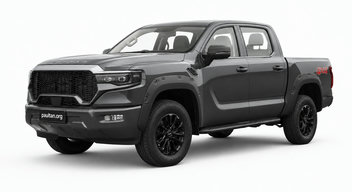
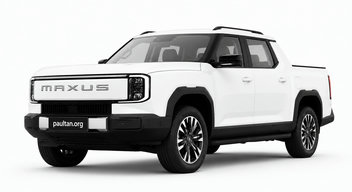
Verdict
The Foton Tunland is the pragmatic Malaysian work-truck choice: RM123,800 buys a 161 hp, 450 Nm diesel mild hybrid with a 76-litre tank, ZF eight-speed automatic and a larger 5,617 mm body. The Maxus eTerron 9 costs RM100,088 more, but its two motors produce 436 hp, its 102 kWh battery is quoted for 430 km, and 115 kW DC charging plus 6.6 kW V2L suit buyers committed to EV use. Both are five-seat AWD pickups; the Maxus is the faster-tech proposition, the Foton the lower-entry one.
Pick the Foton Tunland if you want the RM123,800 entry price, 450 Nm diesel torque and the larger 5,617 mm pickup body.
Pick the Maxus eTerron 9 if you can justify the RM223,888 outlay for 436 hp electric performance, 430 km quoted range and 6.6 kW V2L.
Key differences
- Price: Foton Tunland RM123,800; Maxus eTerron 9 RM223,888.
- Power: Foton Tunland 161 hp diesel mild hybrid; Maxus eTerron 9 dual motors with 436 hp.
- Length: Foton Tunland 5,617 mm; Maxus eTerron 9 5,500 mm.
- Width: Foton Tunland 2,090 mm; Maxus eTerron 9 2,005 mm.
- Height: Foton Tunland 1,955 mm; Maxus eTerron 9 1,860 mm.
- Wheelbase: Foton Tunland 3,355 mm; Maxus eTerron 9 3,300 mm.
Tunland
- RM100,088 cheaper to buy.
- 450 Nm diesel torque with a ZF eight-speed automatic.
- Longer, wider and taller exterior dimensions.
- 161 hp trails the eTerron 9's 436 hp.
- No quoted EV range, DC charging or V2L capability.
eTerron 9
- 436 hp from two electric motors.
- 102 kWh battery with 430 km quoted range.
- 115 kW DC charging and 6.6 kW V2L.
- RM100,088 more expensive.
- 117 mm shorter, 85 mm narrower and 95 mm lower than the Tunland.
| Price & overview | ||
|---|---|---|
| Price | RM123,800✓ | RM223,888 |
| Body type | Pickup | Pickup |
| Segment | Truck/4X4 | Truck/4X4 |
| Assembly | CBU | — |
| Powertrain | ||
| Engine Tech | 16-valve, DOHC with Variable Geometry Turbo, 48-volt Mild Hybrid Assistance | — |
| Horsepower | 161 hp | — |
| Torque | 450 Nm | — |
| Fuel | Diesel Hybrid/REV | Electric |
| Number of Motors | — | 2 |
| Motor Horsepower | — | 436 hp |
| Battery Capacity | — | 102 kWh |
| EV Range | — | 430 km |
| Charging Rate (DC) | — | 115 kW |
| V2L | — | 6.6 kW |
| Drivetrain | ||
| Transmission | Conventional Automatic | Single Ratio Automatic |
| Transmission Name | 8AT | — |
| Gears | 8 | — |
| Transmission Manufacturer | ZF | — |
| Driveline | All Wheel Drive | All Wheel Drive |
| Dimensions | ||
| Length | 5,617 mm | 5,500 mm |
| Width | 2,090 mm | 2,005 mm |
| Height | 1,955 mm | 1,860 mm |
| Wheelbase | 3,355 mm | 3,300 mm |
| Weight | 2,160 kg | — |
| Fuel Tank | 76 litres | — |
| Doors | 4 | — |
| Seats | 5 | 5 |
| Front Tyre | 265/70R18 | — |
| Rear Tyre | 265/70R18 | — |
| Spare Tyre | Full Size Spare | — |
| Factory Tyres | Giti AT71 | — |
| Chassis | ||
| Assembly | China (CBU) | — |
| Front Suspension | Double Wishbones | — |
| Rear Suspension | Leaf Springs | — |
| Front Wheels | 18" Alloys | — |
| Rear Wheels | 18" Alloys | — |
| Steering | Hydraulic Power Steering | — |
| Safety | ||
| Airbags | Driver and Front Passenger | — |
| ABS/EBD | ✓ | — |
| Stability Control | ✓ | — |
| Alarm | ✓ | — |
| Immobilizer | ✓ | — |
| Airbag Disable Function | ✓ | — |
| Child Safety Lock | Manual for Rear Doors | — |
| Seat Belts | 5 Three-point | — |
| ISOFIX | Available on Outer Two Rear Seats | — |
| Lane-keeping Assist | No | — |
| Seatbelt Reminder | All Seats | — |
| Lighting | ||
| Headlamps | LED Projectors | — |
| Taillamps | Bulb | — |
| LED Daytime Running Lights | ✓ | — |
| Front Foglamps | ✓ | — |
| Cabin | ||
| Front Seats | Powered Driver's Seat, Manual Passenger Seat | — |
| Rear Seats | 60:40 Split-folding | — |
| Front Air-con | Single-zone Automatic Climate Control | — |
| Rear Air-con | Rear AC Vents | — |
| Power Sockets | 1 Front, 2 USB Front | — |
| Interior Lighting | Map Lights & Ambient Lighting | — |
| Cup Holders | 2 Front, 2 Rear | — |
| Audio | 14.6" Touchscreen with Wireless Apple CarPlay, 4-speaker Sound System | Dual 12.3" Digital Displays with Wired and Wireless Apple CarPlay and Android Auto |
| Convenience | ||
| Power Windows | Four Windows, Driver's Side Auto Up & Down | — |
| Engine Start | Keyless Push Button | — |
| Locks | Keyless Operation | — |
| Auto Start/Stop | ✓ | — |
| Auto Headlamps | ✓ | — |
| Cruise Control | Passive Cruise Control | — |
| Paddle Shift | ✓ | — |
| Steering Audio Control | ✓ | — |
| Steering Tilt | ✓ | — |
| Steering Telescopic | ✓ | — |
| Parking Sensor Rear | 4 Sensors | — |
| Reverse Camera | Yes | — |
| Bluetooth | ✓ | — |
| Hill Start Assist | ✓ | — |
| Instrument Cluster | Backlit Analogue | — |
| Parking Brake | Electronic | — |
| Warranty | ||
| Warranty Mileage Manufacturer | 200,000 km | — |
| Warranty Manufacturer | 7 years | — |
| Ownership | ||
| Road tax / year | — | RM665 |
Specs shown for the selected variant of each car. ✓ marks the better figure where lower/higher is objectively better. Road tax: West Malaysia, private registration.
Used Tunland & eTerron 9 for sale
Tunland vs eTerron 9 FAQ
Is the Foton Tunland or Maxus eTerron 9 better?
The eTerron 9 is better for electric performance and EV utility, with 436 hp, 430 km quoted range and V2L. The Tunland is the better lower-cost diesel pickup, saving RM100,088 while providing 450 Nm and an eight-speed automatic.
What is the price difference?
The Maxus eTerron 9 costs RM100,088 more than the Foton Tunland: RM223,888 versus RM123,800.
Can the Maxus eTerron 9 power external equipment?
Yes. The eTerron 9 has 6.6 kW vehicle-to-load capability, allowing its 102 kWh battery to supply external electrical equipment. No V2L capability is stated for the diesel mild-hybrid Tunland.