
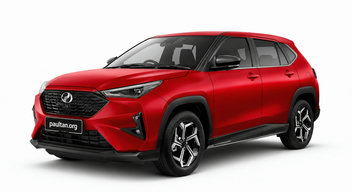
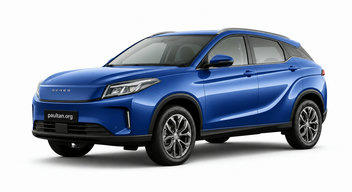
Verdict
The Perodua Traz costs RM76,100, undercutting the Seres 3 by RM18,900 while bringing six airbags, blind-spot monitoring and ASA 3.0 pre-collision braking with pedestrian detection. Its 1.5-litre petrol four-cylinder makes 105 hp and 138 Nm, so it cannot match the Seres 3’s 161 hp and 300 Nm electric motor. The Seres also brings a 53.6-kWh battery, 340-km range and a 525-litre boot, but needs access to AC or DC charging. For a family prioritising active safety and lower entry cost, the Traz is the more sensible pick; the Seres suits buyers committed to EV use.
Pick the Perodua Traz if you want to save RM18,900 and place greater weight on blind-spot monitoring, lane-keeping steering correction and autonomous braking.
Pick the Seres 3 if you have dependable charging and want 161 hp, 300 Nm, a 340-km EV range and the larger boot.
Key differences
- Price: Perodua Traz RM76,100; Seres 3 RM95,000.
- Power and torque: Traz 105 hp and 138 Nm; Seres 3 161 hp and 300 Nm.
- Energy storage: Traz 42-litre petrol tank; Seres 3 53.6-kWh battery with 340 km range.
- Dimensions: Traz 4,310 mm long and 1,770 mm wide; Seres 3 4,385 mm long and 1,850 mm wide.
- Boot space: Traz 471 litres; Seres 3 525 litres.
- Kerb weight: Traz 1,145 kg; Seres 3 1,650 kg.
Traz
- RM18,900 lower purchase price.
- ASA 3.0 braking, blind-spot monitoring and lane-keeping steering correction.
- Full-size 16-inch steel spare tyre.
- Far less output: 105 hp and 138 Nm versus 161 hp and 300 Nm.
- Smaller 471-litre boot versus 525 litres.
- Manual front seats and manual single-zone air-con.
3
- 161 hp and 300 Nm electric motor.
- 53.6-kWh battery, 340-km range and 11-kW AC charging.
- 525-litre boot, powered front seats and automatic climate control.
- Costs RM18,900 more.
- No listed autonomous braking, blind-spot monitoring or lane-keeping assist.
- Space-saver spare tyre instead of the Traz’s full-size spare.
What the Traz has over the 3
What the 3 has over the Traz
Based on the published spec sheets of the selected variants — a blank field on one side can also mean unlisted data.
The 3 is 80 mm wider — more shoulder room, but a tighter fit in parking bays. Boot space favours the 3: 525 litres against 471.
Representative body-type outlines, drawn to scale from each car's length and height.
| Price & overview | ||
|---|---|---|
| Price | RM76,100✓ | RM95,000 |
| Body type | SUV | SUV |
| Segment | B-Segment | B-Segment |
| Assembly | CKD | CBU |
| Ownership | ||
| Road tax / year | RM120 | RM120 |
| Monthly instalment (est.) | RM775/mo✓ | RM970/mo |
| Insurance / year (est.) | RM2,258✓ | RM2,718 |
| Fuel or electricity / year (est.) | — | RM1,401 |
| Energy cost / 100 km (est.) | — | RM7.00 |
| 5-year running costs (est.) | — | RM21,193 |
| Charging (estimated) | ||
| AC charge 0–100% (est.) | — | 4.9 hours |
| DC charge 10–80% (est.) | — | 65 min |
| Powertrain | ||
| Engine Tech | 16-valve DOHC, Naturally Aspirated with Variable Valve Timing | 400V architecture |
| Capacity | 1,496 cc | — |
| Horsepower | 105 hp at 6,000 rpm | — |
| Torque | 138 Nm at 4,200 rpm | — |
| Cylinder Arrangement | Inline 4 | — |
| Fuel | Petrol | Electric |
| Bore × Stroke | 72.5 mm × 90.6 mm | — |
| Compression Ratio | 11.5 | — |
| Number of Motors | — | 1 |
| Motor Horsepower | — | 161 hp |
| Motor Torque | — | 300 Nm |
| Battery Capacity | — | 53.6 kWh |
| EV Range | — | 340 km |
| Charging Rate (AC) | — | 11 kW |
| Charging Rate (DC) | — | 60 kW |
| Drivetrain | ||
| Transmission | CVT Automatic | Single Ratio Automatic |
| Driveline | Front Wheel Drive | Front Wheel Drive |
| Dimensions | ||
| Length | 4,310 mm | 4,385 mm |
| Width | 1,770 mm | 1,850 mm |
| Height | 1,655 mm | 1,650 mm |
| Wheelbase | 2,620 mm | 2,655 mm |
| Weight | 1,145 kg | 1,650 kg |
| Fuel Tank | 42 litres | — |
| Doors | 5 | 5 |
| Seats | 5 | 5 |
| Boot Space | 471 litres | 525 litres✓ |
| Front Tyre | 215/60R17 | 225/55R18 |
| Rear Tyre | 215/60R17 | 225/55R18 |
| Spare Tyre | Full Size 16" Steel | Space Saver |
| Factory Tyres | Toyo Proxes CR1 | Chao Yang SU318a H/T |
| Chassis | ||
| Assembly | Malaysia (CKD) | China (CBU) |
| Front Suspension | MacPherson Struts | MacPherson Struts |
| Rear Suspension | Torsion Beam | Torsion Beam |
| Front Wheels | 17" Dual-tone Alloy | 18" Alloys |
| Rear Wheels | 17" Dual-tone Alloy | 18" Alloys |
| Steering | Rack and Pinion (Electric Power Steering) | Rack and Pinion (Electric Power Steering) |
| Safety | ||
| Airbags | 6 (Driver and Passenger, Front Side, Front and Rear Curtain) | 6 (Driver and Front Passenger, Front Side, Curtain Airbags) |
| ABS/EBD | ✓ | ✓ |
| Stability Control | ✓ | ✓ |
| Alarm | ✓ | — |
| Immobilizer | ✓ | ✓ |
| Airbag Disable Function | ✓ | ✓ |
| Child Safety Lock | Manual for Rear Doors | Manual for Rear Doors |
| Seat Belts | 5 Three-point | 5 Three-point |
| Blind Spot Info System | ✓ | — |
| ISOFIX | Available for 2 Outer Rear Seats | Available on Outer Two Rear Seats |
| Autonomous Braking System | Yes, ASA 3.0 Pre-collision Braking (4-120 km/h) with Pedestrian Detection | — |
| Lane-keeping Assist | Steering Correction | No |
| Collision Warning | ✓ | — |
| Seatbelt Reminder | For All Seats | Front Seats |
| Lighting | ||
| Headlamps | LED Projectors | LED Projectors |
| Taillamps | Full LED | LED Combination |
| LED Daytime Running Lights | — | ✓ |
| Front Foglamps | ✓ | — |
| Rear Foglamps | — | ✓ |
| Wing Mirror Turn Indicators | ✓ | ✓ |
| Cabin | ||
| Front Seats | Manual Adjustable | Powered Front Seats |
| Rear Seats | 60:40 Split-folding | 60:40 Split-fold |
| Front Air-con | Manual Single-zone with Digital Controls | Single-zone Automatic Climate Control |
| Rear Air-con | Rear AC Vents | Rear AC Vents |
| Power Sockets | 1 Front, 2 USB Front, 2 USB Rear | 1 Front, 2 USB Front, 2 USB Rear |
| Interior Lighting | Map Lights | Map Lights |
| Cup Holders | 2 Front, 2 Rear | 2 Front, 2 Rear |
| Audio | 9.0" Touchscreen Infotainment System with Smart Link, Apple CarPlay, Android Auto, Bluetooth, USB and 6 Speakers | 10.25" Touchscreen with Android Auto, Apple CarPlay, Bluetooth and 6 Speakers |
| Convenience | ||
| Power Windows | Four Windows, Driver's Side Auto Up and Down with Anti-pinch | Four Windows, Auto Up and Down with Anti-pinch |
| Engine Start | Keyless Push Button | Keyless Push Button |
| Locks | Remote Control Activation | Remote Control Activation |
| Auto Headlamps | ✓ | ✓ |
| Auto Wipers | — | ✓ |
| Cruise Control | — | Passive Cruise Control |
| Tiptronic | ✓ | — |
| Steering Audio Control | ✓ | ✓ |
| Steering Tilt | ✓ | — |
| Steering Telescopic | ✓ | — |
| Electric Steering Adjustment | — | ✓ |
| Boot Operation | Remote Control Activation | Manual Boot |
| Parking Sensor Front | 2 Sensors | — |
| Parking Sensor Rear | 2 Sensors | 4 Sensors |
| Reverse Camera | Yes | Yes |
| Folding Wing Mirrors | ✓ | — |
| Bluetooth | ✓ | ✓ |
| Hill Start Assist | ✓ | ✓ |
| Instrument Cluster | Electroluminescent Analogue | Full LCD Monitor |
| Parking Brake | Electronic | Electronic |
| Warranty | ||
| Warranty Mileage Manufacturer | 150,000 km | 160,000 km✓ |
| Warranty Manufacturer | 5 years | 5 years |
Specs shown for the selected variant of each car. ✓ marks the better figure where lower/higher is objectively better. Road tax: West Malaysia, private registration. Running-cost estimates assume 20,000 km/year. Fuel at RM1.99/litre (RON95, subsidised). Electricity at RM0.44/kWh (TNB domestic, home charging); public DC charging costs around RM1.30/kWh. Charging times estimated from battery capacity and peak charging rates. Insurance: comprehensive motor tariff, no NCD. Instalment: 10% down, 2.5% flat rate, 9 years. Prices checked October 2026.
Used Traz & 3 for sale
Our reviews & guides


Traz vs 3 FAQ
Is the Perodua Traz or Seres 3 better?
The Traz is the better buy for its RM18,900 lower price and stronger listed active-safety kit, including ASA 3.0, blind-spot monitoring and lane-keeping assistance. Choose the Seres 3 instead for EV driving, much higher 300-Nm torque and a larger 525-litre boot.
What is the price difference?
The Seres 3 costs RM18,900 more than the Perodua Traz: RM95,000 against RM76,100.
How far can the Seres 3 travel and how fast can it charge?
The Seres 3 has a 53.6-kWh battery and a stated 340-km range. It supports AC charging at up to 11 kW and DC charging at up to 60 kW.
How long does charging take?
The 3's 53.6 kWh battery takes about 4.9 hours for a full AC charge, and an estimated 65 minutes from 10% to 80% on a DC fast charger at its 60 kW peak.
Which one is locally assembled?
The Traz is assembled in Malaysia (CKD), while the 3 is fully imported (CBU) from China. Local assembly generally helps pricing and spare-parts supply, and CKD programmes usually signal a longer-term commitment to the model here.