

UPDATE: The government has denied plans to limit fuel subsidies (click link for more info) to those earning less than RM5,000 a month owning cars with engine displacements below 2,000cc.
A Sin Chew Daily exclusive has revealed some details on the new system for the sale of subsidised diesel and petrol to eligible motorists that’s set to begin in September for commercial vehicles and October or November for private vehicles.
Citing Domestic Trade and Consumer Affairs ministry (KPDNKK) sources, the report indicates that under the new system, motorists with a monthly income of RM5,000 and below – and having cars with engines displacing under 2.0 litres – will qualify for the full fuel subsidy allowance.
Those with a monthly income of RM5,000-10,000 will be entitled to 300 litres’ worth of petrol and diesel subsidies, and those with monthly incomes of over RM10,000 may not be able to enjoy any fuel subsidies at all. Also, foreign motorists and foreign cars will no longer be entitled to buy subsidised fuel.
The source told Sin Chew Daily that the government is considering whether to upgrade the MyKad to include information on the bearer’s eligibility to purchase subsidised fuel, or issue a special fuel card.
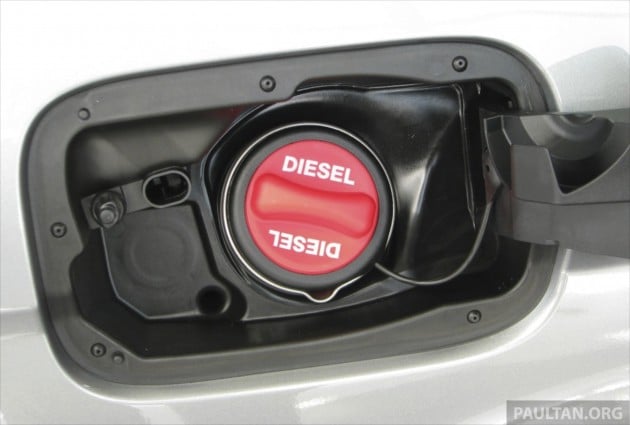
Motorists will likely have to register with JPJ and provide relevant details, such as personal or corporate tax information, to collect this fuel card.
According to the source, the card will contain information such as the bearer’s name, address and monthly fuel quota. It will need to be swiped at petrol stations before filling up.
If a motorist has exceeded his/her fuel allowance for the month, he/she will have to purchase the (additional) fuel at market price, the source said, adding that the cards will also help the government trace motorists’ fuel spending.
However, all this has yet to be finalised, and KPDNKK is still exploring recommendations from relevant industries, the report states.
Looking to sell your car? Sell it with Carro.

 How_about
on
How_about
on 

 Same L0r
on
Same L0r
on  inky
on
inky
on  kelso
on
kelso
on  hantu
on
hantu
on  PBB
on
PBB
on  Jac Li
on
Jac Li
on  farq
on
farq
on  ahoka
on
ahoka
on  ATMD
on
ATMD
on  KP
on
KP
on  Lawrence
on
Lawrence
on  Dax
on
Dax
on  Leo
on
Leo
on  armandd
on
armandd
on  JJ
on
JJ
on  btree (Member)
on
btree (Member)
on  Vader (Member)
on
Vader (Member)
on  muya
on
muya
on  kl fella
on
kl fella
on  Francis
on
Francis
on  Tankie
on
Tankie
on  brink
on
brink
on  Wonka
on
Wonka
on  weeble
on
weeble
on  Wolpe
on
Wolpe
on  aku
on
aku
on  john
on
john
on  tiadaid (Member)
on
tiadaid (Member)
on  drMpower
on
drMpower
on  cibusat
on
cibusat
on  Black Dog
on
Black Dog
on  amfin
on
amfin
on  cont
on
cont
on  sotong88
on
sotong88
on  silver
on
silver
on  test
on
test
on  hway de Cruz
on
hway de Cruz
on  Adam
on
Adam
on  pondan
on
pondan
on  JaRoD
on
JaRoD
on  Refuel service.
on
Refuel service.
on  calcutta
on
calcutta
on  Low Budget
on
Low Budget
on  not-so-john
on
not-so-john
on  iikm
on
iikm
on  yundei
on
yundei
on  crz
on
crz
on  xiper (Member)
on
xiper (Member)
on  senooi
on
senooi
on  ouch
on
ouch
on  thefact
on
thefact
on  idiotsatwork
on
idiotsatwork
on  Useless government
on
Useless government
on  sani
on
sani
on  take
on
take
on  just wonder
on
just wonder
on  TopsyBoXyTurvy
on
TopsyBoXyTurvy
on  farq
on
farq
on  noobplan
on
noobplan
on  seancorr
on
seancorr
on  Anti CO2
on
Anti CO2
on  Casp
on
Casp
on  GDrogon
on
GDrogon
on  vvti
on
vvti
on  Henry
on
Henry
on  Js
on
Js
on  Ben
on
Ben
on  patr
on
patr
on  ben
on
ben
on  salambangi
on
salambangi
on  gee
on
gee
on  Sattian
on
Sattian
on  aku
on
aku
on  jwrx (Member)
on
jwrx (Member)
on  raj
on
raj
on  yyy
on
yyy
on  Wednesday
on
Wednesday
on  gov
on
gov
on  Jay
on
Jay
on  ioma
on
ioma
on  nnn
on
nnn
on  Joey
on
Joey
on  Answer
on
Answer
on  Thursday
on
Thursday
on  AHAHA
on
AHAHA
on  Haripal
on
Haripal
on  ModernM
on
ModernM
on  Outdated
on
Outdated
on  XoXo
on
XoXo
on  ongtu
on
ongtu
on  ivnlph
on
ivnlph
on  TheRealMaserati
on
TheRealMaserati
on  Dead Chicken Kick Pot
on
Dead Chicken Kick Pot
on  daijoubu
on
daijoubu
on  X2
on
X2
on  Din Tiger
on
Din Tiger
on  kangkong
on
kangkong
on  mmaker
on
mmaker
on  Boleh!
on
Boleh!
on  macromedia
on
macromedia
on  DB10
on
DB10
on  lonelyobserve (Member)
on
lonelyobserve (Member)
on  Kampung Boy
on
Kampung Boy
on  F1
on
F1
on  wiralution
on
wiralution
on  Beckscum7
on
Beckscum7
on  Rambo
on
Rambo
on  pening
on
pening
on  loose (Member)
on
loose (Member)
on  iskhalifah
on
iskhalifah
on  S60R
on
S60R
on  Ck
on
Ck
on  bananahead
on
bananahead
on  azizul
on
azizul
on  abdullah
on
abdullah
on  Josh Ling
on
Josh Ling
on  Not satisfied
on
Not satisfied
on  passerby00
on
passerby00
on  Poor Idea Poor execution
on
Poor Idea Poor execution
on  Blue-traveler
on
Blue-traveler
on  klagang
on
klagang
on  ABU111
on
ABU111
on  Critique (Member)
on
Critique (Member)
on  et
on
et
on  Joker
on
Joker
on  sano
on
sano
on  totti
on
totti
on  Simon Ng
on
Simon Ng
on  jojo
on
jojo
on  mango
on
mango
on  honta
on
honta
on  Leong
on
Leong
on  jaijoe
on
jaijoe
on  nabill (Member)
on
nabill (Member)
on  cybermaster98
on
cybermaster98
on  Denaihati
on
Denaihati
on  AVH (Member)
on
AVH (Member)
on  slumber
on
slumber
on  mayoyo
on
mayoyo
on  Hadi75
on
Hadi75
on  Tew chin yan
on
Tew chin yan
on  mason
on
mason
on  Taro
on
Taro
on  samlok
on
samlok
on  Michael
on
Michael
on  kenix tim mun chong
on
kenix tim mun chong
on  Pyy
on
Pyy
on  min
on
min
on  Elvin
on
Elvin
on  fren
on
fren
on  shay
on
shay
on  Motorhead (Member)
on
Motorhead (Member)
on  Pontiac
on
Pontiac
on  WAKAWAKA
on
WAKAWAKA
on  REDDEVIL
on
REDDEVIL
on  numb
on
numb
on  kimchi
on
kimchi
on  nighttrain
on
nighttrain
on  Taiko
on
Taiko
on  Alan Tan
on
Alan Tan
on  Gary Leong
on
Gary Leong
on  D
on
D
on  munchui
on
munchui
on  Guan Yin Maa
on
Guan Yin Maa
on  5050
on
5050
on  Maserati(Official)
on
Maserati(Official)
on  gt4
on
gt4
on  Disgrunted Malaysian Citizen
on
Disgrunted Malaysian Citizen
on  Arcee
on
Arcee
on  Ashho
on
Ashho
on  Ian
on
Ian
on  John Cooper
on
John Cooper
on  Daniel Ng
on
Daniel Ng
on  old dog
on
old dog
on  Jen
on
Jen
on  Xiao Mi
on
Xiao Mi
on  come on lah
on
come on lah
on  kecil
on
kecil
on  adam
on
adam
on  bogus
on
bogus
on  azrai
on
azrai
on  Syameer (Member)
on
Syameer (Member)
on  mystvearn
on
mystvearn
on  bisakeris (Member)
on
bisakeris (Member)
on  Maseratits
on
Maseratits
on  Lam du sa
on
Lam du sa
on  Kilo
on
Kilo
on  Kelvin
on
Kelvin
on  Steve Kok
on
Steve Kok
on  Starstreak
on
Starstreak
on  Subsidy's_killer
on
Subsidy's_killer
on  james dean
on
james dean
on  NA
on
NA
on  TSI
on
TSI
on  Iskandar
on
Iskandar
on  Awesome
on
Awesome
on  apalagibising
on
apalagibising
on  Ron Soo
on
Ron Soo
on  dRwh0
on
dRwh0
on  TY
on
TY
on  ApaPunBoleh
on
ApaPunBoleh
on  Stealth
on
Stealth
on  Samad Jain
on
Samad Jain
on  Void
on
Void
on  Jack
on
Jack
on  asmadi
on
asmadi
on  Cadbury
on
Cadbury
on  mat jojo
on
mat jojo
on  Jon
on
Jon
on  yy
on
yy
on  Neo
on
Neo
on  Proposal
on
Proposal
on  Mana-Ada-System (MAS)
on
Mana-Ada-System (MAS)
on  bn_gov_byk_stupid
on
bn_gov_byk_stupid
on  ods
on
ods
on 


AI-generated Summary ✨
Comments express concern that the subsidy scheme will be exploited by the rich and lead to abuse, such as using drivers or relatives' ICs to claim subsidies, and highlight loopholes like engine cc classifications and income thresholds. Many feel the plan is impractical, too complicated, and prone to fraud. Some critics advocate removing subsidies entirely to lower car prices and promote better public transport. Overall, sentiments are skeptical about the system's feasibility and fairness, fearing it benefits cronies and worsens corruption rather than helping the intended lower-income groups.