
The Petrol Dealers Association of Malaysia (PDAM) has suggested that the government begin dyeing subsidised fuel to enable it to be more easily identified. That way, enforcement agencies would only have to look at the colour of the fuel to tell if it is being taken across borders.
PDAM deputy president Datuk Zulkifli Mokti recommended that the government take this measure in addition to other measures that have to be introduced from August 1 this year, including requiring all tanker trucks to be painted blue with the words “Minyak Subsidi” on the tanks.
Another change in the way subsidies are being controlled is the diesel quota system, which is now set at the station level instead of being set at the fuel company level. Stations will be required to submit monthly reports of how much RON95 and diesel they sell, and they can request for extra allocations if they need it.
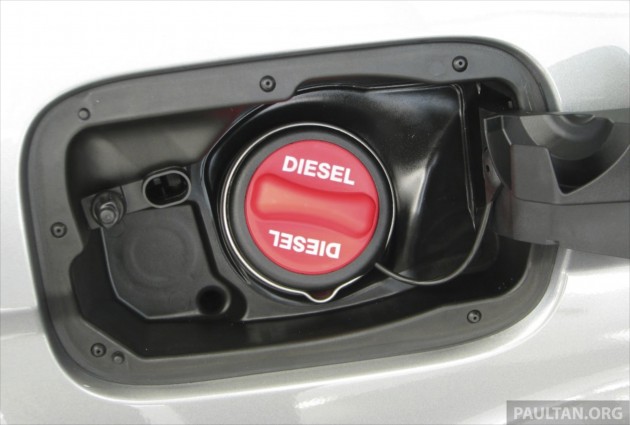
Hopefully this will reduce the “maaf, kuota habis” signs at the stations at the end of the month. I personally faced this quite often before I disposed of my diesel-powered SUV. It makes refuelling even more of an issue, adding on top of the existing issue of finding the right kind of diesel nozzle size to fit the vehicle.

 Dye for Ministers
on
Dye for Ministers
on 

 policeman
on
policeman
on  flat_tire
on
flat_tire
on  Curi Curi Malaysia
on
Curi Curi Malaysia
on  Bersuhabat Suhabat
on
Bersuhabat Suhabat
on  Mari Untung Lebih Lebih!
on
Mari Untung Lebih Lebih!
on  Lesen Stesen Minyak
on
Lesen Stesen Minyak
on  poyo
on
poyo
on  Peter
on
Peter
on  Vader (Member)
on
Vader (Member)
on  lcms
on
lcms
on  start-a-fight
on
start-a-fight
on  the driver
on
the driver
on  support
on
support
on  W204 C63 AMG
on
W204 C63 AMG
on  cendol (Member)
on
cendol (Member)
on  slk3879
on
slk3879
on  bingo
on
bingo
on  Ah Beng King
on
Ah Beng King
on  val
on
val
on  Anti CO2
on
Anti CO2
on  Matt
on
Matt
on  Lane Tamer
on
Lane Tamer
on  Hadi75
on
Hadi75
on  ynnad
on
ynnad
on  Black Dog
on
Black Dog
on  Blondie
on
Blondie
on  joeyoung
on
joeyoung
on  Blaze
on
Blaze
on  dr
on
dr
on  Skeptic
on
Skeptic
on  xbox
on
xbox
on  sengmineng
on
sengmineng
on  panjang
on
panjang
on  Hundredtozero
on
Hundredtozero
on  Jedi
on
Jedi
on  Susukotak
on
Susukotak
on  Lemer
on
Lemer
on  Subsidized Solution!
on
Subsidized Solution!
on  _xXx_
on
_xXx_
on  niterunner99
on
niterunner99
on  Orang Minyak
on
Orang Minyak
on
AI-generated Summary ✨
Comments express support for dyeing subsidized fuel to prevent smuggling and corruption, with suggestions like using MyKaD checks and high-tech tagging. Many believe removing subsidies altogether could be more effective, reducing fraud and saving billions. Some skeptics doubt dyeing's effectiveness against smugglers who are too clever, and there are concerns about enforcement, foreign vehicle fueling, and government corruption. Overall, there's a consensus that better enforcement and transparency are essential.