
Vehicle sales in the country continued a strong showing for the third month running as a result of the government’s move to zero-rate the goods and services tax (GST) for three months before the return of the sales and services tax (SST) on September 1.
Sales in August totalled 65,551 units, which was 4% or 2,914 units less than the 68,465 units achieved in July, but it was ahead of that managed in June when 0% GST kicked in, as consumers continued to take the opportunity to snap up vehicles during the tax holiday period.
Here’s a quick breakdown of how most brands peformed in August. Despite the overall volume going down last month compared to July, most brands actually saw an increase in sales, save the top two. Perodua’s total numbers for the month dropped by 25.3%, while Honda saw a 15.8% decrease in sales in July. Toyota also saw a 3.7% dip in numbers for the month.
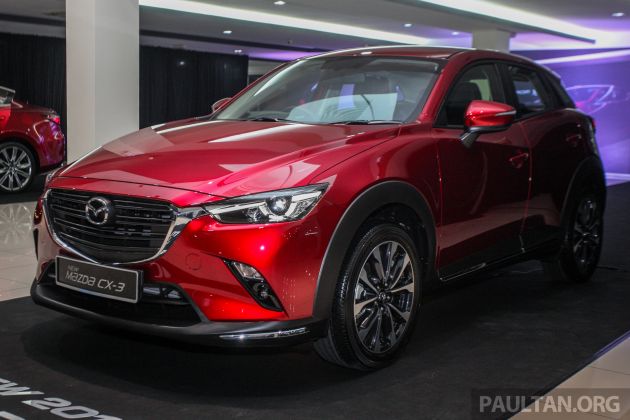
In this case, it wasn’t for lack of demand, but a case of inventory not being able to keep up, effectively tapering off the pace. Elsewhere, things were more positive. Gainers included Proton (+17.3%), Nissan (+6.0%), Mazda (+62.3%), Isuzu (+95.4%), Mitsu (+43.7%), Subaru (+47.6%), Volkswagen (+26.8%) and Ford (+59.0%).
In the premium segment, BMW (+22.8%) outsold Mercedes (-14.4%) for the month, while Lexus saw a 157.1% increase in sales from July. Volvo also had a good month, increasing its sales volume by 40.7%. Again, Audi’s sales figures were not available.
Click on the chart below to view a larger version.


 Yusof
on
Yusof
on 

 tokmoh.
on
tokmoh.
on  ledzepp
on
ledzepp
on  Stanley Ong
on
Stanley Ong
on  Alam
on
Alam
on  karam singh
on
karam singh
on  Simon
on
Simon
on  Volvo audi lexus all koyak
on
Volvo audi lexus all koyak
on  Dont be jealous Honda Salesman
on
Dont be jealous Honda Salesman
on  PV Summary
on
PV Summary
on  john
on
john
on  Tyop
on
Tyop
on  Audi Fans
on
Audi Fans
on  XX
on
XX
on  Gaya Proton
on
Gaya Proton
on  applegreen
on
applegreen
on  Dug Ong
on
Dug Ong
on  GenFranco
on
GenFranco
on  Kimchi Wong
on
Kimchi Wong
on  Axxx
on
Axxx
on  alldisc
on
alldisc
on  Axxx
on
Axxx
on  Ben Yap
on
Ben Yap
on  halloha560-john SDN BHD
on
halloha560-john SDN BHD
on  heyheyman123
on
heyheyman123
on  Dont be jealous Honda Salesman
on
Dont be jealous Honda Salesman
on  Proton oh Proton
on
Proton oh Proton
on  Leonardo
on
Leonardo
on  John
on
John
on  frankC
on
frankC
on  Yong
on
Yong
on  JustSaying
on
JustSaying
on  taknakhonda
on
taknakhonda
on  Yc Foo
on
Yc Foo
on  MenteriPasola101
on
MenteriPasola101
on  Anonymous
on
Anonymous
on  Ongkili
on
Ongkili
on  Taming Sari
on
Taming Sari
on  Same L0rr
on
Same L0rr
on  Kelvin
on
Kelvin
on  Audy
on
Audy
on  Azlan
on
Azlan
on
AI-generated Summary ✨
Comments express varied opinions on Malaysian vehicle sales data, highlighting low sales for brands like Audi, Peugeot, and Proton, and praising strong performers like Perodua, Honda, and Toyota. There is criticism of Honda's service quality and concerns about declining sales of Toyota and Honda. Some comments mention new investments and production plans, while others criticize specific brand performances and dealer management. Overall, sentiments are mixed but tend to favor top-selling local brands and question lesser-performing foreign brands.