
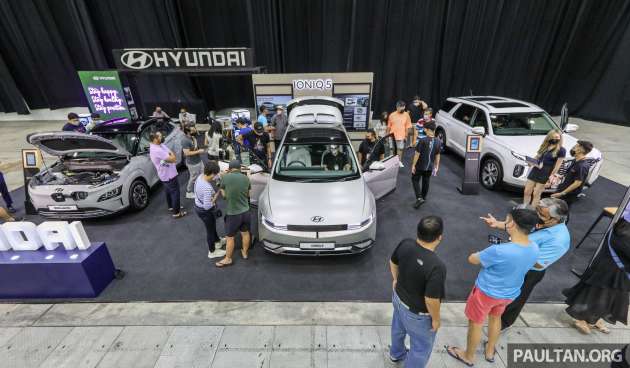
The sales and service tax (SST) exemption for new car purchases, introduced in June 2020 to shore up the economy in the wake of the COVID-19 pandemic, has certainly been beneficial for car buyers. But it has truly hurt the nation’s coffers, with Bernama reporting that the government lost a whopping RM4.8 billion in revenue over the last two years.
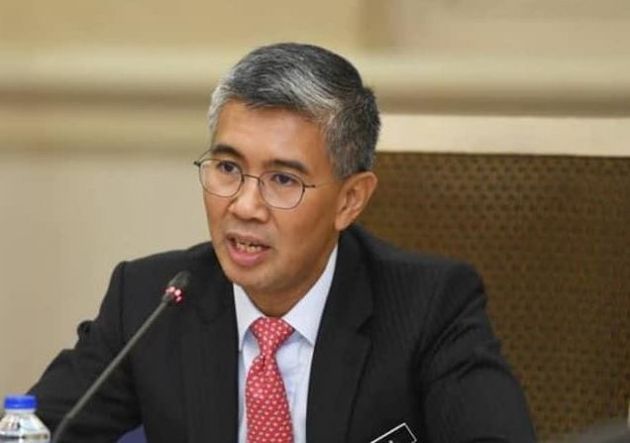
Finance minister Tengku Datuk Seri Zafrul Abdul Aziz said the ministry is currently studying the impact of the SST rebates – the deadline of which has been extended three times and is set to end in less than two weeks – and is currently weighing its options. “The RM4.8 billion revenue forgone is a huge amount, which could have been channelled to help the people.
“We need to thoroughly study the matter. If we decide to extend for another three months, we would lose at least RM1.2 billion and if we were to extend for another six months, we would lose about RM2.5 billion,” he told the media in Labuan yesterday. Zafrul added that the government needs more revenue to provide subsidies to those in need to curb inflation.
Originally slated to end on December 31, 2020, the exemption – 100% for locally-assembled CKD models, 50% for fully-imported CBU cars – was extended at the last minute to June 30, 2021. The deadline was pushed back another six months in May; the current expiry date was announced during the tabling of Budget 2022 in October.
The ministry is under pressure from car companies to extend the rebates yet again, as the backlog of orders continue to mount. The industry is struggling to build enough cars to meet demand due to the global semiconductor shortage and parts supply issues.
Looking to sell your car? Sell it with Carro.

 Mr. Sotong
on
Mr. Sotong
on 

 Eat My Smoke
on
Eat My Smoke
on  runaway
on
runaway
on  The man of experience
on
The man of experience
on  KongMing
on
KongMing
on  Ctrl C and Ctrl V
on
Ctrl C and Ctrl V
on  pikacchiu
on
pikacchiu
on  Holden
on
Holden
on  AHB
on
AHB
on  Agree with you
on
Agree with you
on  155B
on
155B
on  Ma Cha
on
Ma Cha
on  mingKor
on
mingKor
on  iGas
on
iGas
on  Rakyat Malaysia
on
Rakyat Malaysia
on  Mana otak?
on
Mana otak?
on  John Doe
on
John Doe
on  Disagree with you
on
Disagree with you
on  Lilo
on
Lilo
on  Bryan
on
Bryan
on  King of Seleweng
on
King of Seleweng
on  Who believes them anymore?
on
Who believes them anymore?
on  morpoyos
on
morpoyos
on  syd
on
syd
on  Dong Gor
on
Dong Gor
on  KJ, University of Oxford
on
KJ, University of Oxford
on  Unknown
on
Unknown
on  Kam
on
Kam
on  Jibbyyyyy
on
Jibbyyyyy
on  Thed
on
Thed
on  Where are food necessities??
on
Where are food necessities??
on  KY
on
KY
on  Paper Plus
on
Paper Plus
on  mika
on
mika
on  Razir
on
Razir
on  bieight8
on
bieight8
on  Rakyat Malaysia
on
Rakyat Malaysia
on  Carlips3
on
Carlips3
on  Andrew Tang
on
Andrew Tang
on  JJ
on
JJ
on  Golfer
on
Golfer
on  Hsh
on
Hsh
on  PMK
on
PMK
on  Maginto
on
Maginto
on  CKL
on
CKL
on  Newme
on
Newme
on  applegreen
on
applegreen
on  ANTI gomengok
on
ANTI gomengok
on  Mr Graham
on
Mr Graham
on  Sohai
on
Sohai
on  Goog22
on
Goog22
on  Anthony
on
Anthony
on  Sairam
on
Sairam
on 


AI-generated Summary ✨
Comments express concern that SST exemption leads to significant revenue loss for the government, traffic congestion, and environmental issues. Many argue extensions are unnecessary, viewing them as a gimmick that benefits car buyers and elites while worsening traffic and economic stability. Some suggest re-evaluating policies like foreign vehicle taxes or promoting electric vehicles, emphasizing the need for better public transport and prioritization of essential spending over car subsidies. Overall, frustration with current policies and skepticism about financial management are prevalent.