
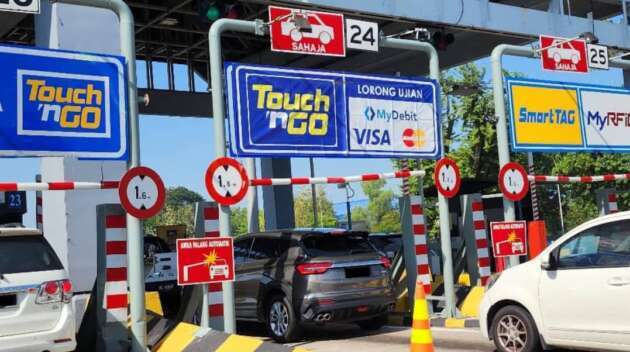
A transport think tank has said Malaysia must move away from compensating toll concessionaries to prevent toll rate hikes and provide discounts. As reported by NST, MY Mobility Vision co-founder Rahman Hussin said this practice, which he described as a board-base subsidy, has cost RM7.7 billion since 2016.
“We are essentially subsidising private vehicle use at the expense of all Malaysians, including those in rural areas, public transport users and households without private vehicles,” Rahman commented in relation to the government’s recent decision to allocate RM591.56 million to prevent toll hikes on 10 highways this year.
“For motorists, the benefit is immediate and visible: no toll increase. But is this the most effective use of limited public funds at a time when Malaysia’s transport system, and its public finances, are under increasing pressure?” he added. In the past 10 years, he said, RM7.7 billion was spent to put off toll hikes, with the RM591.56 million set aside to maintain toll rates for this year being among the lowest amounts in recent years.
“When you look at the compensation figures, they could easily fund thousands of additional daily bus trips in major urban corridors for a year. This money could also be used to expand feeder services that determine whether public transport is viable for working households. Instead, it is deployed as a recurring operating expense, one that stabilises toll rates without expanding transport capacity or reducing long-term demand,” Rahman explained.
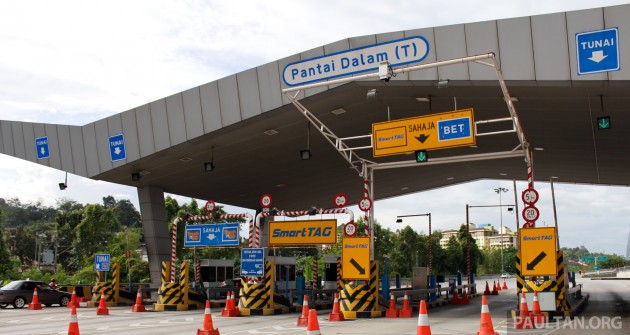
Rahman also noted that highways covered by the freeze include not only financially weaker concessions, but also those that have matured and are commercially stable. “Under concession frameworks, when scheduled toll adjustments are deferred, the government compensates operators for foregone revenue,” he said.
“As a result, public funds are used to support highways under financial strain and to offset lost income on profitable corridors. He said the way forward was investments in higher-frequency bus services, expanded feeder networks and first- and last-mile infrastructure,” he added.
Citing the National Transport Policy, which aims to reduce dependence on private vehicles and increase public transport usage, Rahman pointed out that compensating tolls is counterproductive to the policy’s goals. “The question is no longer whether tolls should be frozen. It is how long Malaysia can afford to keep freezing its transport choices,” said.

Stop building useless highways. No need so called think tank for this.
Just call it what it is lah…toll concessions are a way to transfer tax dollars to private crony companies ad infinitum. That’s why the concession agreements are never disclosed to the rakyat despite all the $$$ that’s paid. Instead they just keep getting renewed. What a sweet deal for some. And Malaysians so bodoh buy property where the only access road is tolled and never ask questions of all the clowns who allowed it to happen. Just accept.
I find it highly peculiar how our highways are packed beyond maximum capacity yet the concessionaires claim they are constantly making a loss, year after year, to the tune of BILLIONS of Ringgit. Time to declassify the Top Secret status of all these unfavorable and perhaps even corrupt contract awards…
Govt shouldnt have signed such lopsided contract to start with. Its like guaranteeing profit to the company, where in the world got such thing as confirm make money contract?!
remember when they say tolls will be abolished?
The people are sick and tired of listening to how much the govt has to compensate the toll concessionaires. Why was the govt so stupid to sign such a concession agreement? For a start, the govt should de classify all the toll concession agreements. They are not something that affect national security and should not be classified.
can anyone remind me, which party was the govt and who was the PM back in 2016?
It’s not the rakyat who have benefited. It’s the toll concessionaires companies with billions of RM.
When MY Mobility Vision co-founder Rahman Hussin becomes a politician, he will do the same to spend on toll compensation. when he is not a politician, it is easier for him to object.
Should increase the toll rate by 200%
old tun m and his old privatization scheme, perfection