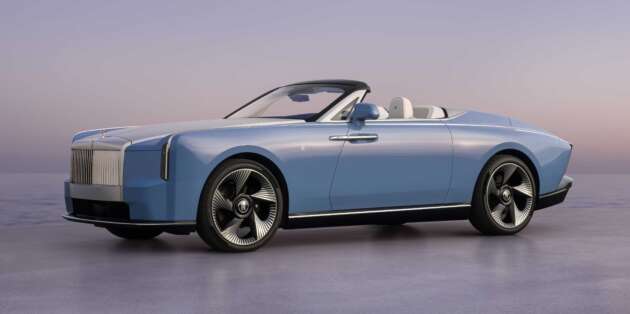
Rolls-Royce has pulled the covers off Project Nightingale, the inaugural model in its new Coachbuild Collection programme – and it is unlike anything the marque has built before. This is a fully electric, open-top two-seater, hand-built at Goodwood, and limited to just 100 examples worldwide. If you have to ask the price, you almost certainly will not be getting one: the entire run is offered strictly by invitation, to a small circle of long-standing Rolls-Royce clients.
The name comes from Le Rossignol – French for “the nightingale” – the house used by Henry Royce’s designers and engineers at his winter estate on the Côte d’Azur. It is described as a “production concept,” meaning the design is locked, but a few details still rely on manufacturing techniques that Rolls-Royce has yet to fully develop. A global testing and validation programme kicks off this summer, with the first customer cars set to be delivered from 2028.
Project Nightingale draws heavily on Rolls-Royce’s experimental cars of the 1920s – the so-called ‘EX’ models, which wore red badges (a detail revived here to denote concept status). Two prototypes in particular, 16EX and 17EX from 1928, were the key references. Back then, Royce and his engineers wrapped lightweight aluminium bodies over Phantom chassis to chase a then-lofty top speed of more than 90 mph (145 km/h), giving the cars a torpedo-like silhouette: long bonnet, shallow windscreen and a snug cabin set deep into the body.
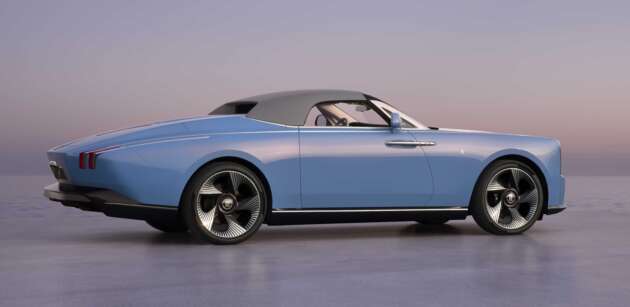
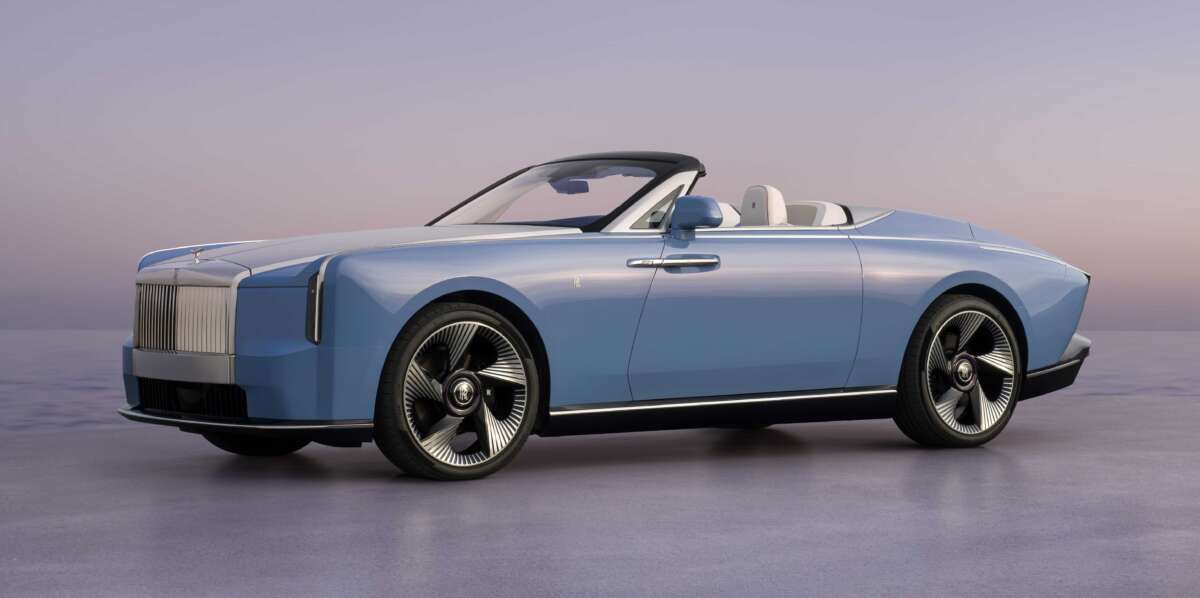
That torpedo theme defines the new car. The overall aesthetic leans on Streamline Moderne – the sleek, late Art Deco design language where clean, uninterrupted surfaces matter more than ornamentation. Rolls-Royce calls the look “sheer” and “monolithic,” and the surfacing has been obsessed over to make the car appear carved from a single billet of metal.
At 5.76 metres long, Project Nightingale is almost exactly the same length as the Phantom limousine – except all of that real estate is devoted to a two-seat convertible. Going electric allowed the designers to ditch the big cooling intakes an ICE would need, freeing up huge expanses of unbroken sheet metal across the front.
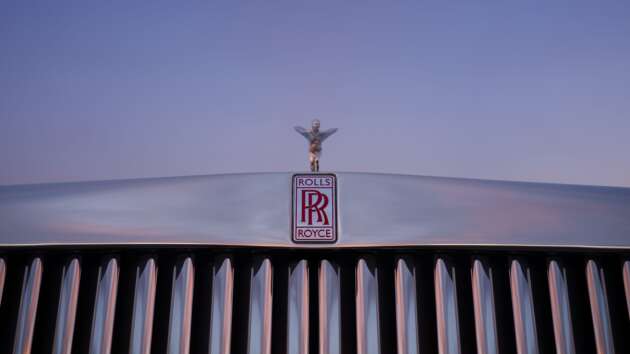
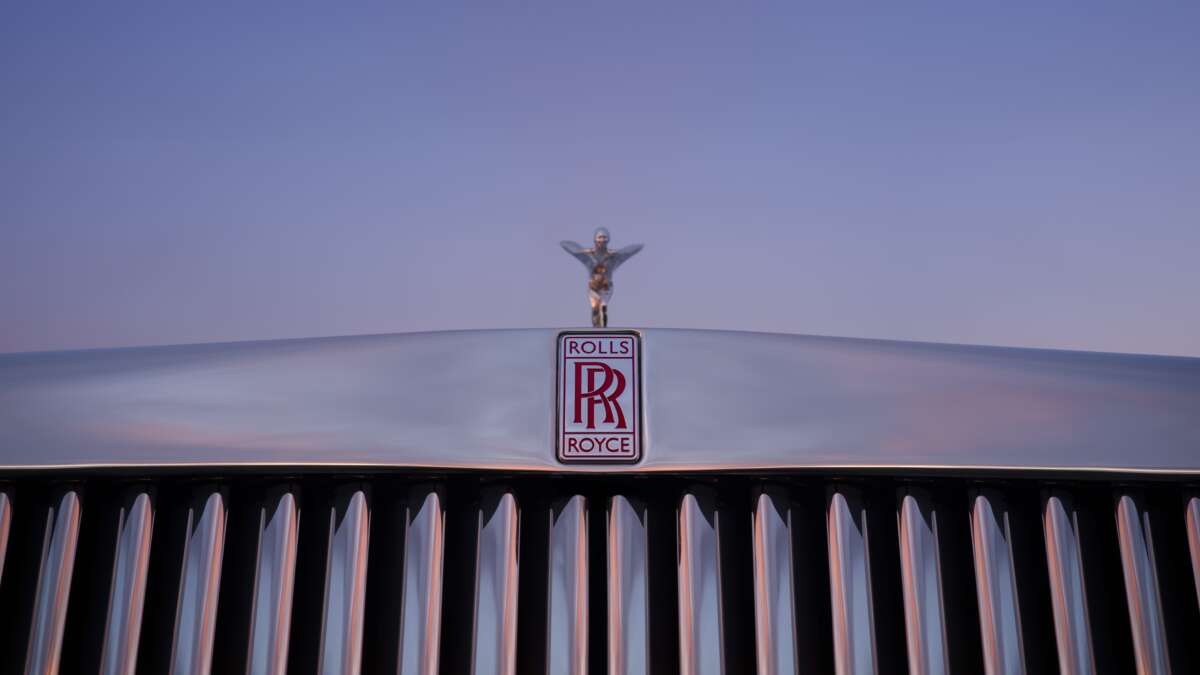
The Pantheon grille is the showstopper up front: a surround nearly a metre wide that looks like it was hewn from a solid block of stainless steel, with 24 vanes set deep inside. The Spirit of Ecstasy sits in a recessed section on top, her lines flowing back into the bonnet as though she is moving through water. Flanking the grille are slim, vertically-oriented headlamps, linked front-to-rear by polished stainless-steel bands running the full length of the car.
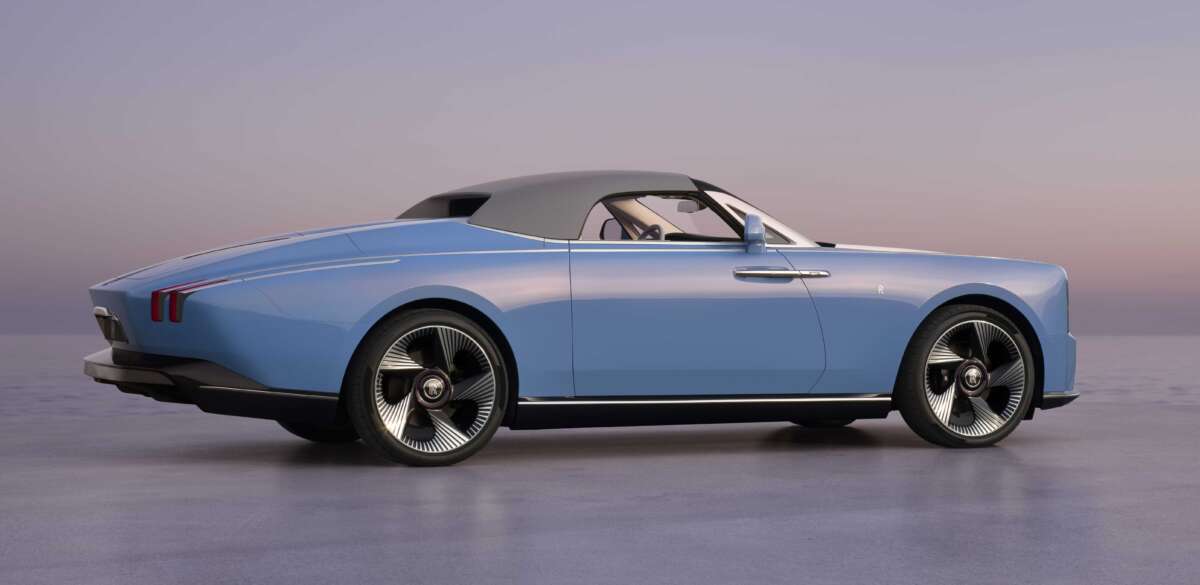
In profile, a single “hull line” – inspired by where a yacht’s hull meets its superstructure – runs uninterrupted from nose to tail. There is a carbon-fibre sill nodding to the running boards of old, and 24-inch wheels, the largest ever fitted to a Rolls-Royce, with a directional design meant to look like yacht propellers viewed from underwater.
At the back, the deck is flat and horizontal, punctuated by razor-thin right-angled tail lamps and a “Piano Boot” that opens sideways on a cantilever, like the lid of a grand piano. A single longitudinal brake light runs down the centreline, and a carbon-fibre rear diffuser – the “Aero Afterdeck,” made possible by the absence of an exhaust – keeps the car stable at speed without an unsightly spoiler.
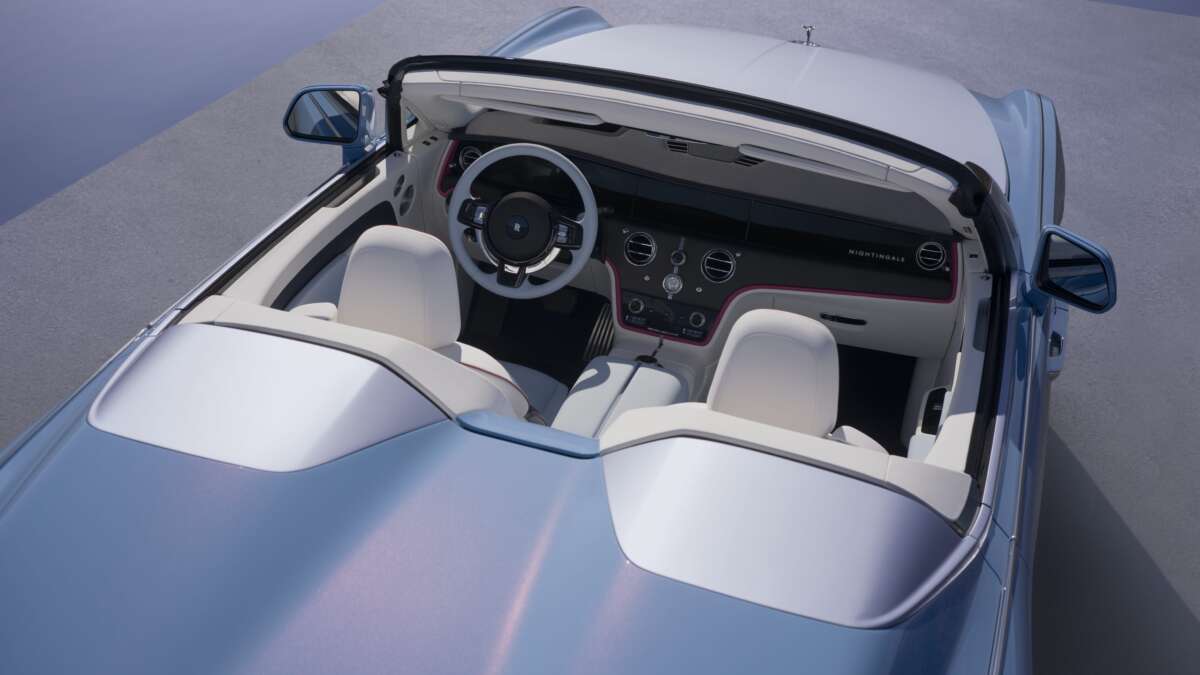
The interior centres on a feature Rolls-Royce calls the Starlight Breeze suite. During early prototype drives, designers noticed they could hear birdsong with unusual clarity thanks to the near-silent EV drivetrain. They recorded nightingale songs, studied the soundwave patterns, and translated them into a constellation of 10,500 individual “stars” that wrap around the two occupants – effectively turning melody into ambient light.
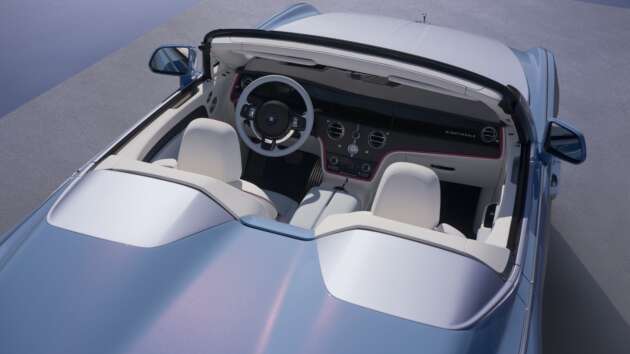
The lighting sits within a sculptural form called the “Horseshoe” behind the seats. There is a leather “saddle” armrest split into two pieces, a Spirit of Ecstasy rotary controller revealed when you open the door, and a deliberately minimalist control count – just five rotary controls in total, each finished with jewellery-grade detailing.
The specific car shown wears Côte d’Azur Blue, a pale solid blue with subtle red flakes (a nod to those red ‘EX’ badges) inspired by the 1928 17EX, topped with a silver soft-top roof. Inside, it pairs pastel Charles Blue and Grace White with Deep Navy inserts and flashes of Peony Pink, finished with Openpore Blackwood. Every one of the 100 cars, naturally, will be specced uniquely with its owner.
Project Nightingale runs solely on Rolls-Royce’s electric drivetrain – the company is leaning into the silence and effortless delivery of EV power as the perfect match for a coachbuilt grand tourer. Specifics like battery size, range and output have not been disclosed yet; those will come as the car works through its testing programme.
In the words of CEO Chris Brownridge, the project brings together three things that had never before coexisted at the marque – the design freedom of coachbuilding, a near-silent electric powertrain, and a serene take on open-top motoring. Design director Domagoj Dukec, meanwhile, reckons the car feels “both inevitable and completely unexpected,” and says it will shape everything Rolls-Royce does next.







Looking to sell your car? Sell it with Carro.