
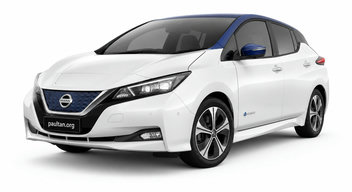
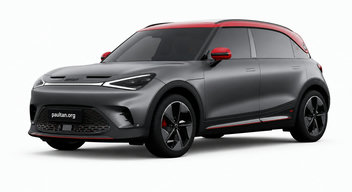
Verdict
The #1 is 45% more powerful, while the #1 goes 14% further on a charge. Weigh that against the equipment each side gives you in the table below.
| Price & overview | ||
|---|---|---|
| Price | RM168,888✓ | RM169,000 |
| Body type | Hatchback | SUV |
| Segment | C-Segment | C-Segment |
| Assembly | CBU | CBU |
| Ownership | ||
| Road tax / year | RM100✓ | RM260 |
| Powertrain | ||
| Engine Tech | 400V architecture | 400V architecture |
| Fuel | Electric | Electric |
| Number of Motors | 1 | 1 |
| Motor Horsepower | 148 hp | 268 hp✓ |
| Motor Torque | 320 Nm | 343 Nm✓ |
| Battery Capacity | 40.0 kWh | 49 kWh✓ |
| EV Range | 270 km | 315 km✓ |
| Charging Rate (AC) | 6.6 kW | 7.2 kW✓ |
| Charging Rate (DC) | 50.0 kW | 150 kW✓ |
| V2L | — | 3.3 kW |
| Drivetrain | ||
| Transmission | Single Ratio Automatic | Single Ratio Automatic |
| Transmission Name | Constant Ratio Gearbox for EV | — |
| Transmission Manufacturer | Nissan | — |
| Driveline | Front Wheel Drive | Rear Wheel Drive |
| Performance & Efficiency | ||
| 0-100 km/h | 7.9 seconds | 6.7 seconds✓ |
| Top Speed | 155 km/h | 180 km/h✓ |
| Dimensions | ||
| Length | 4,480 mm | 4,270 mm |
| Width | 1,790 mm | 1,822 mm |
| Height | 1,540 mm | 1,636 mm |
| Wheelbase | 2,690 mm | 2,750 mm |
| Weight | 1,544 kg | 1,780 kg |
| Doors | 5 | 5 |
| Seats | 5 | 5 |
| Boot Space | 435 litres✓ | 411 litres |
| Front Tyre | 215/50R17 | 235/45R19 |
| Rear Tyre | 215/50R17 | 235/45R19 |
| Spare Tyre | Space Saver | — |
| Factory Tyres | Dunlop Enasave EC300 | Continental EcoContact 6 Q |
| Chassis | ||
| Assembly | Japan (CBU) | China (CBU) |
| Front Suspension | MacPherson Strut | MacPherson Struts |
| Rear Suspension | Torsion Beam | Multi-link |
| Front Wheels | 17" Alloy | 19" Amps Alloy Wheels |
| Rear Wheels | 17" Alloy | 19" Amps Alloy Wheels |
| Steering | Rack and Pinion (Electric Power Steering) | Rack and Pinion (Electric Power Steering) |
| Chassis Notes | e-Pedal, Intelligent Ride Control, Intelligent Trace Control | Comfort Suspension |
| Crash Safety Ratings | ||
| EuroNCAP | 5 stars — With 6 Airbags and Autonomous Emergency Braking | 5 stars |
| Safety | ||
| Airbags | Driver and Passenger, Front Side, Front and Rear Curtain | Driver & Front Passenger, Side Airbags, Curtain Airbags and Driver's Knee Airbag |
| ABS/EBD | ✓ | ✓ |
| Stability Control | ✓ | ✓ |
| Alarm | ✓ | — |
| Immobilizer | ✓ | — |
| Child Safety Lock | Manual for Rear Doors | Manual for Rear Doors |
| Seat Belts | 5 Three-point | 5 Three-point |
| Blind Spot Info System | — | ✓ |
| ISOFIX | Available on Two Outer Rear Passenger Seats | Available On Front Passenger Seat, Rear Outer Seats |
| Autonomous Braking System | Yes | Yes, Front and Rear |
| Lane-keeping Assist | No | Steering Correction |
| Collision Warning | ✓ | ✓ |
| Seatbelt Reminder | Front Seats Only | All Seats |
| Safety Notes | — | Door Opening Warning, Traffic Sign Recognition, Auto High Beam, |
| Lighting | ||
| Headlamps | LED Projector | LED Reflector with Manual Levelling |
| Taillamps | LED Combination | LED |
| LED Daytime Running Lights | ✓ | ✓ |
| Front Foglamps | ✓ | — |
| Rear Foglamps | ✓ | ✓ |
| Wing Mirror Turn Indicators | ✓ | ✓ |
| Cabin | ||
| Front Seats | Manual Adjustment | 10-way Power Adjustable Driver's Seat with Memory Function, Powered Front Passenger's Seat |
| Rear Seats | 60:40 Split-folding | 60:40 Split-fold with Sliding Adjustment |
| Front Air-con | Single-zone Automatic Climate Control | Dual-zone Automatic Climate Control |
| Rear Air-con | — | Rear AC Vents |
| Sunroof | — | Panoramic Glass Roof |
| Power Sockets | 1 Front | 1 Front, 3 USB-C, 1 USB-A, Qi Wireless Charger |
| Interior Lighting | Map Lights | Map Lights, 64-colour Ambient Lighting |
| Cup Holders | 2 Front | 2 Front, 2 Rear |
| Sun Shade | — | Yes |
| Audio | 5" Display Radio/CD Player with USB, Bluetooth, AUX-in and 4 Speakers | 12.8" Touchscreen with Wireless Apple CarPlay & Android Auto |
| Convenience | ||
| Power Windows | Four Windows, Driver's Side Auto Up and Down with Anti-Pinch | Four Windows, Auto Up and Down with Anti Pinch |
| Engine Start | Keyless Push Button | Keyless (Depress Brake Pedal) |
| Locks | Keyless Operation | Keyless Operation |
| Auto Headlamps | ✓ | ✓ |
| Auto Wipers | — | ✓ |
| Cruise Control | Passive Cruise Control | Adaptive Cruise Control with Highway & Traffic Jam Assist |
| Steering Audio Control | ✓ | ✓ |
| Steering Tilt | ✓ | ✓ |
| Steering Telescopic | — | ✓ |
| Boot Operation | Manual Operation | Yes, Powered |
| Reverse Camera | Yes, with Around View Monitor (AVM) | Yes, With 360-degree Camera |
| Auto Parking | — | Yes |
| Folding Wing Mirrors | ✓ | ✓ |
| Bluetooth | ✓ | ✓ |
| Navigation | ✓ | ✓ |
| Hill Start Assist | ✓ | ✓ |
| Instrument Cluster | Digital/Analogue | Full LCD Monitor |
| Parking Brake | Electronic | Electronic |
| Convenience Notes | 6.6 kW Wallbox, 7" Information Display, Climate Control Timer | — |
| Warranty | ||
| Warranty Mileage Manufacturer | 100,000 km | Unlimited✓ |
| Warranty Manufacturer | 3 years | 4 years✓ |
| Warranty Notes | 3-year/60,000 km Free Service, 8-year/160,000 km Battery Warranty, Complimentary Usage of Nissan SUV, MPV or Pick-up for 23 Days per Year | 8-year/200,000 km Battery Warranty |
Specs shown for the selected variant of each car. ✓ marks the better figure where lower/higher is objectively better. Road tax: West Malaysia, private registration.