
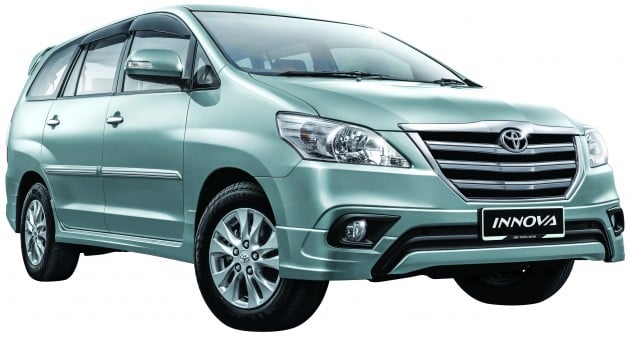
UMW Toyota is certainly on a roll today – having revealed a new Toyota Camry 2.0 G X variant on its website, it’s now put up pricing and specs of the facelifted Toyota Innova, saying it’s “coming soon.” The refreshed MPV was launched in Indonesia last August – this is the third facelift.
The variants are E manual, E auto and G auto – all powered by a 136 PS/182 Nm 2.0 litre 1TR-FE four-cylinder petrol motor. The manual is a five-speeder and the auto a four-speeder with ECT.
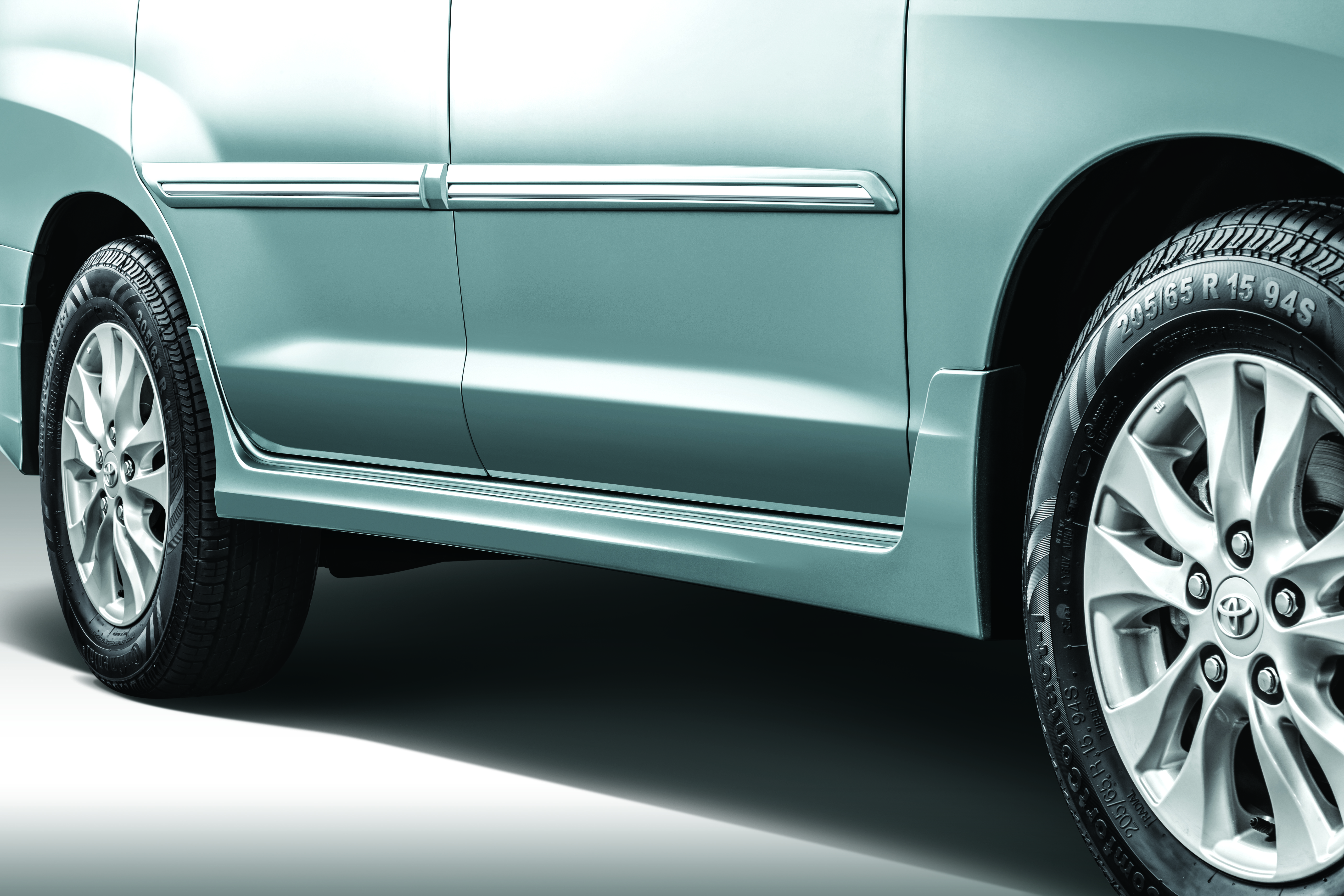
No matter what variant you choose, you get 205/65 R15 alloys, front-disc-rear-drum brakes, a 2-DIN head unit with CD, MP3, AUX, USB, Bluetooth and six speakers, second- and third-row air-con vents, fabric seats, dual-cell colour-keyed reverse sensors, two airbags and Isofix in the second row. E manual and E auto are pretty similar in terms of kit.
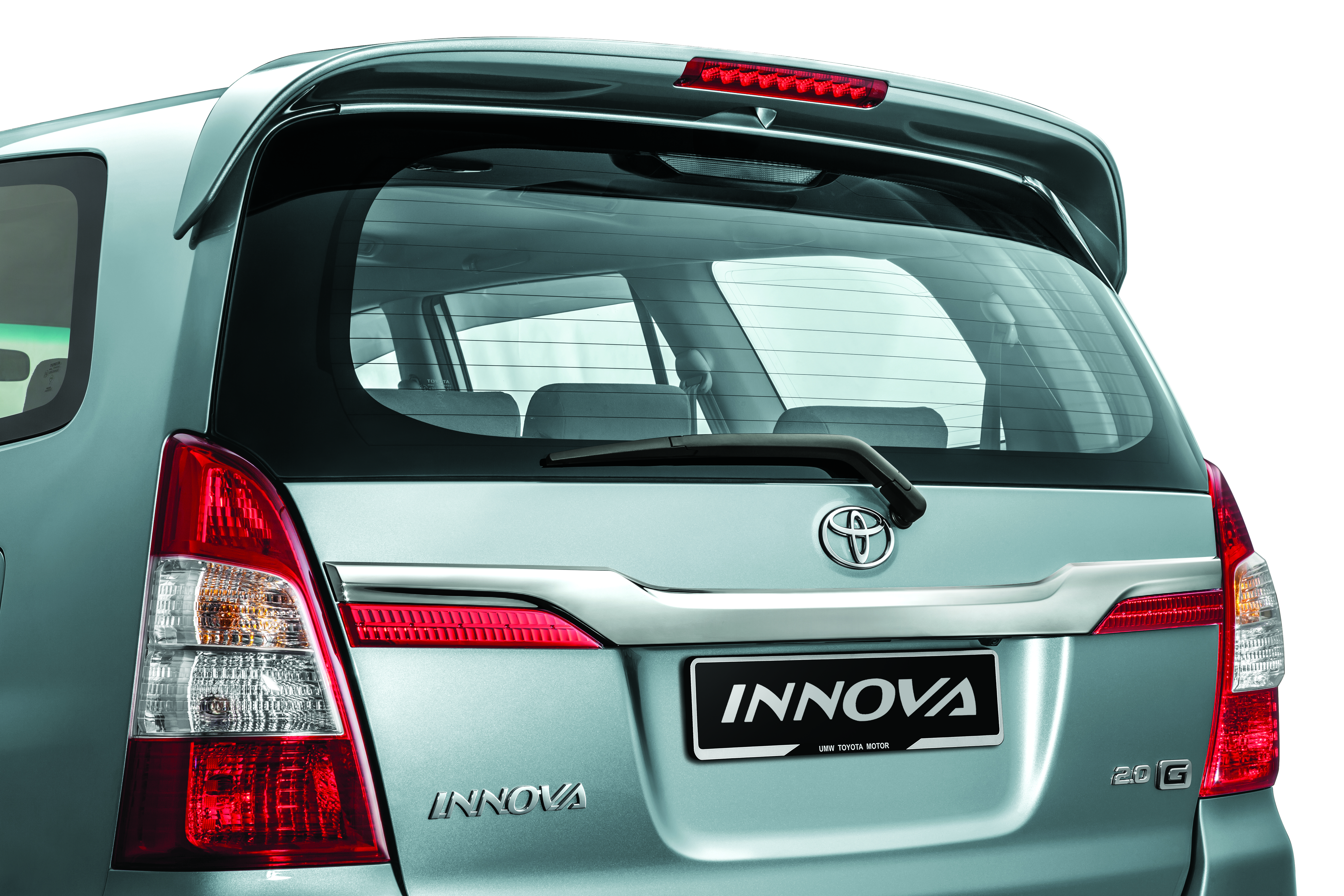
On the outside, the G auto exclusively sports a chromed front grille, wing mirror indicators, chrome door handles, rear wiper, side moulding, chrome tailgate garnish and front fog lamps.


Click to enlarge
Inside, the range-topper gets time-adjustable wipers, Optitron meter panel with multi-info display (MID), auto air-con, a leather and wood steering wheel with MID switches (and matching gear knob).
Optional accessories include a seven-inch DVD-AVN system, a 5.8-inch DVD-AVX system, an eight-inch roof monitor (with or without DVD Combo, which gives you DVD, remote control and one headset), an aerokit (for G auto only) and a selection of tint films.
OTR prices with insurance are listed as follows: E manual RM98,546 (non-metallic RM97,750), E auto RM103,546 (non-metallic RM102,750), G auto RM110,990 (non-metallic RM110,194).


 Toyota Innova Zenix
from RM165,000
Toyota Innova Zenix
from RM165,000  Toyota Yaris Cross
from RM99,900
Toyota Yaris Cross
from RM99,900  Toyota Hilux
from RM226,300
Toyota Hilux
from RM226,300  Toyota Urban Cruiser
from RM198,000
Toyota Urban Cruiser
from RM198,000  Toyota bZ4X
from RM220,000
Toyota bZ4X
from RM220,000  Toyota GR Yaris
from RM315,600
Toyota GR Yaris
from RM315,600  Toyota GR Corolla
from RM368,950
Toyota GR Corolla
from RM368,950  Toyota Camry
from RM221,800
Toyota Camry
from RM221,800  Toyota Corolla Cross
from RM133,800
Toyota Corolla Cross
from RM133,800 
 Ken
on
Ken
on 

 Toyota - Stinking RV
on
Toyota - Stinking RV
on  feel sorry for you
on
feel sorry for you
on  Pinky
on
Pinky
on  Petrolhead (Member)
on
Petrolhead (Member)
on  Contender
on
Contender
on  dugong
on
dugong
on  Ahok
on
Ahok
on  Mike Mechanics
on
Mike Mechanics
on  otak udang
on
otak udang
on  Emma
on
Emma
on  Toyota and UMW - slow death!
on
Toyota and UMW - slow death!
on  Mafia
on
Mafia
on  Furs
on
Furs
on  Das Auto
on
Das Auto
on  amfin
on
amfin
on  Oh Brunei
on
Oh Brunei
on  Car user
on
Car user
on  Anti-Fuel-Price
on
Anti-Fuel-Price
on  Anon
on
Anon
on  VS
on
VS
on  farq
on
farq
on  AutoFrenz
on
AutoFrenz
on  Ken
on
Ken
on  sudonano (Member)
on
sudonano (Member)
on  Kevin
on
Kevin
on  EnergyAnalyst
on
EnergyAnalyst
on  XDM
on
XDM
on  AVH (Member)
on
AVH (Member)
on  Joker
on
Joker
on  engdau
on
engdau
on  hey hey hey
on
hey hey hey
on  Someguyonthenet
on
Someguyonthenet
on  idesofmarch
on
idesofmarch
on  roxas
on
roxas
on  sktan
on
sktan
on  Motorhead (Member)
on
Motorhead (Member)
on  ioma
on
ioma
on  Nabill
on
Nabill
on  Simon C
on
Simon C
on  Chronikel
on
Chronikel
on  Aero (Member)
on
Aero (Member)
on  tokmoh (Member)
on
tokmoh (Member)
on  dino years
on
dino years
on  4G63T DSM
on
4G63T DSM
on  Eazy
on
Eazy
on  Jayden Koo
on
Jayden Koo
on  Datuk
on
Datuk
on  The Real Brand
on
The Real Brand
on  Anti innova
on
Anti innova
on  Danny Lim
on
Danny Lim
on  senorita
on
senorita
on  Maseratits
on
Maseratits
on  jc
on
jc
on  Internetsurfer
on
Internetsurfer
on  hehehe
on
hehehe
on  NCAP
on
NCAP
on  don
on
don
on  :|
on
:|
on  passion33
on
passion33
on  vroom
on
vroom
on  calcutta
on
calcutta
on  babygrand
on
babygrand
on  spongewai
on
spongewai
on  Pilot
on
Pilot
on  innova2011
on
innova2011
on  Ray
on
Ray
on  hukaka
on
hukaka
on  Denaihati
on
Denaihati
on  carbon
on
carbon
on  uglam
on
uglam
on  Jay
on
Jay
on  taboogen
on
taboogen
on  kusochon
on
kusochon
on  Paparazzi
on
Paparazzi
on  BOMOH
on
BOMOH
on  Sorchai (Member)
on
Sorchai (Member)
on  iskhalifah
on
iskhalifah
on  Za
on
Za
on  kenot
on
kenot
on  King
on
King
on  kim
on
kim
on  huduh
on
huduh
on  Maserati
on
Maserati
on  Savvy88
on
Savvy88
on  WhatThaHeck
on
WhatThaHeck
on 
 Korean Fan
on
Korean Fan
on  Samad Jain
on
Samad Jain
on  joeannacum
on
joeannacum
on  huhuhuu
on
huhuhuu
on  Jayakumar
on
Jayakumar
on  Syameer (Member)
on
Syameer (Member)
on  Jebonr
on
Jebonr
on  opaixxx
on
opaixxx
on  KarTiN (Member)
on
KarTiN (Member)
on
AI-generated Summary ✨
The comments express mostly negative sentiments about the Toyota Innova facelift, criticizing its dull and ugly design, outdated features, and lack of safety innovations like VSC and more airbags. Many feel the facelift is uninspired and a waste of money, with some suggesting the model is long overdue for replacement. Others highlight poor resale value, high prices, and competition from newer, better-looking alternatives like Honda and Korean brands. Overall, the consensus is disappointment and frustration with Toyota's continued stagnation.