
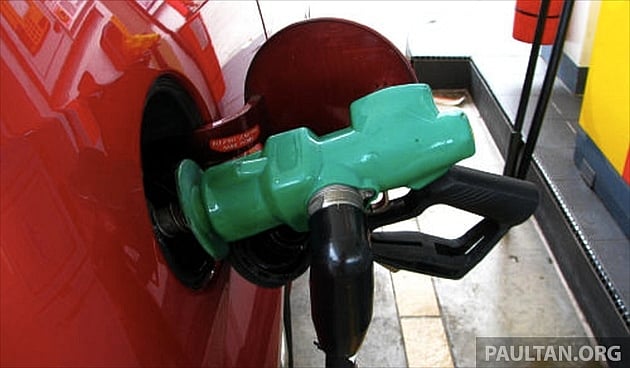
The rationalisation of fuel subsidies is unavoidable in developing nations including Malaysia, Petroleum Dealers Association of Malaysia (PDAM) president Datuk Hashim Othman has said, according to Bernama.
He cited as an example Indonesia’s plans to cut fuel subsidies by 3,000 rupiah (RM0.82) before the year is up, saying that the move, drastic though it may seem, will save the country a trillion rupiah in the short term.
The PDAM president added that the money saved from reduced subsidies could go into Indonesia’s transport infrastructure, including roads and public transport. The republic is facing a US$23 billion (RM75.48 billion) fuel subsidy bill – its biggest fiscal problem.
“For Malaysia, the move to slowly reduce the subsidy will neither shock the people nor cause a sudden change in the economic landscape. The reduction in stages… will also curb any sudden increase in the prices of goods and a slow down in demand,” Bernama quoted Hashim as saying.

 sudonano (Member)
on
sudonano (Member)
on 

 ProtonGSC
on
ProtonGSC
on  Twin Turbo
on
Twin Turbo
on  OMG
on
OMG
on  Kenapa Sibuk Sangat?
on
Kenapa Sibuk Sangat?
on  A Yasir
on
A Yasir
on  tng
on
tng
on  nonsense
on
nonsense
on  karam singh
on
karam singh
on  winwin
on
winwin
on  Kou Shui Wang
on
Kou Shui Wang
on  Kancil Hybrid
on
Kancil Hybrid
on  kambinganas
on
kambinganas
on  Maserati(Official)
on
Maserati(Official)
on  Biggbro
on
Biggbro
on  Maserati(Official)
on
Maserati(Official)
on  Samad Jain
on
Samad Jain
on  Matt
on
Matt
on  Mr.Skywalker
on
Mr.Skywalker
on  MAKINGTHEPEOPLE LOOK STUPID
on
MAKINGTHEPEOPLE LOOK STUPID
on  superdriver
on
superdriver
on  fairytail
on
fairytail
on  fuel my ass
on
fuel my ass
on  Black Dog
on
Black Dog
on  Abdullah
on
Abdullah
on  alldisc
on
alldisc
on  wkaka
on
wkaka
on  Mozilla Chrome
on
Mozilla Chrome
on  kong
on
kong
on  kud_power
on
kud_power
on  Najib
on
Najib
on  Same L0rrr
on
Same L0rrr
on  Potong Kepala
on
Potong Kepala
on  Maseratits
on
Maseratits
on  takNakP1
on
takNakP1
on  Airis
on
Airis
on  Nenek Kau
on
Nenek Kau
on  MeToo
on
MeToo
on  Haroun Nazreen
on
Haroun Nazreen
on  Aerodynamic bro
on
Aerodynamic bro
on  nabill (Member)
on
nabill (Member)
on  seancorr (Member)
on
seancorr (Member)
on  KayuhBasikalJe
on
KayuhBasikalJe
on  maniam
on
maniam
on  Chris (Member)
on
Chris (Member)
on  Name
on
Name
on  Josh Ling
on
Josh Ling
on  PeteM
on
PeteM
on  slk3879
on
slk3879
on  loler
on
loler
on  qov
on
qov
on  hero
on
hero
on  LB
on
LB
on  kemosabe
on
kemosabe
on  ANDY TAN
on
ANDY TAN
on  OmarHas
on
OmarHas
on  Obviously (Member)
on
Obviously (Member)
on  renko
on
renko
on  WTF... Joke
on
WTF... Joke
on  Semi-Value (Member)
on
Semi-Value (Member)
on  K-Stylz
on
K-Stylz
on  messi
on
messi
on  pity the fools
on
pity the fools
on  The Professor
on
The Professor
on  mango
on
mango
on  C.P.MOHAN
on
C.P.MOHAN
on  1Mal
on
1Mal
on  Tarpis Crude Price Drop
on
Tarpis Crude Price Drop
on  BNtalkcock
on
BNtalkcock
on  jc
on
jc
on  mmmmm
on
mmmmm
on  mastermind
on
mastermind
on  MintBerryCrunch
on
MintBerryCrunch
on
AI-generated Summary ✨
Comments generally acknowledge that fuel subsidy cuts are unavoidable due to global oil prices and national budget shortfalls. Many advocate for floating fuel prices, reducing car taxes, and increasing taxes on the wealthy. Some critics express frustration over government mismanagement of revenue and corruption, while others believe removal of subsidies should be complemented with lower vehicle taxes for fairness. A few comments highlight the importance of transparency and question policies that benefit cronies or lead to higher living costs.